← Back

Rock engravings of the Camonica Valley

Località Naquane, 25044 Capo di Ponte BS, Italia ★★★★☆ 184 views
Melissa Bush
Capo di Ponte
🏆 AI Trip Planner 2026

Get the free app

Discover the best of Capo di Ponte with Secret World — the AI trip planner with 1M+ destinations. Get personalized itineraries, hidden gems and local tips. Free on iOS & Android.

🧠 AI Itineraries 🎒 Trip Toolkit 🎮 KnowWhere Game 🎧 Audio Guides 📹 Videos
Scan to download iOS / Android
Scan for AppGallery Huawei users

About Rock engravings of the Camonica Valley

Rock engravings of the Camonica Valley - Capo di Ponte | Secret World Trip Planner

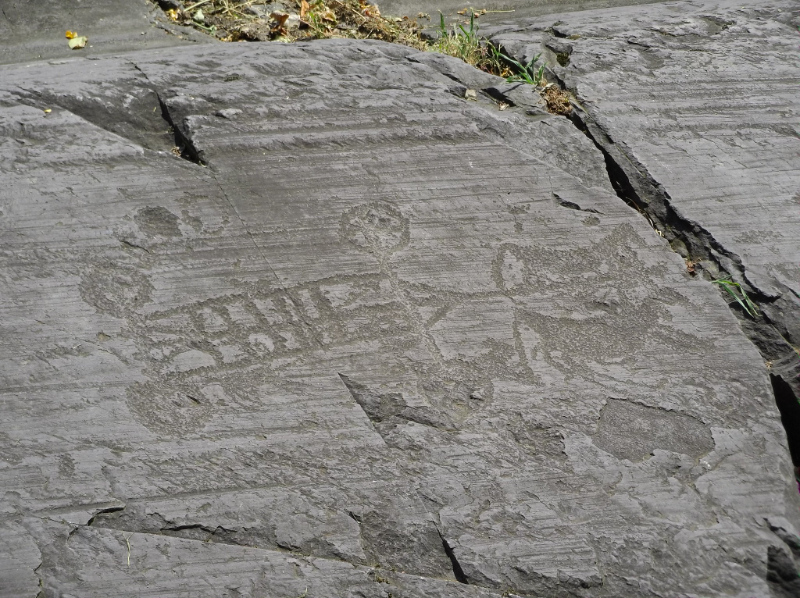
The Camonica Valley, in the Alpine area of northern Italy, has one of the largest collections of rock engravings in the world. The rock art of the Camonica Valley, attested on about 2,000 rocks, in more than 180 localities included in 24 different municipalities, represents the first recognized UNESCO World Heritage Site in Italy, in 1979, for an initial recognized nucleus of more than 140,000 figures, to which new discoveries were added uninterruptedly over time, until reaching a current estimate of more than 200,000. A veritable gallery of prehistoric art, to be visited on an itinerant, naturalistic journey through the beauty of the Valley. More than 140,000 symbols and figures carved into the rock over a period of about 8,000 years describe themes related to agriculture, navigation, warfare, hunting, and magic, but also represent symbolic geometric figures.

Rock engravings of the Camonica Valley - Capo di Ponte | Secret World Trip Planner

The earliest traces of man in Valle Camonica date back at least thirteen thousand years, when the area was first affected by human habitation following the melting of glaciers, but it was not until the advent of the Neolithic (5th-4th millennia B.C.) that the first inhabitants settled permanently in the valley. Some anthropomorphic figures (the so-called "orants," schematic human beings with arms pointing upward) and certain "topographic depictions" are traditionally traced to this phase.

During the Eneolithic (3rd millennium B.C.), with the development of early metallurgy, the discovery of plowing and wheeled transportation, a number of shrines composed of engraved boulder-menhirs became widespread in the Camonica Valley. The height of engraving art in the valley was reached with the Iron Age (1st millennium B.C.), a period to which about 75 percent of the engravings date.
Rock engravings of the Camonica Valley - Capo di Ponte | Secret World Trip Planner

Engraving art in the Camonica Valley began to decline with the subjugation to the Roman Empire (16 B.C.), except for a brief revival in the late medieval period.

Eight archaeological parks and a national museum of prehistory have been established to enhance the rock archaeology complex.


🗺 L'app dei tesori italiani

Plan your visit to Capo di Ponte

Suggested itinerary near Rock engravings of the Camonica Valley

MAJ+
500.000+ travelers worldwide
  1. 🌅
    Morning
    Rock engravings of the Camonica Valley
    📍 Capo di Ponte
  2. ☀️
    Afternoon
    Rock Carvings National Park -Val Camonica
    📍 0.2 km · Capo di Ponte
  3. 🌆
    Evening
    MUPRE - National Museum of Prehistory of the Camonica Valley
    📍 0.6 km · Capo di Ponte

Buy Unique Travel Experiences

Powered by Viator

See more on Viator.com

Explore nearby · Capo di Ponte

Frequently Asked Questions

The Camonica Valley contains over 200,000 rock engravings spread across approximately 2,000 rocks in more than 180 localities. This collection represents one of the largest assemblages of rock art in the world and was recognized as Italy's first UNESCO World Heritage Site in 1979 with an initial nucleus of over 140,000 figures.
The rock engravings span approximately 8,000 years of human history, with the earliest human traces dating back at least 13,000 years. About 75 percent of the engravings date to the Iron Age (1st millennium B.C.), which represents the peak period of engraving art in the valley.
The engravings illustrate diverse themes including agriculture, navigation, warfare, hunting, and magical practices, along with symbolic geometric figures and anthropomorphic representations. These carvings provide a visual record of prehistoric life and beliefs across multiple millennia.
Permanent human settlement in the Camonica Valley began during the Neolithic period (5th-4th millennia B.C.), following the melting of glaciers from the previous ice age. The earliest engraved figures, including schematic human figures called 'orants' with raised arms, are traditionally attributed to this Neolithic phase.
The Camonica Valley offers an itinerant naturalistic journey through its eight archaeological parks and a national museum of prehistory, allowing visitors to explore the rock art distributed across 24 different municipalities. This accessible network of sites enables travelers to experience the valley's prehistoric gallery at their own pace.