



← Back

The Royal Palace of Caserta

Viale Douhet, 2/a, 81100 Caserta CE, Italia ★★★★☆ 164 views
Emma Sileri
Caserta
🏆 AI Trip Planner 2026

Get the free app

Discover the best of Caserta with Secret World — the AI trip planner with 1M+ destinations. Get personalized itineraries, hidden gems and local tips. Free on iOS & Android.

🧠 AI Itineraries 🎒 Trip Toolkit 🎮 KnowWhere Game 🎧 Audio Guides 📹 Videos
Scan to download iOS / Android
Scan for AppGallery Huawei users

About The Royal Palace of Caserta

The Royal Palace of Caserta - Caserta | Secret World Trip Planner

The Palace of Caserta and the Palace of Versailles have a thin thread connecting them. The great French royal residence had been completed almost 70 years earlier when Charles of Bourbon, king of Naples, decided to build his new palace. It was 1751, and the ruler who would later become Charles III of Spain chose the Caserta area, located 20 kilometers from Naples (just like Versailles from Paris). The construction of the palace was wanted in Caserta because the king was very fascinated by the beauty of the Caserta landscape and, for security reasons, he wanted it far from the sea and inland, but not far from Naples. The palace was to hold its own against that of Versailles.

The Royal Palace of Caserta - Caserta | Secret World Trip Planner

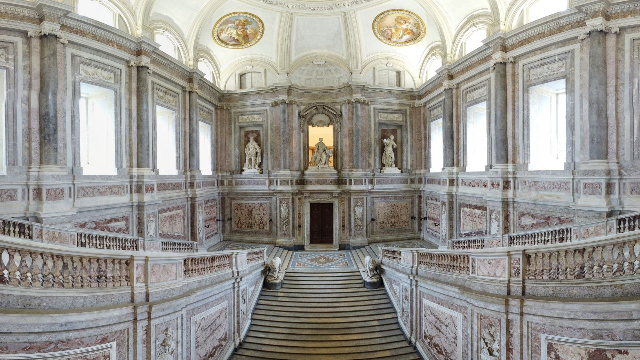
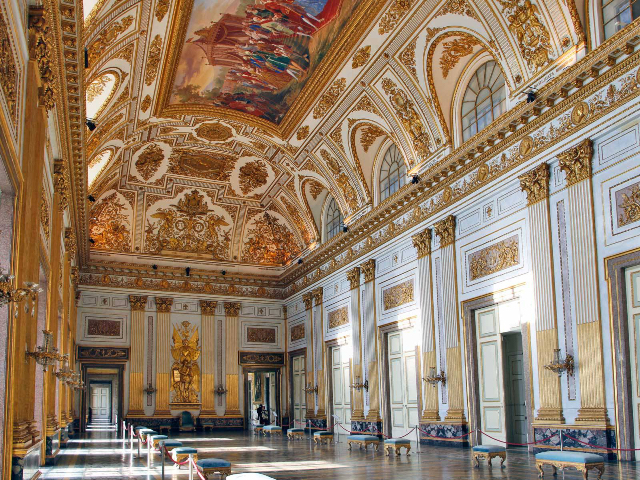
The Reggia was completed in 1845 (although it had already been inhabited since 1780) and is considered the last great example of Italian Baroque. The Royal Palace of Caserta was built starting in 1752 by Luigi Vanvitelli, and later by his son Charles, at the behest of Charles of Bourbon with the aim of erecting it as the centerpiece of the new kingdom of Naples. The Royal Palace of Caserta has a total area of 47,000 square meters and is by far the largest royal residence in the world. There are more than 1,200 rooms that make up the Royal Palace of Caserta. At night the spectacle is provided by the lights filtering through the 1742 windows, all arranged in a precise order. The interiors are a tribute to luxury, pageantry and elegance. The best artists of the kingdom were called upon to collaborate on the work. One of the most beautiful interiors of the Royal Palace of Caserta, the Palatine Chapel, was made and decorated personally by Vanvitelli. Also wonderful is the Court Theater, an authentic jewel of 18th-century architecture from which the architects of the best theaters in Europe were inspired. The Park stretches for about 4 km and is adorned with waterfalls, fountains, statues, groves, and lay-bys. A masterpiece of rare beauty, rich in plants of all kinds. The eye relaxes at the sight of the greenery that frames the waterfalls that flow through it.

One of the best-known anecdotes related to the Royal Palace of Caserta is about the cataloging of objects by Piedmontese officials after the annexation of the Kingdom of the Two Sicilies in 1861. When confronted with an object never seen (and used) before, a Savoy official noted, "Strange unknown object in the shape of a guitar." It was the bidet.

The Royal Palace of Caserta - Caserta | Secret World Trip Planner
🗺 L'app dei tesori italiani

Plan your visit to Caserta

Suggested itinerary near The Royal Palace of Caserta

MAJ+
500.000+ travelers worldwide
  1. 🌅
    Morning
    The Royal Palace of Caserta
    📍 Caserta
  2. ☀️
    Afternoon
    Teatro di Corte di Caserta
    📍 0 km · Caserta
  3. 🌆
    Evening
    The Easter Pine Cone
    📍 0.4 km · Caserta

Buy Unique Travel Experiences

Powered by Viator

See more on Viator.com

Explore nearby · Caserta

Frequently Asked Questions

The Royal Palace of Caserta is the largest royal residence in the world, spanning a total area of 47,000 square meters. It was built to rival the famous Palace of Versailles and contains over 1,200 rooms with 1,742 windows, making it an architectural marvel of unparalleled scale.
Charles of Bourbon was fascinated by the beautiful landscape of the Caserta area and chose it for strategic reasons—it was located 20 kilometers inland from Naples, providing security from sea threats while remaining close enough to the city. The location mirrored the positioning of Versailles near Paris, and he intended the palace to be the centerpiece of his new kingdom of Naples.
Construction began in 1752 under the direction of architect Luigi Vanvitelli and was continued by his son Charles. Although the palace was inhabited starting in 1780, it wasn't fully completed until 1845, making it the last great example of Italian Baroque architecture.
Two standout interiors are the Palatine Chapel, which was personally made and decorated by architect Vanvitelli, and the Court Theater, an authentic 18th-century architectural jewel that inspired the design of Europe's best theaters. The palace's interiors throughout are tributes to luxury, pageantry, and elegance, created by the kingdom's finest artists.
The park stretches for approximately 4 kilometers and is beautifully adorned with waterfalls, fountains, statues, groves, and scenic lay-bys filled with plants of all kinds. It's a masterpiece of landscaping that provides a relaxing complement to the palace's architectural grandeur.