← Back

The colored Truogoli of Santa Brigida

Piazza di Santa Brigida, 16126 Genova GE, Italia ★★★★☆ 155 views
Candice Renoir
Genova
🏆 AI Trip Planner 2026

Get the free app

Discover the best of Genova with Secret World — the AI trip planner with 1M+ destinations. Get personalized itineraries, hidden gems and local tips. Free on iOS & Android.

🧠 AI Itineraries 🎒 Trip Toolkit 🎮 KnowWhere Game 🎧 Audio Guides 📹 Videos
Scan to download iOS / Android
Scan for AppGallery Huawei users

About The colored Truogoli of Santa Brigida

The colored Truogoli of Santa Brigida - Genova | Secret World Trip Planner

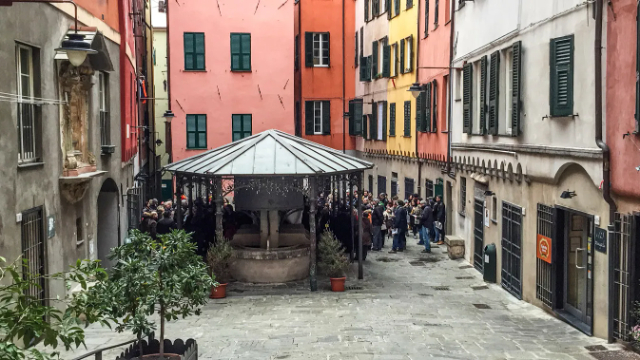
Within the historic center you can find a colorful little square known as Santa Brigida. Here, tall medieval houses circumscribe with their colorful facades a small slice of the city, which has become one of the brightest and prettiest corners of the historic center. Leaving, then, the wide Piazza del Vastato (today's Piazza della Nunziata) and proceeding in the direction of Principe Station, along that "Strada delli Signori Balbi," wealthy Genoese bankers, we come to that stretch of street where a dim "banner," which has very little historical value, announces that we have arrived at the place where, on March 24, 1403, the archbishop of Genoa, Pileo de Marinis, laid the first stone of the monastery that took its name from the saint. On the right, an underpass, followed by a flight of steps, gives access to a small square where time seems to have stood still: the completely renovated facades of typical medieval houses, which seem to rejoice in their new yellow and red clothes, frame the old truogoli (Santa Brigida's ancient wash-houses), supplied , by a spring called Bocca di Bove, a corner of silence where, stretching the ear, one still seems to hear the garrulous chatter of the merry washerwomen.

The colored Truogoli of Santa Brigida - Genova | Secret World Trip Planner

On the ancient canopy, brilliant with restoration, is mirrored a precious aedicule, the only prominent ornament in the essentiality of the square. To the left, a solid archway, the ancient entrance to the monastery, continues in a maze of alleys, rich in history, that climb up the hill to Corso Dogali.

These are the places where the Augustinian nuns arrived, coming from the turbulent heights of Sarzano, with the intention of building a church and dedicating it to the saint, Brigid, whose rule they followed (the rule of the Order of the Most Holy Savior of St. Brigid is an integration, in 27 capitals, of that of St. Augustine).
The colored Truogoli of Santa Brigida - Genova | Secret World Trip Planner

A member of the Swedish royal family, Bridget (1303-1373), a very young wife of the nobleman Ulf Gudmarsson and mother of eight children, stripped herself of her possessions when her husband died to give herself to a life of faith. On one of her many pilgrimages, made on foot or on the back of a mule, she arrived in Genoa where she found hospitality for a few months in the abbey of St. Jerome of Quarto, while waiting to embark for Rome, a hospitality she certainly did not return if, as legend has it, from the heights of the Peralto, turning her eyes toward the city she foretold its complete ruin.

Truogoli di Santa BrigidaThe Brigidine monastery of Genoa had a peculiar characteristic: it was designed for "cohabitation," albeit strictly separate, between friars and nuns, both cloistered, which imposed the construction of labyrinthine passages that give us an account of the future creuze.


🗺 L'app dei tesori italiani

Plan your visit to Genova

Suggested itinerary near The colored Truogoli of Santa Brigida

MAJ+
500.000+ travelers worldwide
  1. 🌅
    Morning
    The colored Truogoli of Santa Brigida
    📍 Genova
  2. ☀️
    Afternoon
    Mu.MA - Museoteatro della Commenda di Prè Museum-theatre
    📍 0.2 km · Genova
  3. 🌆
    Evening
    Lift Castello d'Albertis-Montegalletto
    📍 0.2 km · Genova

Buy Unique Travel Experiences

Powered by Viator

See more on Viator.com

Explore nearby · Genova

Frequently Asked Questions

The truogoli are ancient wash-houses located in the Santa Brigida square that were supplied by a natural spring called Bocca di Bove. These historic structures were once bustling centers of activity where washerwomen gathered to do laundry, and today they remain as charming reminders of daily life in medieval Genoa.
From Piazza del Vastato (today's Piazza della Nunziata), head in the direction of Principe Station along the street called Strada delli Signori Balbi. Look for a small banner marking the historic site, then take the underpass on the right followed by a flight of steps to access the square.
The monastery was founded on March 24, 1403, when the archbishop of Genoa, Pileo de Marinis, laid the first stone. It was built by Augustinian nuns who followed the rule of St. Brigid, a Swedish royal family member from the 14th century.
Santa Brigida is known as one of the brightest and prettiest corners of Genoa's historic center, featuring colorful yellow and red facades of renovated medieval houses that frame the small square. It's described as a corner of silence and timelessness where visitors can experience the atmosphere of medieval Genoa, with the beautifully restored ancient canopy and precious aedicule adding to its charm.
Yes, the ancient monastery entrance is marked by a solid archway on the left side of the square, which leads into a maze of historic alleys climbing toward Corso Dogali. The square also features a precious aedicule, described as the only prominent ornament in the square's essentiality, which is worth seeing during your visit.