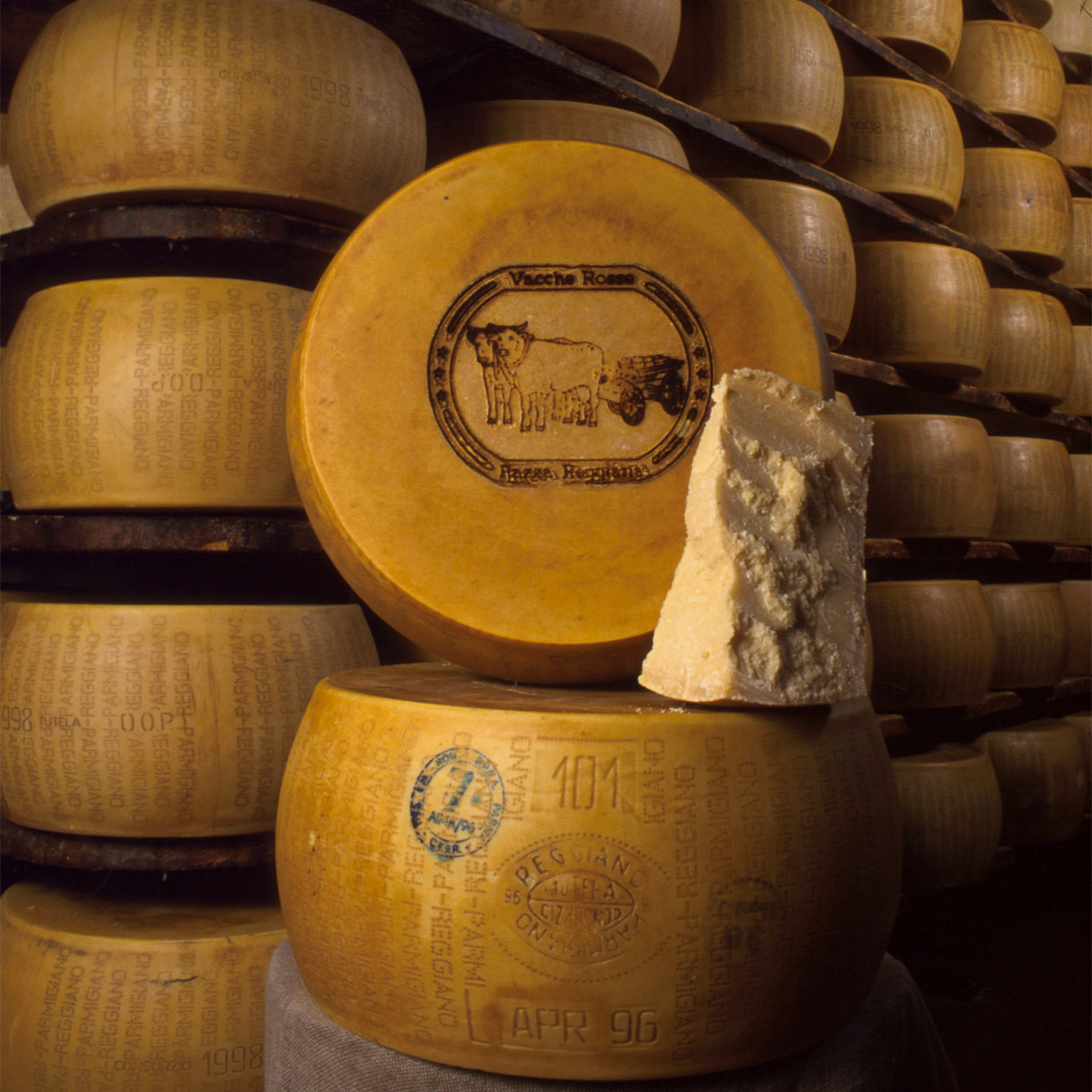

In the last century this less productive but more rustic and long-lived breed was gradually replaced by more profitable cattle breeds. The breed was in danger of extinction, and it was then that a group of tenacious and far-sighted breeders initiated an enhancement project that fostered a steady recovery in cattle numbers. The farms are mainly located in the province of Reggio Emilia and the milk produced is delivered to the Vacche Rosse Consortium dairies where it is processed into "Vacche Rosse" Parmigiano Reggiano. The first references concerning the Reggiana cattle breed, in the Parma and Reggio Emilia area, are reported by some monks in the year 1000. The breed was presented at the Vienna Expo in 1873. Genealogical records began in 1950 and breed standards were published in 1953. The breeders' association was officially recognized in the year 1962. Demographics and distribution of the breed
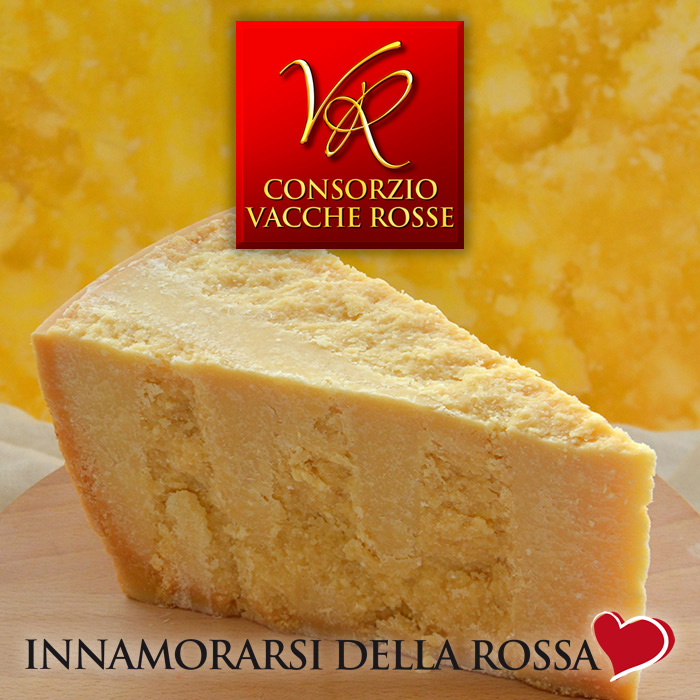
The population reached a maximum size of about 41,000 cows around the 1950s. From the 1950s onward a strong process of replacement with the cosmopolitan breeds Bruna Alpina and Friesian began, which led to a gradual decrease in the population to 8,000 cows in the 1970s. In 1981 the lowest population level was reached: 450 cows. Subsequently, towards the end of the 1980s, following the beginning of the production of Parmigiano Reggiano di Razza Reggiana, there was an increase population. Today, Reggiana breed cattle are mainly raised in the provinces of Reggio Emilia and Parma, totaling about 3,000 head. Description of the breed... and the cheese
The Reggiana is characterized by an attenuated fromentino-red coat in the inner and lower areas of the limbs, around the eyes, snout and tail. The average milk production in 305 days of lactation is 5,557 kg (3.45% protein; 3.54% fat). Reggiana breed milk is particularly suitable for Parmigiano Reggiano production due to its high casein content and good cheesemaking properties. Particularly casein type is better suited for prolonged ripening, making it particularly suitable for the production of Parmigiano Reggiano with long ripening time. This is why Parmigiano-Reggiano Vacche Rosse is not placed on the market until 24 months, with all the countless merits that this entails: its flavor and aroma are enhanced, its digestibility is improved, its presence in calcium, phosphorus, protein, and essential amino acids, its absolute absence of lactose makes it suitable for those who are intolerant to it, it is particularly recommended by pediatricians for infants and children, for sportsmen who need to eat without weighing themselves down, for women who need a greater natural intake of calcium, and for all those who live busy lives like those of today.
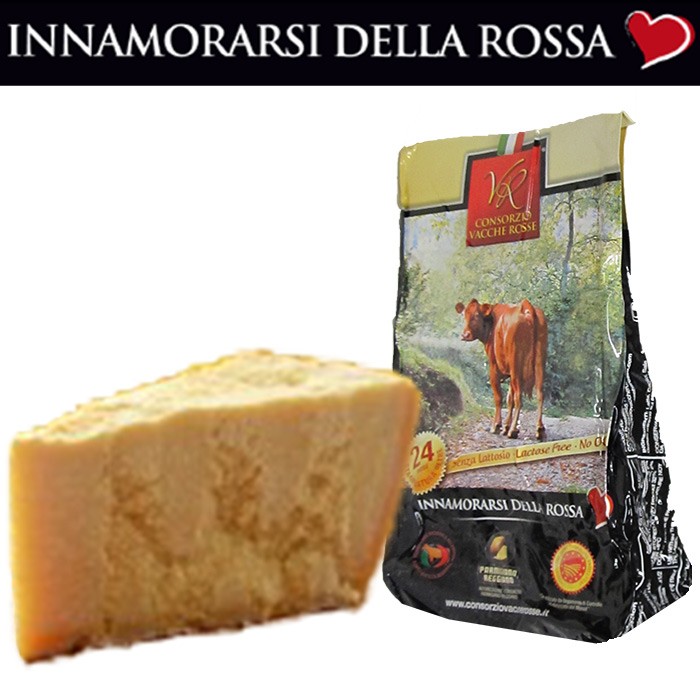
Its good milk combined with a strict production regulation that requires cows to be fed green grass, the prohibition of feeding techniques that force production, the use of non-GMO grains, and the experience and skill of the cheesemaker through traditional processing, give this Parmigiano Reggiano a strong flavor and a more intense straw yellow color, and unique characteristics.
In its grainy and fragrant paste, one can rediscover the fragrance and naturalness of herbs typical of the production area. Parmigiano Reggiano Vacche Rosse can be paired with fruit mustards, honey or Traditional Balsamic Vinegar of Modena, enjoyed in flakes on its own or in quick salads, used as an ingredient to add flavor to your best dishes. Traditionally married to Lambrusco, it also goes well with full-bodied and well-structured red wines, white raisin wines and malvasia.