






Perched majestically on the serene hills of Lantau Island, the Tian Tan Buddha, more commonly known as the Big Buddha, stands as a symbol of peace, unity, and spiritual enlightenment. This colossal bronze statue, completed in 1993, is not just an architectural marvel but a deeply revered spiritual site that invites pilgrims and tourists alike to explore its tranquil surroundings.

The history of the Tian Tan Buddha is intertwined with the development of the nearby Po Lin Monastery, which was founded in 1906 by three monks visiting from Jiangsu Province. Originally named "The Big Hut," Po Lin Monastery quickly became a place of significance, attracting Buddhists from across the region. The idea to construct the Big Buddha was conceived in the latter half of the 20th century, with the aim of symbolizing the harmonious relationship between man and nature, people and faith. The statue took 12 years to complete, with its unveiling on December 29, 1993, drawing thousands of visitors from around the world.
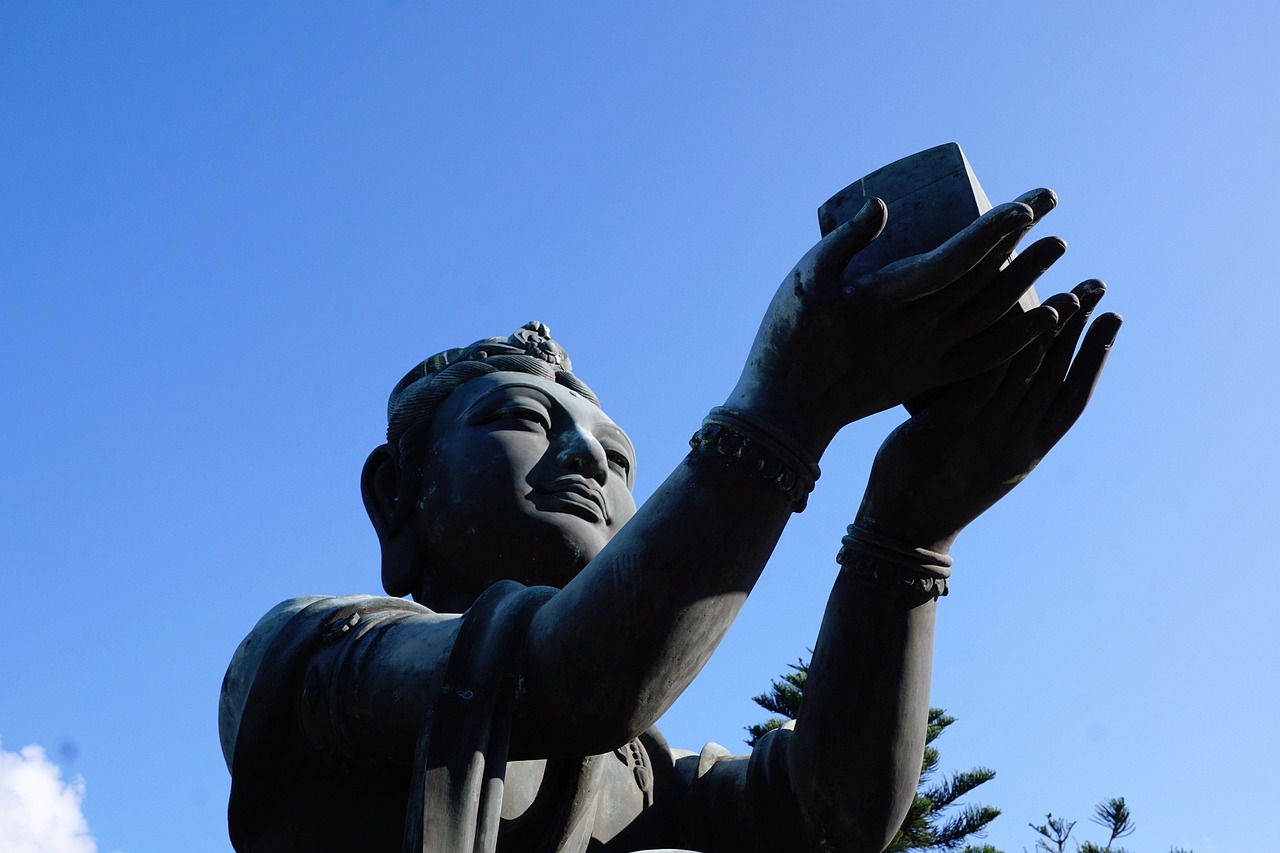
Architecturally, the Big Buddha is an impressive feat of engineering and artistry. Standing at 34 meters, the statue is composed of 202 bronze pieces and weighs over 250 metric tons. What sets it apart is its unique location and orientation; it faces north to look over the Chinese people, which is unusual as most Buddha statues face south. The statue is seated on a lotus throne atop a three-tiered base, which is styled like the Altar of Heaven or Tian Tan — hence its name. Surrounding the statue are six smaller bronze statues known as "The Offering of the Six Devas," each presenting flowers, incense, a lamp, ointment, fruit, and music to the Buddha, symbolizing the six perfections of generosity, morality, patience, zeal, meditation, and wisdom.
Culturally, the Tian Tan Buddha is a focal point during several Buddhist festivals, with the Birthday of Buddha being one of the most significant events, celebrated on the eighth day of the fourth month of the Chinese lunar calendar. During this time, pilgrims flock to the site to pay homage, offer incense, and participate in chanting ceremonies. The presence of the Big Buddha is a testament to the enduring influence of Buddhism in Hong Kong, reflecting the city's rich tapestry of religious and cultural traditions.
Food is an integral part of any cultural exploration, and the area around the Big Buddha offers a taste of traditional vegetarian Buddhist cuisine. At the Po Lin Monastery, visitors can enjoy a simple yet nourishing vegetarian meal, which often includes delicacies such as Buddha’s Delight (a medley of vegetables and tofu) and bean curd rolls. These meals are not only delicious but also reflect the Buddhist principles of non-violence and mindfulness.
Beyond the statue and monastery, there are lesser-known aspects of this site that add depth to its allure. Few visitors are aware that the Big Buddha's serene expression was designed to embody the concept of samsara, or the cycle of life and death, reminding visitors of the transient nature of existence. Additionally, the base of the statue houses a small museum featuring a relic of Siddhartha Gautama, the historical Buddha, adding an aura of sacredness to the visit.
For those planning a visit, the best time to experience the Big Buddha is during the cooler months of October to December, when the weather is pleasant, and the skies are generally clear. Arriving early is advisable to avoid the midday crowds. A visit is not complete without climbing the 268 steps leading up to the statue, which offers breathtaking panoramic views of the lush landscape and the South China Sea. Don't miss the nearby Wisdom Path, a short walk from the statue, where wooden columns inscribed with the Heart Sutra provide a tranquil spot for reflection.
In the heart of bustling Hong Kong, the Tian Tan Buddha offers a peaceful retreat, blending history, spirituality, and natural beauty. It invites visitors not just to look, but to ponder, reflect, and connect with the deeper aspects of existence.