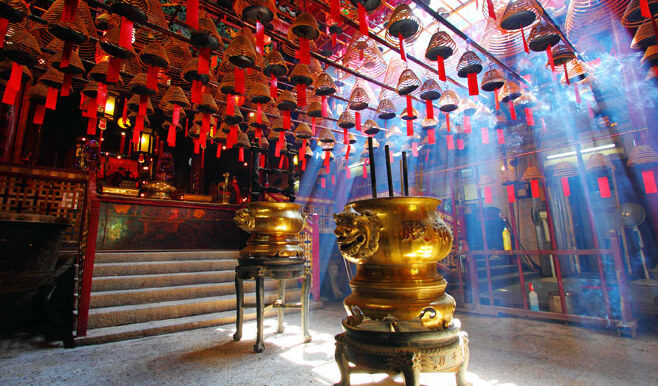

Nestled in the bustling heart of Hong Kong, the Man Mo Temple stands as a serene tribute to the dual forces of wisdom and warfare. With its rich history and striking architecture, it invites visitors into a world where the ancient melds seamlessly with the modern.
### History and Origins
Founded in 1847 during the Qing Dynasty, the Man Mo Temple was established by a group of prosperous Chinese merchants. They not only sought a sacred space to honor the God of Literature (Man) and the God of War (Mo) but also created a venue for arbitration in a community fraught with tension between Chinese locals and British colonial authorities. At a time when trust was scarce, oaths taken within these sacred walls—sometimes accompanied by the ritual beheading of a rooster—were respected by the colonial government, highlighting the temple’s pivotal role in fostering local governance.
The temple's foundations reflect the socio-political landscape of the time, marking it as a cornerstone of both spiritual and civic life. Over the years, it has served as a cultural touchstone, witnessing Hong Kong's transformation from a small fishing village to a bustling metropolis.
### Art and Architecture
The architectural elegance of the Man Mo Temple is a stunning representation of traditional Chinese design. Its striking green-tiled roof, adorned with intricate carvings and ceramic figures, beckons visitors from afar. The temple's main hall features a stunning altar where offerings are made to the deities, enveloped in swirling clouds of fragrant incense smoke.
Inside, the temple holds two beautifully crafted 19th-century sedan chairs. With their intricate woodwork and colorful designs, these chairs are not just transport for the honored; they reflect the artistic prowess of the period. Gilt plaques, once carried in processions, line the entrance, detailing the significance of the gods and reminding visitors of the respect owed within these hallowed grounds.
### Local Culture and Traditions
The Man Mo Temple is a living testament to the local customs and beliefs that thrive in Hong Kong. Devotees frequent the temple to pay homage to the gods, often bringing offerings of fruit, incense, and symbolic items. The air is thick with the scent of burning incense, a ritualistic element that represents prayers ascending to the heavens.
Throughout the year, the temple becomes a focal point for various festivals. The most notable is the Birthday of Man, celebrated on the 4th day of the 1st lunar month, where devotees flock to partake in traditional ceremonies and festivities, bringing the temple to life with vibrant colors and sounds.
### Gastronomy
While the Man Mo Temple itself does not offer food, its surrounding area is a gastronomic paradise. Just a stone’s throw away, one can savor local delicacies that reflect Hong Kong's rich culinary heritage. Egg tarts, pork buns, and dim sum are among the must-try treats that pair perfectly with the experience of visiting the temple.
Moreover, the nearby streets teem with local eateries offering traditional Cantonese dishes. Sampling a bowl of won ton noodles or indulging in a plate of char siu after a visit to the temple provides a delightful glimpse into the local food culture.
### Lesser-Known Curiosities
Beyond its striking facade and serene atmosphere, the Man Mo Temple holds many lesser-known secrets. For instance, the temple is home to a number of unique artifacts, including a large bell that once marked the hours. Another curiosity is the story of the “God of Literature,” who is often depicted with a long beard and holding a brush, symbolizing wisdom and learning.
Additionally, many visitors may overlook the four gilt plaques outside the temple. These plaques not only describe the gods but also serve as reminders of the social norms expected within the temple’s walls, such as the request for silence and respect as well as the warning to menstruating women to refrain from entering the main hall.
### Practical Visitor Information
The best time to visit the Man Mo Temple is during the early morning or late afternoon when the light filters through the incense smoke, creating a mystical atmosphere. Weekdays are generally less crowded, allowing for a more contemplative experience.
Visitors should look for the beautiful wooden carvings and the elaborate altars, and don’t forget to bring a few sticks of incense to partake in the ritual of offering. A small donation is appreciated to help maintain the temple.
To navigate the broader expanse of Hong Kong’s cultural landscape, consider using the Secret World app to plan a personalized AI itinerary to visit.