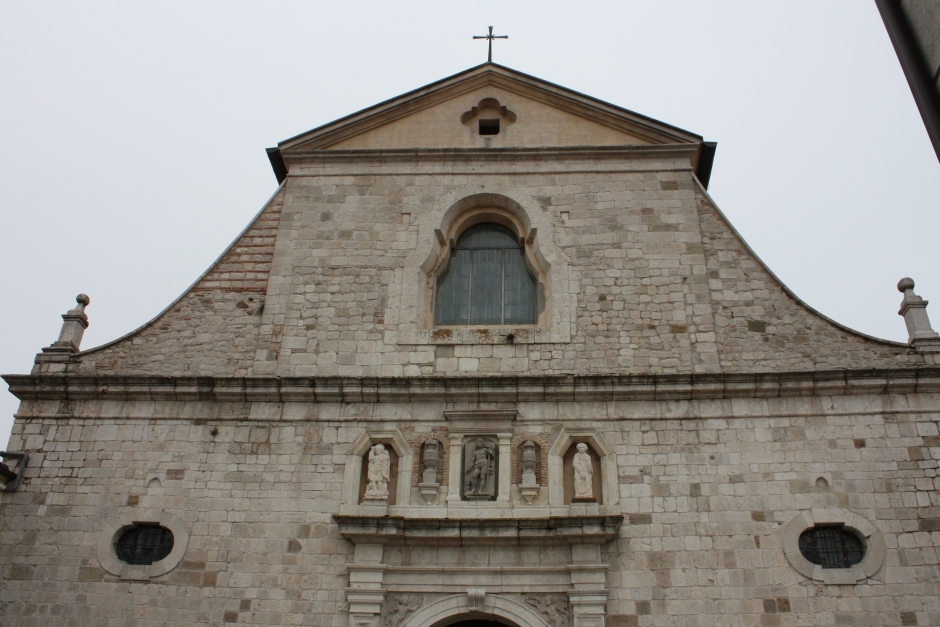

Nestled in the picturesque town of Sant'Angelo dei Lombardi, Italy, the Cathedral of Sant'Angelo dei Lombardi stands as a testament to the region's rich historical tapestry and artistic heritage. With its roots tracing back to the 11th century, the cathedral has undergone numerous transformations, reflecting the area's turbulent history marked by invasions, earthquakes, and restoration efforts. Originally founded by Benedictine monks, this sacred space has evolved into a significant religious and cultural landmark.

The architecture of the cathedral showcases rounded and soft late Romanesque lines, a style that hints at its restoration following the devastating earthquakes, particularly the one in 1980. The sixteenth-century portal stands as a remnant of a bygone era, while the facade is adorned with prominent figures including St. Michael, the Saviour, and St. Antonino, the patron saint to whom the church is dedicated.
Inside, the cathedral tells a story of both loss and survival. Although many frescoes were lost due to the earthquake, it still houses significant artworks, such as the Madonna di Montevergine, the Baptism of Jesus by Francesco Solimena, and the Savior by Domenico Vaccaro. One of the most striking features is the wooden Crucifix that was previously housed in the nearby Goleto monastery, adding a layer of historical richness to the interior. The crypt is equally fascinating, featuring a marble altar from the Goleto and a unique painting of the Madonna del Latte, an uncommon representation of the Virgin Mary nursing, symbolizing maternal care and nourishment.
The local culture surrounding the Cathedral of Sant'Angelo dei Lombardi is vibrant and steeped in tradition. The town celebrates various festivals, the most significant of which is the Feast of St. Antonino in early September. This festive occasion draws locals and visitors alike, featuring processions, music, and traditional foods that honor the town’s patron saint.
Speaking of food, the cuisine of Sant'Angelo dei Lombardi is a delightful reflection of its agricultural heritage. Dishes like candele, a type of pasta often served with rich sauces, and scialatielli, a handmade pasta, are local staples. The region is also known for its robust wines, particularly Aglianico, which pairs beautifully with the hearty local fare. Don't miss sampling mozzarella di bufala, a creamy cheese that is celebrated throughout the region.
For those interested in lesser-known curiosities, the cathedral and its surroundings offer a wealth of surprises. The crypt's Madonna del Latte, for instance, is one of the few representations of Mary nursing her child, a theme that is rare in Christian art. Additionally, the cathedral's bell tower, which survived multiple earthquakes, is a striking feature that offers panoramic views of the surrounding landscape, making it a worthwhile climb.
If you’re planning a visit, the best time to explore the Cathedral of Sant'Angelo dei Lombardi is during the spring or early fall when the weather is mild and the local festivals are in full swing. Be sure to take your time to admire the intricate details of the architecture and seek out the hidden corners of the cathedral that tell stories of its past.
As you wander through the cathedral and its serene surroundings, consider using the Secret World app to craft a personalized itinerary that enhances your experience in Sant'Angelo dei Lombardi.