
🎄 Win a month in Italy for two — €10,000 · The Secret Italy Prize GO →
Castle - Palace of Portici — .
← Back
Palaces, Villas and Castles 📍 ., Italy 108 views

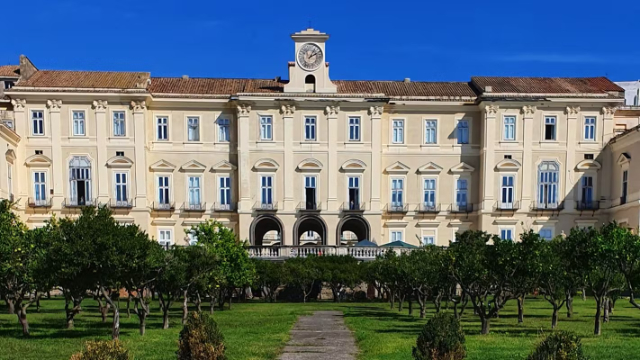
Castle - Palace of Portici

In 1759, upon the death of his brother Ferdinand VI of Spain, Charles VII ascended the throne of this state as Charles III and abdicated from the thrones of Naples and Sicily in favor of his third-born son, still a child, Ferdinand IV , who in 1775 had "the Castle" and "the Wall...

Photo · Felicia M.

Castle - Palace of Portici — ., Italy.

Location
.
Type
Palaces, Villas and Castles
Opening hours
Weather now
↗ Directions

About Castle - Palace of Portici

Castle - Palace of Portici - . | Secret World Trip Planner

In 1759, upon the death of his brother Ferdinand VI of Spain, Charles VII ascended the throne of this state as Charles III and abdicated from the thrones of Naples and Sicily in favor of his third-born son, still a child, Ferdinand IV , who in 1775 had "the Castle" and "the Wall for playing ball" built in the Upper Park.The Castle whose construction was supervised by engineer Michele Aprea reproduced in miniature the fortress of Capua. This was built to hide a water reservoir and was used for war exercises of the royal troops. Inside it was the "dumb board" , so called because it went up and down from a trapdoor located above the dining room so as not to inconvenience the waiters, and a chapel named after the Virgin of the Rosary.The Wall, supported by huge pillars, has in the center a door, now walled up, used to reach the playing field more easily; in front of it are arranged three steps on which spectators sat; to the left is the "rest pavilion" that served as a dressing room.Many kings and emperors came to visit Portici, some of whom stayed in the palace for a long time, not to mention the very high number of famous people.Portici until 1860 had politically an important role in the Two Sicilies and was considered the second capital of the kingdom; in fact numerous political acts, even very important ones, were issued from its Royal Palace.On June 14, 1761, Raffaello Morghen, the son of a gardener who worked in the service of the king, was born in the palace. Morghen became famous in the art of intaglio; so much so that he was considered the best in Italy at that time.In the spring of 1769 the Emperor Joseph II of Austria was hosted at length in the Royal Palace. In 1770 Mozart, just 14 years old, stayed there, and one morning in the Royal Chapel, in the presence of the entire court, he offered his divine notes to the Virgin.


✦ Secret World · suggested day

A perfect day in .

Start with Castle - Palace of Portici, then continue with nearby places selected by Secret World.

  1. 01
    Morning
    Castle - Palace of Portici
    📍 .
    Start here
  2. 02
    Afternoon
    📍 0.4 km away
  3. 03
    Evening
    📍 0.7 km away

Collect this place

Turn places you discover into stamps in your Secret Passport.

Open Secret Passport →

Keep exploring · .

Frequently Asked Questions

The Castle was built in 1775 by King Ferdinand IV under engineer Michele Aprea's supervision, designed to miniature the fortress of Capua. Its primary purpose was to hide a water reservoir while serving as a venue for royal troop war exercises, making it both functional and architectural.
Yes, the young Mozart stayed at the palace in 1770 when he was just 14 years old, and he famously performed in the Royal Chapel in the presence of the entire court. Additionally, Emperor Joseph II of Austria was hosted there at length in spring 1769.
The Castle contained a 'dumb board,' an innovative service device that moved up and down through a trapdoor above the dining room to serve food without requiring waiters to enter, as well as a chapel dedicated to the Virgin of the Rosary. These features showcase the sophisticated design meant to serve the royal family.
The Wall, built in 1775 with supporting pillars and a central door, was designed as a recreation facility for ball games with seating steps for spectators and a 'rest pavilion' that functioned as a dressing room. This structure demonstrates the leisure activities available to the royal court.
Until 1860, Portici was considered the second capital of the Kingdom of the Two Sicilies and played a major political role, with numerous important state acts being issued from its Royal Palace. The palace was a significant seat of power where kings conducted important governmental affairs.

Experiences nearby · .

Powered by Viator

See more on Viator.com