← Back

Basilica di San Clemente

Via Labicana, 95, 00184 Roma RM, Italy ★★★★☆ 116 views
Carla Rossi
Roma
🏆 AI Trip Planner 2026

Get the free app

Discover the best of Roma with Secret World — the AI trip planner with 1M+ destinations. Get personalized itineraries, hidden gems and local tips. Free on iOS & Android.

🧠 AI Itineraries 🎒 Trip Toolkit 🎮 KnowWhere Game 🎧 Audio Guides 📹 Videos
Scan to download iOS / Android
Scan for AppGallery Huawei users

About Basilica di San Clemente

Basilica di San Clemente - Roma | Secret World Trip Planner

This not-as-touristy Basilica San Clemente al Laterano tells the history of Rome based on the different layers of the church. The current church ‘San Clemente’, dedicated to pope Clement I, was built on top of a 4th-century church during the 12th century. Below that, many more Roman foundations have been found. The current basilica is one of many in Rome and not the main reason for your visit, but remnants of Roman houses (500-27 BCE) have been found 20 metres below this church. It is thought that the houses were destroyed by a large fire during the reign of emperor Nero and later used as foundations.
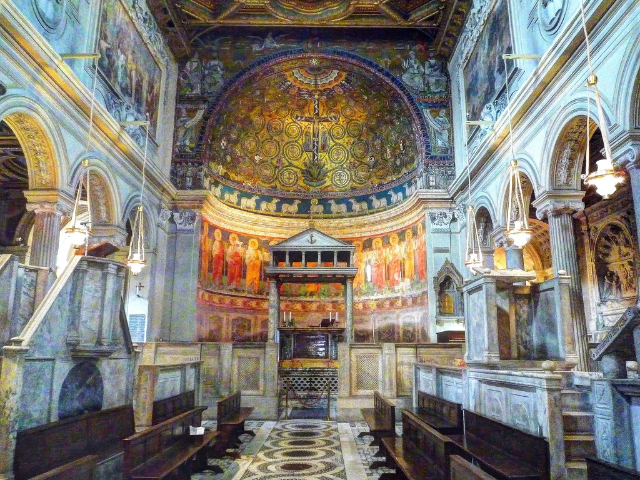
Basilica di San Clemente - Roma | Secret World Trip Planner

On top of these foundations, another large house was found that had been built in the 1st century. This house served as a secret church for pope Clement at that time, as there was no freedom of religion yet.

During the 4th century, when freedom of religion was granted, a basilica was built on top of the secret church. The church was dedicated to the tomb of Saint Clement, the third successor of Peter as the pope. What makes this basilica unique is how richly it was decorated by painters and sculptors.

In 1084, much of the church was destroyed in Viking raids, after which Pope Paschal had a new church built on top of the old one in the 12th century. In order to create a strong foundation, parts of the old church were bricked up and filled in.

Since 1862, many digs were carried out to uncover ancient structures, mosaics, and frescos of the lower church. When you visit the church, you journey through the different layers of its history.


🗺 L'app dei tesori italiani

Plan your visit to Roma

Suggested itinerary near Basilica di San Clemente

MAJ+
500.000+ travelers worldwide
  1. 🌅
    Morning
    Basilica di San Clemente
    📍 Roma
  2. ☀️
    Afternoon
    Basilica of Santo Stefano Rotondo al Celio
    📍 0.4 km · Roma
  3. 🌆
    Evening
    Colosseum : the largest amphitheatre in Rome - Secret World
    📍 0.5 km · Roma

Buy Unique Travel Experiences

Powered by Viator

See more on Viator.com

Explore nearby · Roma

Frequently Asked Questions

Basilica di San Clemente is unique because it literally contains multiple layers of history stacked on top of each other—a 12th-century church built above a 4th-century basilica, which sits above a 1st-century secret church used by Pope Clement, all built on Roman house foundations from 500-27 BCE. When you visit, you journey through these different archaeological layers, making it a living history of Rome rather than just a single religious structure.
The remnants of ancient Roman houses have been found approximately 20 metres below the current basilica. These foundations are thought to have been destroyed during a massive fire under Emperor Nero's reign and were later reused as the base for subsequent structures built above them.
A large Roman house was converted into a secret church in the 1st century because there was no freedom of religion at that time—Pope Clement and other Christians had to worship in hiding. Once freedom of religion was granted in the 4th century, a proper basilica was built directly on top of this secret church and dedicated to Saint Clement's tomb.
In 1084, much of the 4th-century church was destroyed during Viking raids. Pope Paschal then commissioned the construction of a new basilica in the 12th century, strategically building it on top of the damaged older church and using parts of it as bricked-up foundations to create a strong base.
Visitors can see ancient mosaics, frescoes, and remnants of the 4th-century basilica, the 1st-century secret church, and Roman house foundations dating back over 2,000 years. Since 1862, extensive archaeological digs have uncovered and preserved these lower structures, allowing modern visitors to walk through the actual layers of Rome's religious and architectural history.