




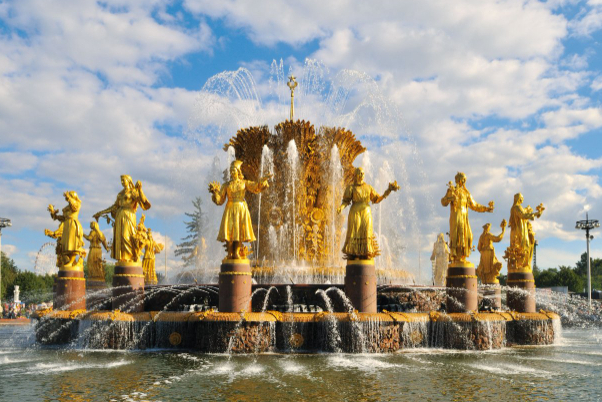
In the heart of Moscow, nestled within the expansive grounds of the VDNKh Exhibition Center, stands a shimmering testament to unity and artistry—the Fountain Friendship of Nations. This magnificent fountain is not merely a visual spectacle but a symbolic narrative of a bygone era, encapsulating the spirit of the Soviet Union through its grand design and intricate details.

The origins of the Fountain of Friendship of Nations are steeped in the political and cultural aspirations of the post-war Soviet Union. It was unveiled in 1954 during the grand reconstruction of the VDNKh, initially known as the All-Union Agricultural Exhibition. This site was envisioned as a showcase of the USSR's achievements and the fountain was intended to be its crowning jewel. Designed by architect K. Topuridze and sculptors Z. Bazhenova and A. Teneta, the fountain was meant to embody the unity and equality of the Soviet republics. The 16 gold-plated female figures that encircle the fountain represent each of the republics at the time, including the Karel-Finnish SSR, which existed from 1940 to 1956 before its territory was divided between the Karelian Autonomous SSR and the Leningrad Region.
The architectural style of the fountain is a blend of Socialist Realism and the classical traditions of fountain design, characterized by its opulence and grandeur. Each statue is crafted with meticulous detail, dressed in the traditional garments of their respective republics, offering a glimpse into the diverse cultures that formed the Soviet Union. Standing majestically in the center of a large basin, the figures are arranged in a circle, symbolizing unity and equality. The fountain’s waters dance in choreographed harmony, creating a mesmerizing spectacle of movement and light, further enhanced by the gold plating that glistens under the Moscow sun.
Beyond its architectural allure, the Fountain of Friendship of Nations holds a significant place in the local culture. It has been a backdrop to countless events and festivals, becoming intertwined with the collective memory of Moscow's residents. The VDNKh itself hosts numerous cultural festivals and exhibitions that celebrate Russian and post-Soviet culture, where the fountain often serves as a focal point for gatherings and celebrations.
While exploring the area, visitors can indulge in the rich gastronomy of Moscow, which offers a delightful blend of traditional Russian cuisine and flavors from the former Soviet republics. Nearby cafes and eateries serve up hearty dishes like borscht and pelmeni, alongside Georgian khachapuri and Uzbek plov, providing a culinary journey through the diverse tastes of the region.
For those keen on discovering the lesser-known aspects of the fountain, it’s fascinating to note that each statue is uniquely different, reflecting the distinctiveness of the republic it represents. Many visitors overlook the subtle differences in attire and posture that tell their own stories. The fountain is also a popular spot for wedding photography, with couples often seen posing against its golden backdrop, symbolizing prosperity and unity in their new life together.
Practical information for visitors is essential to make the most of a trip to this iconic site. The best time to visit the fountain is during the late spring and early summer months, when the surrounding gardens are in full bloom and the weather is pleasant. It’s advisable to arrive early in the day to avoid the crowds and to fully appreciate the beauty and serenity of the location. Pay attention to the light play on the gold details, as the morning and afternoon sunlight can provide spectacular photo opportunities.
In conclusion, the Fountain Friendship of Nations is more than a mere architectural marvel; it is a vibrant tapestry of history, art, and culture, offering a glimpse into the rich heritage of the Soviet era and the enduring spirit of the people it represents. Whether one is drawn by its artistic allure, historical significance, or cultural richness, this fountain remains a must-visit landmark for anyone exploring the depths of Moscow's captivating past.