




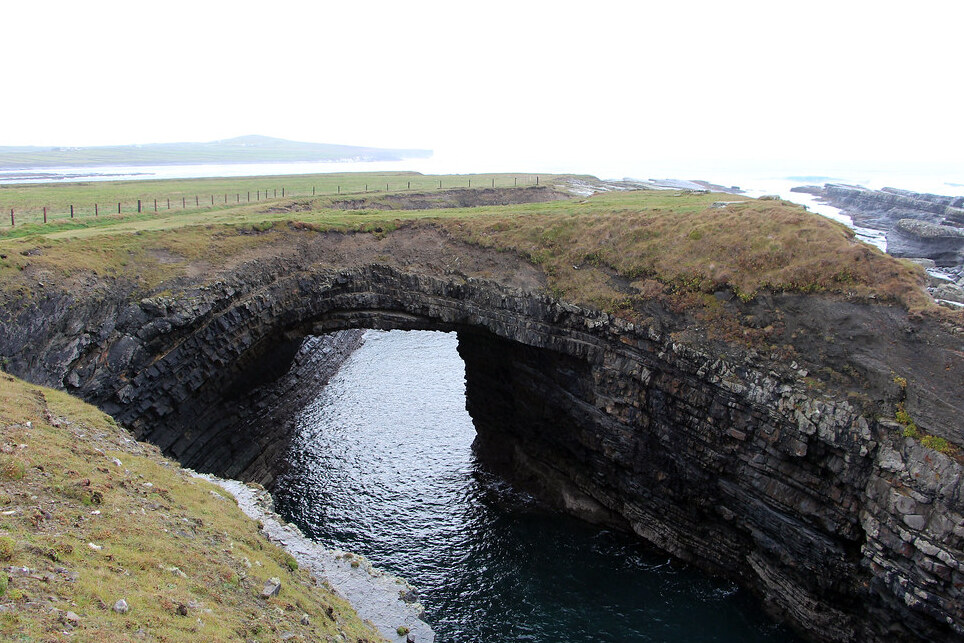
Perched on the rugged coastline of County Clare, the Bridges of Ross stand as a testament to the relentless power of nature and the passage of time. Once a trio of magnificent rock arches, only one remains today, a solitary sentinel that continues to captivate those who venture to this remote corner of Ireland. The journey to the Bridges is as much about the scenic splendor and the captivating lore as it is about the destination itself.
The history of the Bridges of Ross is deeply intertwined with the geological narrative of Ireland's west coast. These natural formations were carved by the relentless Atlantic waves over millennia. The name "Bridges of Ross" is a nod to the unique architecture of these rock arches, once resembling man-made bridges spanning the deep inlets of the sea. The remaining arch stands as a silent witness to the time when all three arches were intact, offering a glimpse into the dramatic natural history of this coastline.
In terms of art and architecture, the Bridges of Ross might not boast human-made structures, but they are architectural wonders crafted by nature. The smooth curves and rugged textures of the remaining arch are akin to a natural sculpture, constantly reshaped by the elements. This natural artistry has inspired countless artists and photographers, drawn to the site's dramatic interplay of light and shadow, and the stark contrast between the vibrant blue of the sea and the weathered stone.
Culturally, the Bridges of Ross are steeped in local folklore. The area is part of the larger Loop Head Peninsula, a region rich in Irish tradition and tales. Local legends speak of ancient mariners and mythical creatures that once graced these shores. The nearby village of Kilbaha hosts the annual Loop Head Summer Hedge School, a festival that celebrates traditional Irish music, dance, and storytelling, offering visitors a chance to immerse themselves in the vibrant cultural tapestry of the region.
No visit to the Bridges of Ross would be complete without indulging in the local gastronomy. The proximity to the Atlantic ensures a bounty of fresh seafood. Visitors can savor dishes like seafood chowder, bursting with the flavors of clams, mussels, and fresh fish, or the local specialty, Doolin crab claws. Pair these with a pint of locally brewed ale or a dram of Irish whiskey for a truly authentic taste of County Clare.
For those keen on discovering lesser-known curiosities, the area around the Bridges offers hidden delights. The nearby Carrigaholt Castle, a short drive away, provides a glimpse into the medieval history of the region. Birdwatchers will find the cliffs around the Bridges alive with the cries of seabirds, including puffins and gannets. And for those with a keen interest in marine life, the waters off the coast are home to one of Ireland's resident populations of bottlenose dolphins.
When planning a visit, timing is crucial. The best months to explore the Bridges of Ross are from late spring to early autumn, when the weather is more favorable and the days are longer. However, even in winter, the site offers a different kind of beauty, with dramatic skies and crashing waves. It's advisable to wear sturdy footwear and to stay on marked paths, as the cliffs can be slippery and dangerous.
In conclusion, the Bridges of Ross are not merely a stop on a tourist itinerary but a gateway into the natural, cultural, and historical richness of Ireland's west coast. They invite visitors to pause, reflect, and connect with the enduring spirit of this remarkable land. Whether you're tracing the path of ancient legend or simply basking in the breathtaking beauty of the coastline, the Bridges of Ross promise an experience that lingers long after you've left their windswept arches behind.