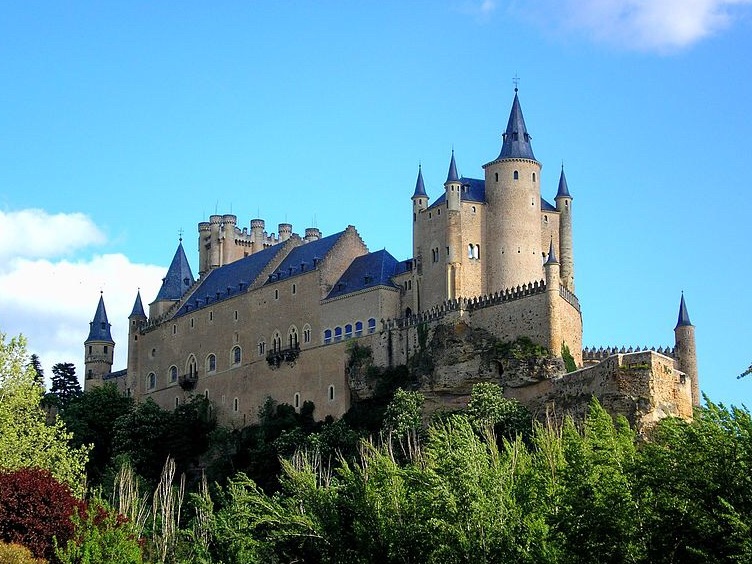

Perched dramatically on a rocky outcrop, the Alcázar of Segovia is a captivating testament to Spain's medieval history. This castle, resembling the bow of a ship, has a rich tapestry of stories woven into its stone walls, making it a must-visit for anyone exploring Segovia, a UNESCO World Heritage Site.
### History and Origins The Alcázar of Segovia has a storied past that dates back to the Roman era, originally serving as a fortress. The earliest documentation of the castle appears in the 12th century when it was transformed into a royal palace. Throughout the centuries, it was a favored residence for several Castilian monarchs, including Alfonso VI and Isabel I, who were pivotal in shaping Spain's history. The castle witnessed significant events, such as the Cortes of 1480, which marked a turning point in the consolidation of the Spanish monarchy.
In the 16th century, the Alcázar underwent extensive renovations under the direction of Juan Guas, incorporating elements of Gothic architecture that would define its unique character. Despite suffering damage during the Spanish Civil War in the 20th century, restoration efforts have preserved its grandeur, enabling visitors to step back into a time of knights and royalty.
### Art and Architecture The architectural style of the Alcázar is a compelling blend of Romanesque, Gothic, and Mudejar influences. Its iconic silhouette, reminiscent of a ship’s bow, features a series of impressive towers, the most famous being the Torre del Homenaje, which rises majestically at 88 meters. Visitors ascending the tower are rewarded with panoramic views of Segovia and the surrounding countryside.
Inside, the castle is adorned with exquisite tapestries, intricate wooden ceilings, and the Throne Room, whose opulent decor reflects the power and wealth of its former inhabitants. One notable artwork is the Mudejar coffered ceiling, a masterpiece that showcases the skill of medieval artisans and the cultural exchanges prevalent in the region.
### Local Culture and Traditions The cultural landscape of Segovia is rich with traditions that mirror the city’s historical significance. The Fiesta de San Frutos, celebrated in early October, honors the patron saint of Segovia with processions, music, and local delicacies. This lively festival draws both locals and tourists, allowing them to immerse themselves in the vibrant spirit of the city.
Moreover, Segovia is known for its historic Roman aqueduct, another UNESCO World Heritage Site, which is an engineering marvel. The city’s traditions are steeped in legends, such as the story of La Reina de Saba (the Queen of Sheba), who is said to have visited the Alcázar during her travels.
### Gastronomy To truly savor Segovia, one must indulge in its culinary delights. The region is particularly famous for cochinillo asado, a succulent roast suckling pig that is a staple at festive gatherings and special occasions. This dish, with its crispy skin and tender meat, is best enjoyed at traditional restaurants like Restaurante José María, where generations have perfected the recipe.
Accompany your meal with a glass of Ribera del Duero wine, a rich and full-bodied red that pairs beautifully with the robust flavors of local cuisine. For dessert, don’t miss out on Ponche Segoviano, a delightful almond cake that encapsulates the sweet essence of Segovia.
### Lesser-Known Curiosities While many tourists flock to the Alcázar, some fascinating details often go unnoticed. For instance, did you know that the castle served as a model for Disney's Cinderella Castle? Its enchanting silhouette inspired the iconic design of the castle in the animated classic.
Additionally, within the castle walls, there is a hidden chapel where you might stumble upon a small collection of royal armory, showcasing an array of weaponry that tells tales of battles fought to protect the realm. Also, keep an eye out for the secret passageways that once allowed monarchs to escape during times of peril – a reminder of the castle's strategic importance throughout history.
### Practical Visitor Information The best time to visit the Alcázar of Segovia is during the spring (April to June) and fall (September to October) when the weather is mild and the crowds are thinner. To make the most of your experience, consider joining a guided tour that delves into the castle's history and architecture.
Be sure to explore not only the Torre del Homenaje but also the surrounding gardens, which offer a tranquil escape with stunning views of the landscape. Don't forget to take your time in the Royal Palace, where the elegance of royal life is beautifully preserved.
In conclusion, the Alcázar of Segovia is more than just a castle; it's a treasure trove of history, culture, and gastronomy waiting to be explored. For a personalized itinerary that includes this magnificent site and more, consider using the Secret World app to plan your visit to Segovia.