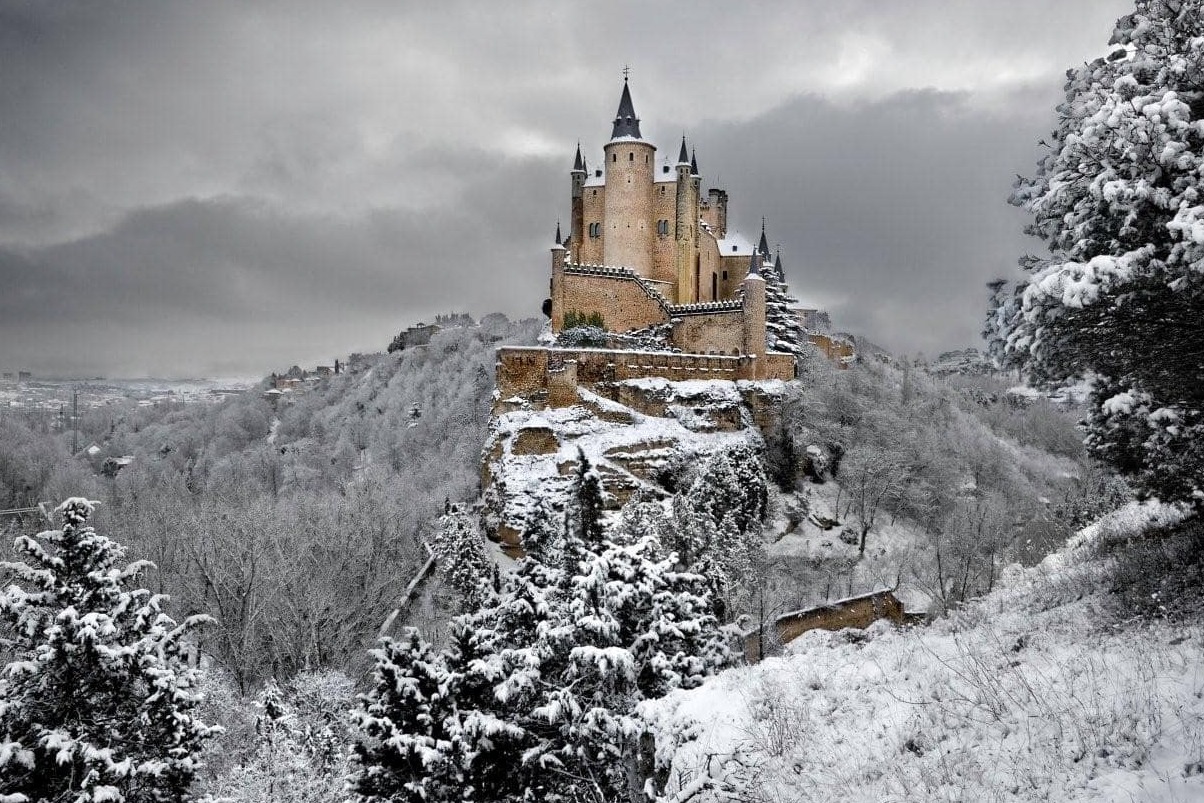

The Alcázar of Segovia, perched majestically atop a rocky crag at the confluence of the rivers Eresma and Clamores, is a testament to Spain's rich tapestry of history and culture. This iconic fortress, with its unique ship-like silhouette, not only commands the landscape of Segovia but also the imagination of those who visit.

History and Origins
The origins of the Alcázar date back to Roman times, as it was built on the remains of a Roman fort. However, its historical significance truly began to unfold during the reign of the Kingdom of Castile. The earliest documented reference to the Alcázar appears in 1122, but it was during the reign of King Alfonso VIII (1155–1214) that it became a favorite residence of the Castilian monarchs, marking its role as a key seat of power. Throughout the centuries, it has played host to numerous historical events, from the marriage of Philip II to Anna of Austria in 1570 to being the inspiration for Walt Disney's Cinderella Castle. The Alcázar also served as a prison and later, a military academy, showcasing its versatile role in Spanish history.

Art and Architecture
The Alcázar's stunning architecture is a blend of Romanesque, Gothic, and Mudéjar styles, each layer telling a story of its time. The Herrerian-style tower, added during the reign of Philip II, is among its most striking features. Inside, the Hall of the Kings is adorned with a magnificent frieze depicting 52 sculptures of rulers from Asturias, León, and Castile, offering a visual history lesson in royal lineage. The intricate Mudéjar ceilings and the richly decorated throne room are masterpieces of medieval artistry, echoing the cultural confluence that characterizes Spain.
Local Culture and Traditions
Segovia is a city steeped in tradition, and the Alcázar plays a central role in local customs. The city’s annual feast of San Juan and San Pedro in late June is a vibrant celebration of music, dance, and fireworks that illuminates the fortress in a kaleidoscope of colors. The Semana Santa (Holy Week) processions are deeply moving, with the Alcázar providing a dramatic backdrop to these solemn events. These traditions reflect the city's enduring spirit and its ability to harmoniously blend past and present.
Gastronomy
A visit to Segovia is not complete without indulging in its culinary delights. The region is renowned for its cochinillo asado, a succulent roast suckling pig that has become synonymous with Segovian gastronomy. This dish, traditionally prepared in wood-fired ovens, is a must-try for any visitor. Pair it with a glass of local Ribera del Duero wine, and one experiences the true essence of Castilian flavors. The city also offers ponche segoviano, a delightful marzipan and sponge cake dessert that perfectly rounds off a meal beneath the shadow of the Alcázar.
Lesser-known Curiosities
While many are captivated by the Alcázar's grandeur, few are aware of its role in shaping navigation history. Legend has it that the fortress's unique shape inspired the clipper ships that dominated the 19th-century seas. Another fascinating detail is the secret tunnel said to connect the Alcázar with the city’s other architectural marvel, the Segovia Aqueduct. Though its existence remains unverified, it adds an intriguing layer of mystery to this historic site.
Practical Visitor Information
The best time to visit the Alcázar is during spring (April to June) or fall (September to October), when the weather is mild, and the crowds are thinner. It’s advisable to purchase tickets in advance, especially during peak tourist seasons. As you explore, take note of the panoramic views from the Tower of John II, where the sweeping vistas of Segovia and its surrounding countryside are unparalleled. For a deeper understanding of its history, consider a guided tour, which can provide insights into the fortress’s storied past that might otherwise be missed.
The Alcázar of Segovia is more than a monument; it is a living testament to the enduring legacy of Spain’s royal heritage. Whether you're drawn by its historical significance, architectural beauty, or cultural richness, a visit to this fortress is a journey through time, offering a glimpse into the heart of Castilian history.