
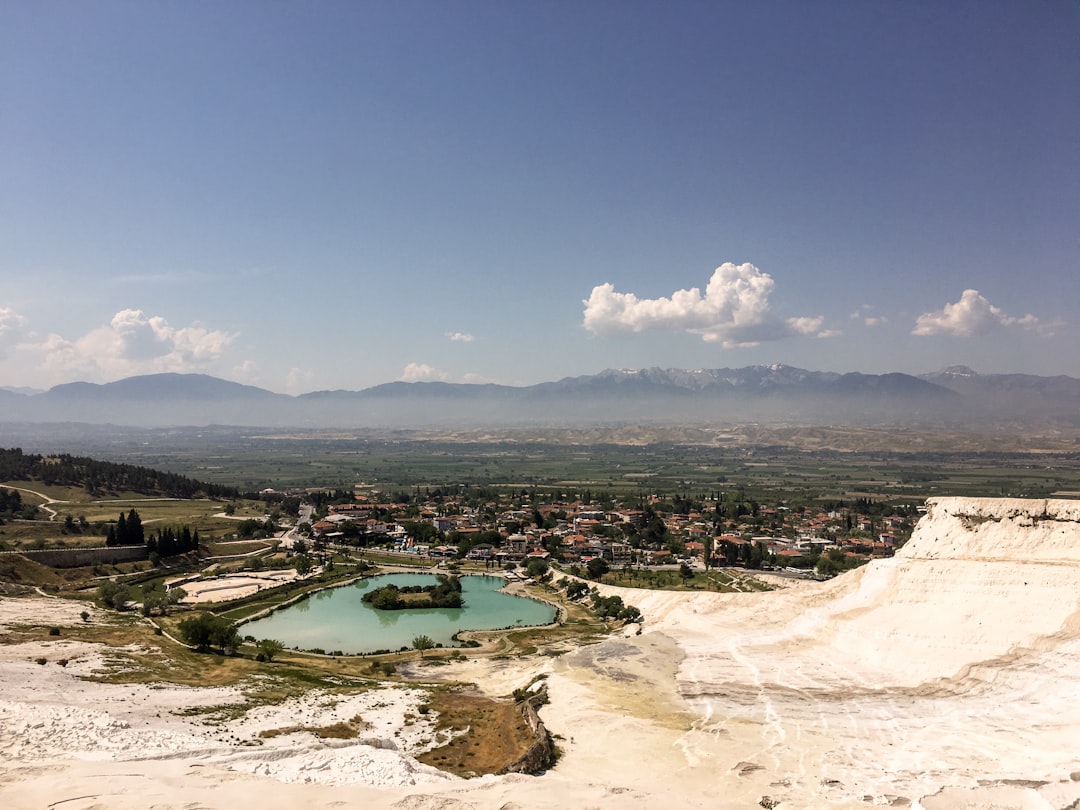
The water flows silently over the white rock, then plunges with a thin whisper into the basin below, where steam rises into the fresh morning air. This is the first encounter with Pamukkale, the natural site in the province of Denizli, in the Aegean hinterland of Turkey, where thermal springs rich in calcium carbonate have built over the millennia a cascade of white terraces that descend along a cliff about 160 meters above the level of the surrounding plain.
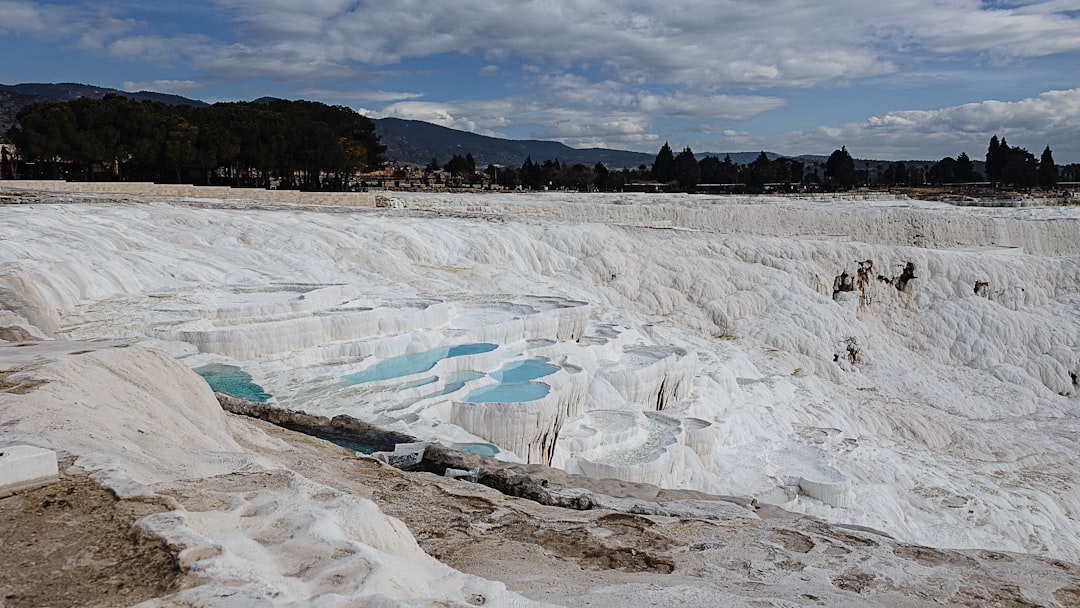
The Turkish name Pamukkale literally means cotton castle, and the definition perfectly captures the visual effect: from a distance, the slope appears covered in snow or solidified foam. Up close, however, one discovers a smooth, curved surface, shaped by the mineral water that flows at a constant temperature around 35-36 degrees Celsius. The natural pools — called travertines — hold turquoise and transparent water, with reflections that change color depending on the angle of the sun.
The path from the South Gate and what can be seen
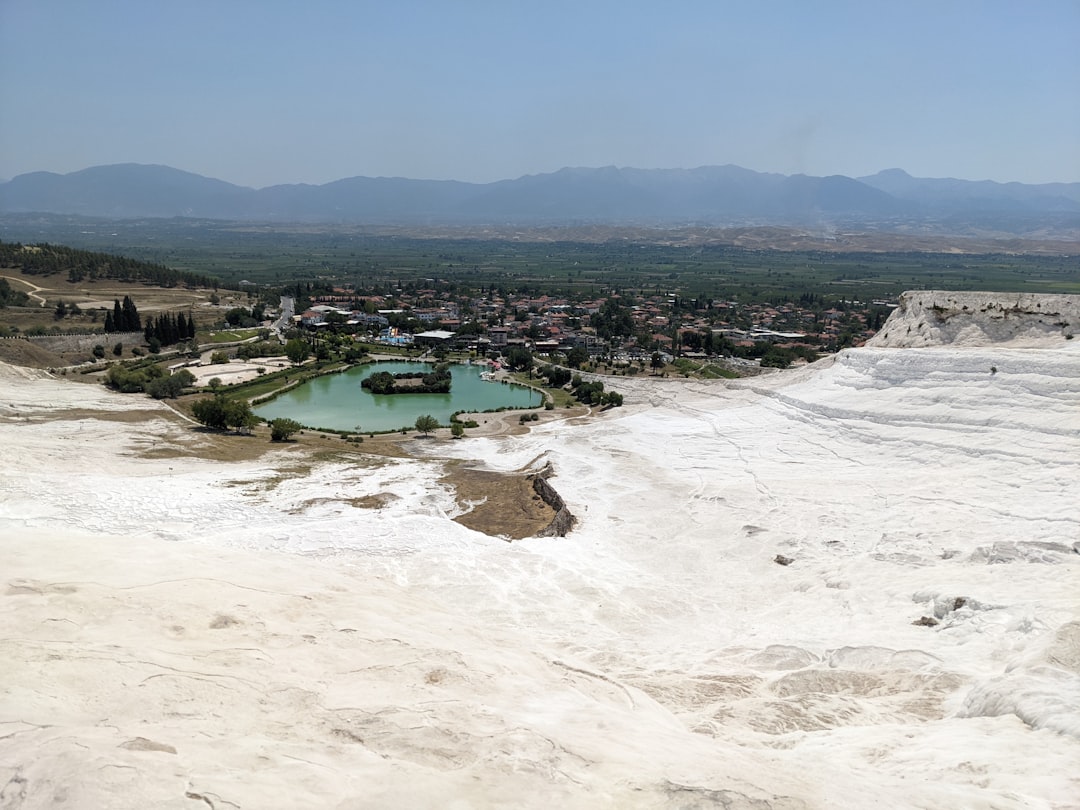
The South Gate is one of the main entrances to the site and leads directly to the base of the terraces, offering a perspective from the bottom up that is particularly effective for understanding the scale of the phenomenon. From here, one can hear the constant sound of water flowing from one basin to another, a continuous and uniform sound that accompanies the entire visit. The thermal steam, especially in the cooler hours, creates a light mist that blurs the outlines of the upper terraces, making the view almost unreal.
Walking on the terraces is allowed only barefoot, to protect the limestone surface from erosion. This practical detail has an unexpected consequence: the direct contact with the white rock and the warm water flowing beneath the feet transforms the visit into a complete sensory experience. The surface is not uniform — it alternates between smooth sections and rough areas where the mineral deposit is more recent and granular.
Hierapolis: the ancient city on the terraces
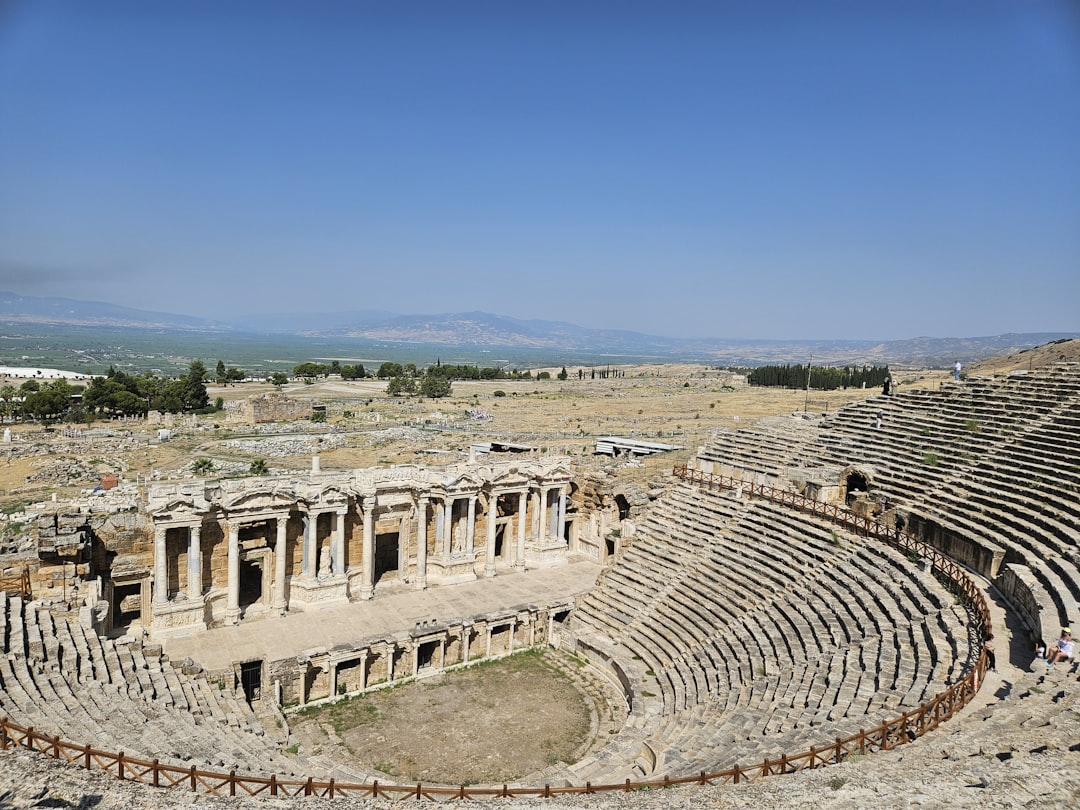
At the top of the terraces are the remains of Hierapolis, a Hellenistic city founded around the 2nd century BC by the kings of Pergamon. The city later became an important Roman and then Byzantine center, thanks to the healing properties of the thermal waters. The visible ruins today include a well-preserved Roman theater, an extensive necropolis, and the remains of a sanctuary dedicated to Apollo.
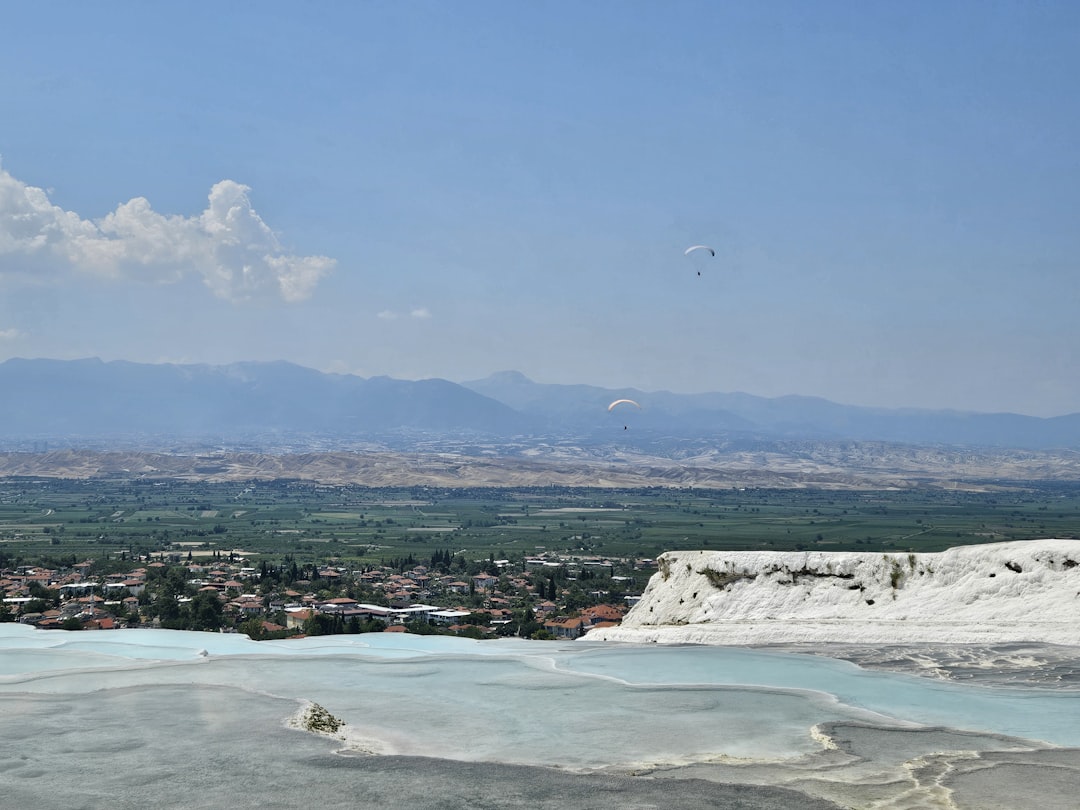
Within the site, there is also the Hierapolis Archaeological Museum, housed in the Roman thermal buildings, which preserves sculptures and artifacts from local excavations. The theater, built in the Roman period and expanded in the 2nd-3rd century AD, can hold several thousand spectators and overlooks the underlying plain with a wide and clear view. The combination of archaeology and natural landscape is one of the distinctive elements of this site, which has been listed as a UNESCO World Heritage Site since 1988.
The light and colors during the day
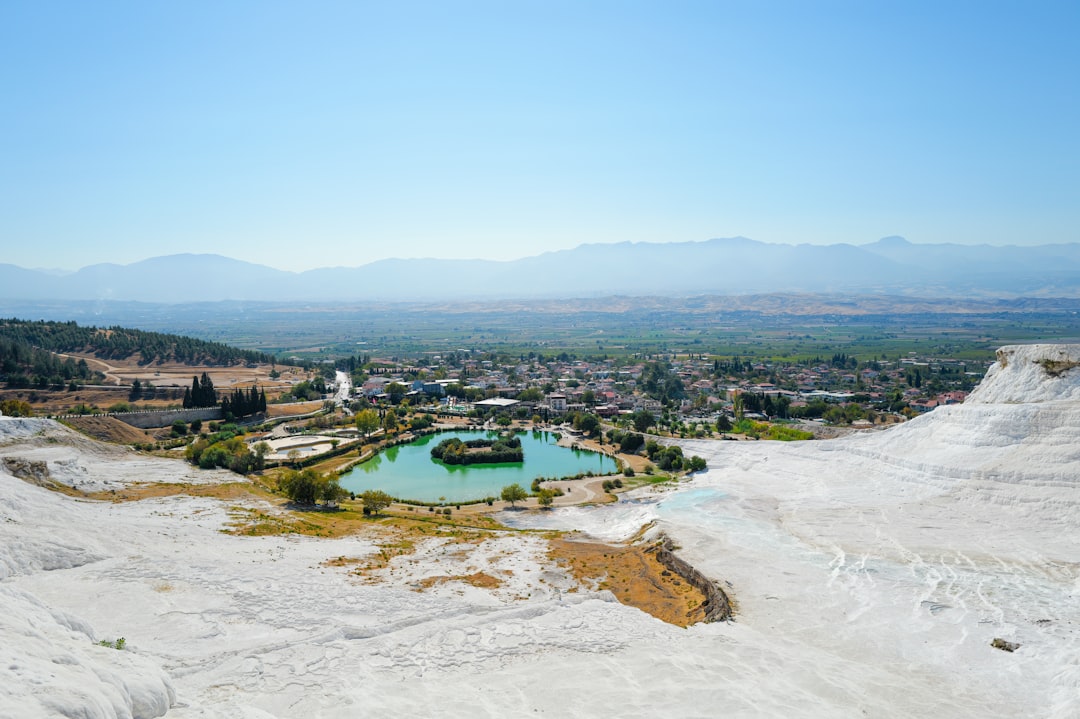
The color of the pools visibly changes throughout the day. In the early morning, with the low sun, the water reflects very intense blue and green shades, while the white of the rock appears almost luminous by contrast. In the afternoon, the slanting light enhances the textures of the limestone surface, making visible the stratifications and microformations that calcium carbonate has built over time. At sunset, when the sky turns orange, it casts long shadows on the terraces and transforms the entire slope into a chromatic spectacle that is hard to describe.
The steam rising from the warmer pools contributes to this changing visual quality: on cool mornings or cloudy days, the fog thickens around the upper terraces, visually isolating them from the plain and creating the impression of a structure suspended in mid-air. It is an effect that does not depend on any artificial staging, but simply on the physics of hot water in contact with cooler air.
Practical tips for the visit
The best time to visit Pamukkale is early in the morning, right when the site opens, when the terraces are less crowded and the light is more favorable for photography. In the summer months (July and August), the site can become very busy during the central hours of the day. The entrance ticket includes both the terraces and the site of Hierapolis and can be purchased directly at the entrances; the indicative cost is around 500-600 Turkish lira, but it is subject to frequent variations related to local inflation, so it is advisable to check the updated price before departing.
Pamukkale is easily reached by bus from Denizli, the nearest city, with dolmuş (shared minibuses) that regularly depart from the bus station. The center of Pamukkale is about 20 kilometers from Denizli. It is essential to bring comfortable shoes that can be easily removed, as well as a bottle of water: the walk on the terraces takes at least two hours to be enjoyed at a leisurely pace, and adding the visit to Hierapolis easily brings it to a whole half day.