← Back

Antica Aeclanum

SS90, 161, 83036 Passo di Mirabella-pianopantano AV, Italia ★★★★☆ 195 views
Claudia Campanile
Passo di Mirabella-pianopantano
🏆 AI Trip Planner 2026

Get the free app

Discover the best of Passo di Mirabella-pianopantano with Secret World — the AI trip planner with 1M+ destinations. Get personalized itineraries, hidden gems and local tips. Free on iOS & Android.

🧠 AI Itineraries 🎒 Trip Toolkit 🎮 KnowWhere Game 🎧 Audio Guides 📹 Videos
Scan to download iOS / Android
Scan for AppGallery Huawei users

About Antica Aeclanum

Antica Aeclanum - Passo di Mirabella-pianopantano | Secret World Trip Planner

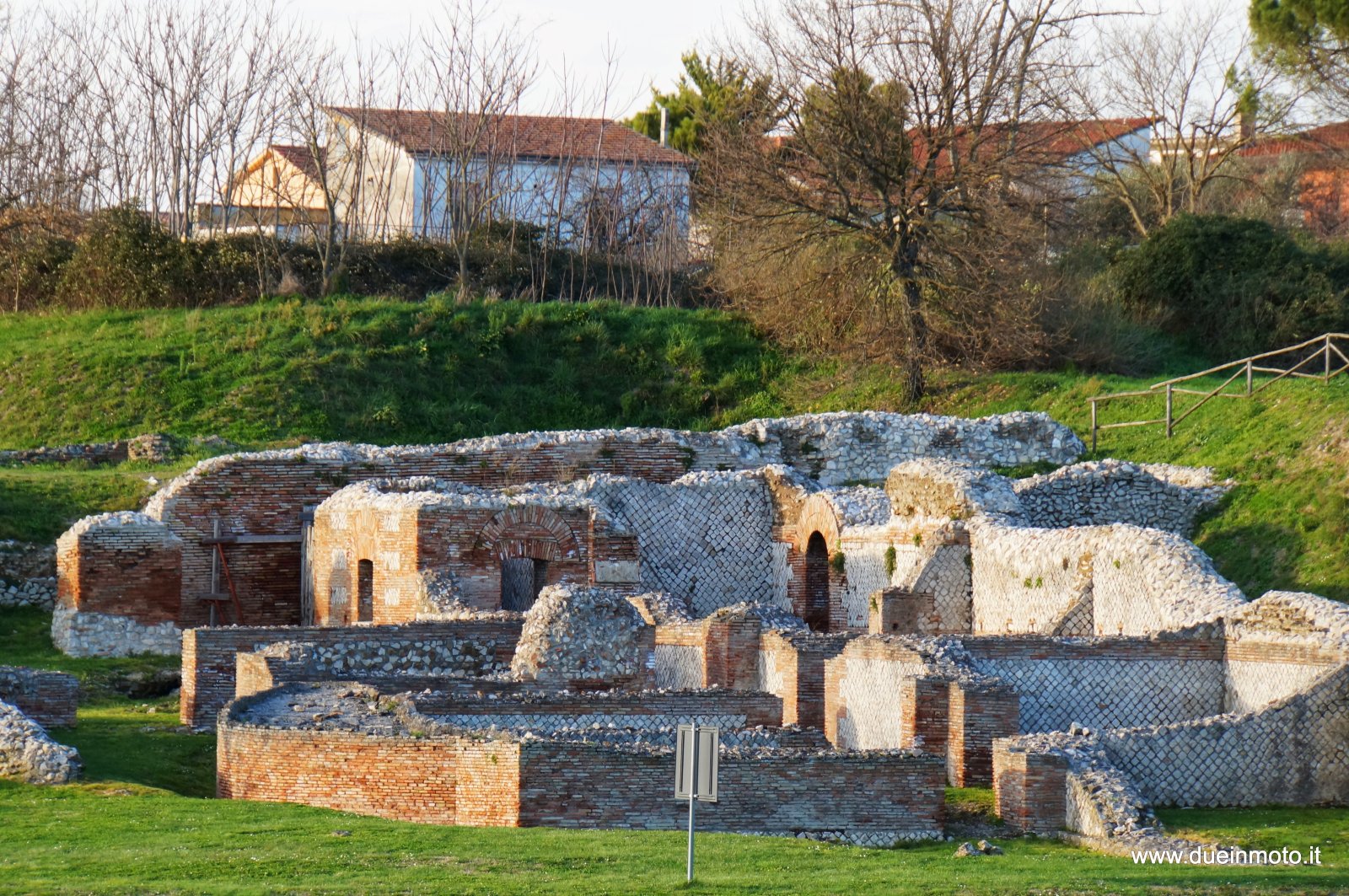
Inhabited since the Eneolithic age (necropolis in the locality Madonna delle Grazie), in the locality of Passo di Mirabella Eclano stood the ancient Aeclanum whose first plant can date back to the end of the 3rd century BC. The centre was initially equipped with a wooden wall (Appiano), later set on fire by the dictator Silla in the year 89 B.C.. Around the first century B.C., i.e. at the time of the establishment of the municipium, the fortification was rebuilt in a reticulated structure, following an irregular course that delimited a triangular-shaped plateau. It has not so far been possible to place the civil forum, the seat of the administrative and political life of the municipium, within the walls, even though the area is partly known. Of the slaughterhouse (open-air market for meat and fish), a central building with a circular plan can be seen, located north of the supposed forum and presumably surrounded by a porticoed space and tabernae (shops). Overlooking a basement street is a dwelling with a peristyle supported by brick columns, originally covered with stucco. Other rooms also belonged to the same dwelling, with the function of representation. At a later stage the dwelling seems to have changed its use, in particular in the peristyle, which has now lost its function as the centre of the house to house wells and preparations for handicraft production. The discovery during the excavation phases of a large quantity of glass slag suggested that it was a glazier's workshop. On a short hill, to the north-west, stood a thermal complex, whose structures are still well-preserved for a considerable height, in some cases up to the vaults. Inside the thermal complex, at the time of the excavations, statues and marble decorations were found, which testify to the magnificence reached by the Irpinia centre, especially during the 2nd century AD. The presence of a Christian basilica intra moenia, dating back to the end of the 4th century A.D., attests to the continuation of life in the urban settlement, as well as the existence of the diocese seat, which had as its bishop the famous Julian, adversary of St. Augustine. The city was inhabited until the 7th century AD. Since the 8th century the site is remembered with the toponym of Quintodecimo, attesting the distance of the centre from Benevento of fifteen miles.

Antica Aeclanum - Passo di Mirabella-pianopantano | Secret World Trip Planner
🗺 AI Trip Planner

Plan your visit to Passo di Mirabella-pianopantano

Suggested itinerary near Antica Aeclanum

MAJ+
500.000+ travelers worldwide
  1. 🌅
    Morning
    Antica Aeclanum
    📍 Passo di Mirabella-pianopantano
  2. ☀️
    Afternoon
    Mirabella golf club
    📍 1.8 km · Passo di Mirabella-pianopantano
  3. 🌆
    Evening
    Castle of Montemiletto
    📍 9.9 km · Passo di Mirabella-pianopantano

Buy Unique Travel Experiences

Powered by Viator

See more on Viator.com

Explore nearby · Passo di Mirabella-pianopantano

Frequently Asked Questions

Antica Aeclanum was inhabited since the Eneolithic age, with its first urban plant dating back to the end of the 3rd century BC at Passo di Mirabella in Eclano. The settlement was initially fortified with wooden walls but was set on fire by the dictator Sulla in 89 BC, after which it was rebuilt with stone fortifications when it became a municipium around the first century BC.
Key structures include a well-preserved thermal complex with vaults still standing to considerable heights, decorated with statues and marble from the 2nd century AD, a circular open-air market building for meat and fish, and a peristyle dwelling with brick columns that later served as a glazier's workshop. You can also find remains of a Christian basilica dating to the end of the 4th century AD within the city walls.
The presence of a Christian basilica intra moenia (within the city walls) dating to the end of the 4th century AD demonstrates the transition of Antica Aeclanum to Christianity during the late Roman period. This basilica, discovered during excavations, attests to the continuity and evolution of the settlement during religious transformation in the Roman Empire.
Excavations have revealed a large quantity of glass slag within a peristyle dwelling, indicating it functioned as a glazier's workshop in later periods. Additionally, the discovery of statues and marble decorations throughout the thermal complex testifies to the magnificence and sophisticated lifestyle of Aeclanum residents, particularly during the 2nd century AD.
The city was built on an irregular triangular-shaped plateau and was fortified with reticulated stone walls following an irregular course, rebuilt after Sulla destroyed the original wooden fortifications in 89 BC. While the exact location of the civil forum remains unknown, the surrounding area has been partially mapped, revealing the organized urban planning of this important Irpinia center.