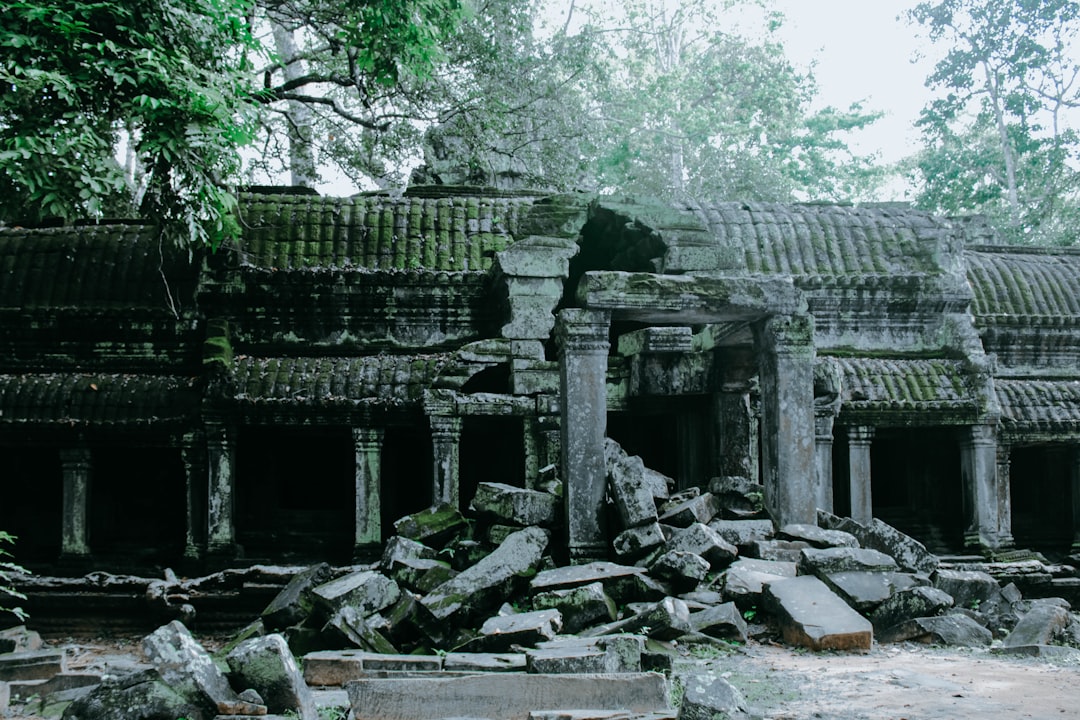

At five in the morning, when the air is still cool and humid, hundreds of visitors gather silently along the edge of the western moat of Angkor Wat. They all wait for the same thing: the moment when the five lotus-shaped towers slowly emerge from the morning mist, as the sky transitions from black to purple, to orange, to gold. The water of the basin reflects every hue with an almost unreal precision, doubling the spectacle. It is not a postcard: it is exactly like this.
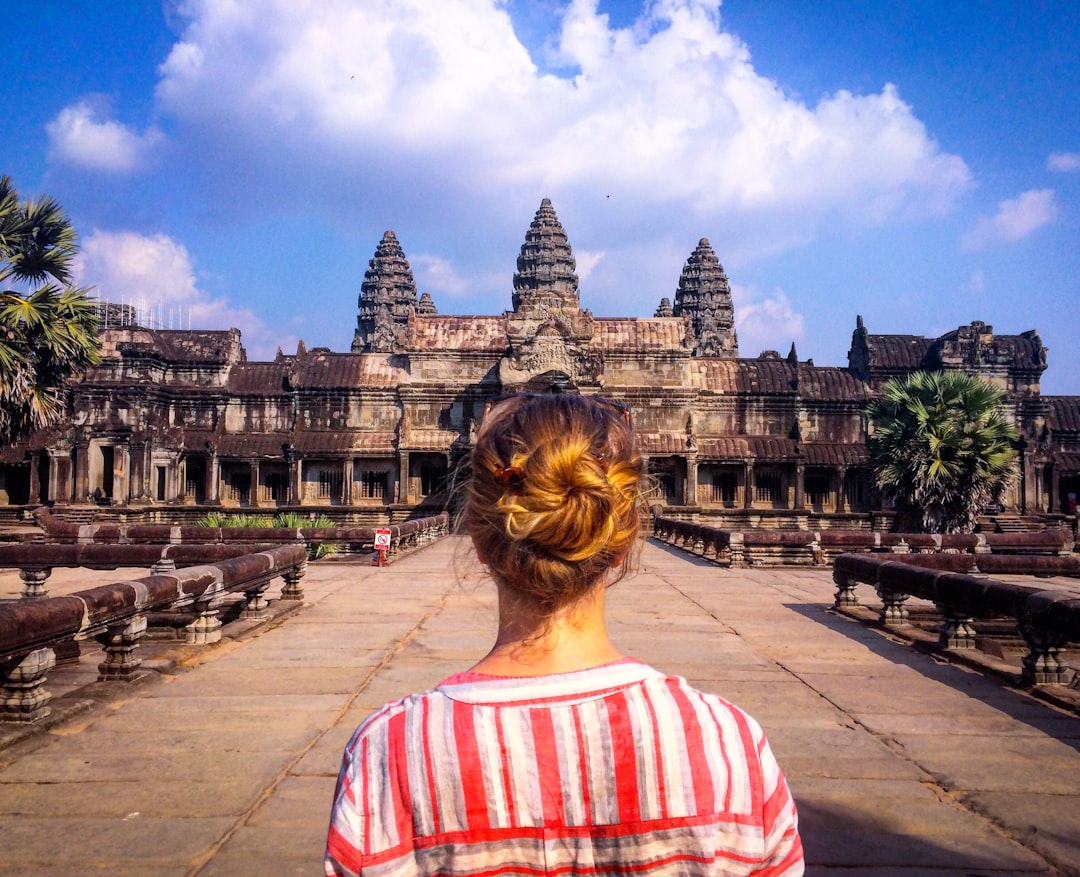
Angkor Wat was built in the first half of the 12th century, during the reign of Suryavarman II, sovereign of the Khmer Empire. Construction began around 1113 and was completed around 1150. The complex was conceived as a state temple and royal mausoleum, originally dedicated to the god Vishnu — an unusual choice for Khmer tradition, which favored Shiva. Covering an area of about 162 hectares, it is the largest religious monument in the world, surrounded by a moat approximately 190 meters wide that marks its sacred boundary.
The architecture that tells a cosmos
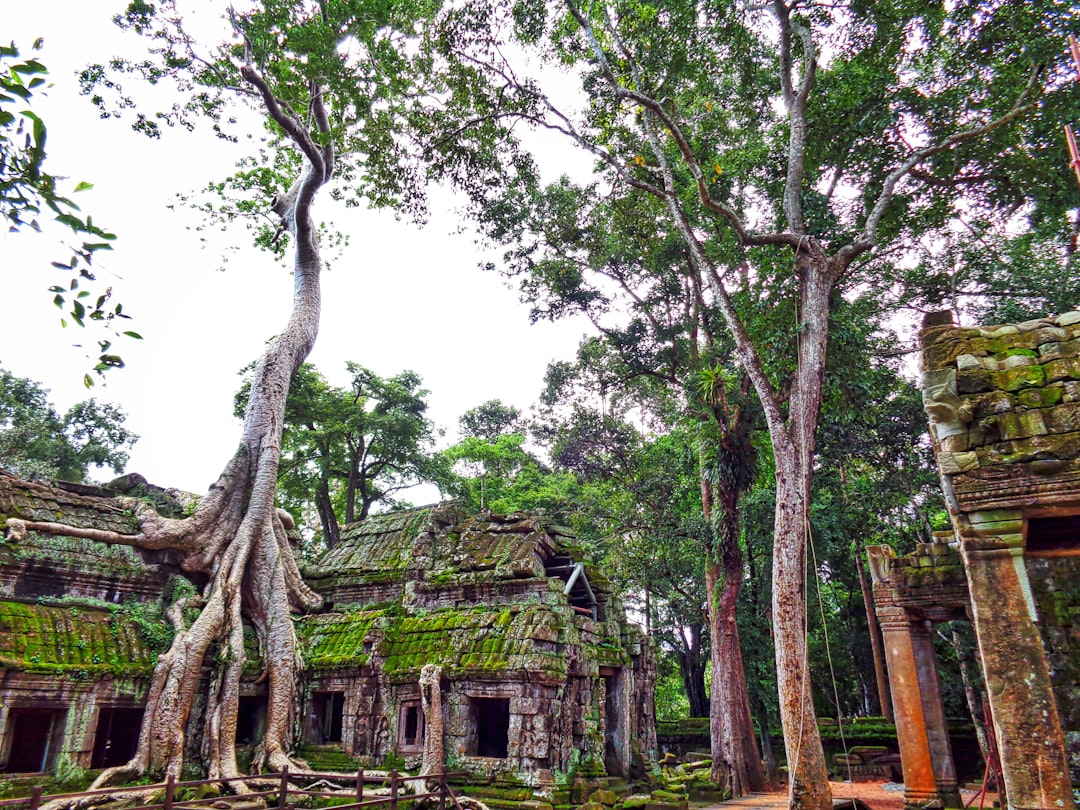
Looking at Angkor Wat from the western entrance, the first thing that strikes is the absolute symmetry. The main avenue, almost 475 meters long, leads directly to the central tower through a series of terraces and overlapping galleries. This three-level structure represents Mount Meru, the cosmic mountain of Hinduism, home of the gods. Each level is higher than the previous one, and the central tower reaches about 65 meters in height.
On the walls of the galleries of the second level, continuous bas-reliefs extend for about 800 linear meters. They depict epic scenes from the Ramayana and the Mahabharata, historical battles of the army of Suryavarman II, and the famous scene of the Churning of the Ocean of Milk, with 92 demons and 88 gods pulling the cosmic serpent Vasuki. The details are so fine — jewelry, facial expressions, postures of the warriors — that one can spend an entire hour on a single wall without exhausting its visual reading.
The sunset and the dawn: two opposite experiences
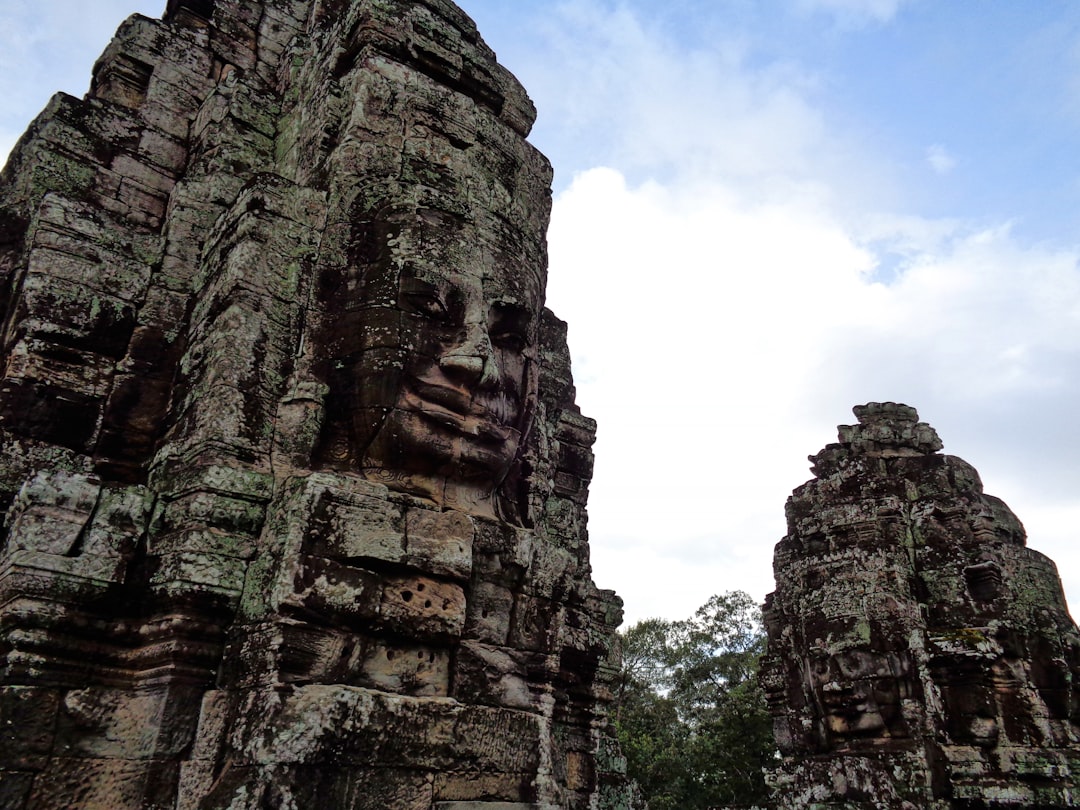
Angkor Wat is oriented towards the west, a direction associated with death and the world of the deceased in Khmer iconography, making it exceptional for watching the sunset. The sun sets exactly in line with the main walkway during certain times of the year, creating an optical effect of rare beauty. However, the dawn on the opposite side — that which is observed from the reflecting pools on the west side — has become the most iconic image of the site.
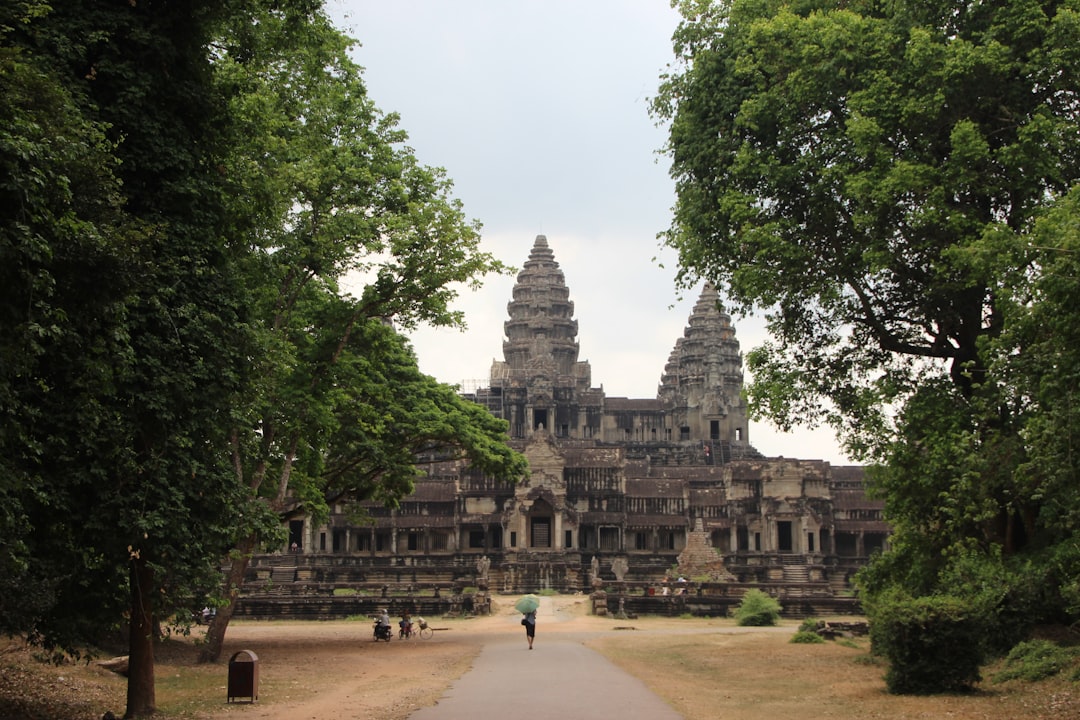
The difference between the two experiences is tangible: at sunset, one is surrounded by warm light that warms the gray sandstone to make it appear golden, and the galleries progressively empty. At dawn, on the other hand, one is immersed in still cold light, fog is often present between November and March, and the reflections in the pools are sharper. Both experiences deserve a separate visit.
How to Organize the Visit in a Concrete Way
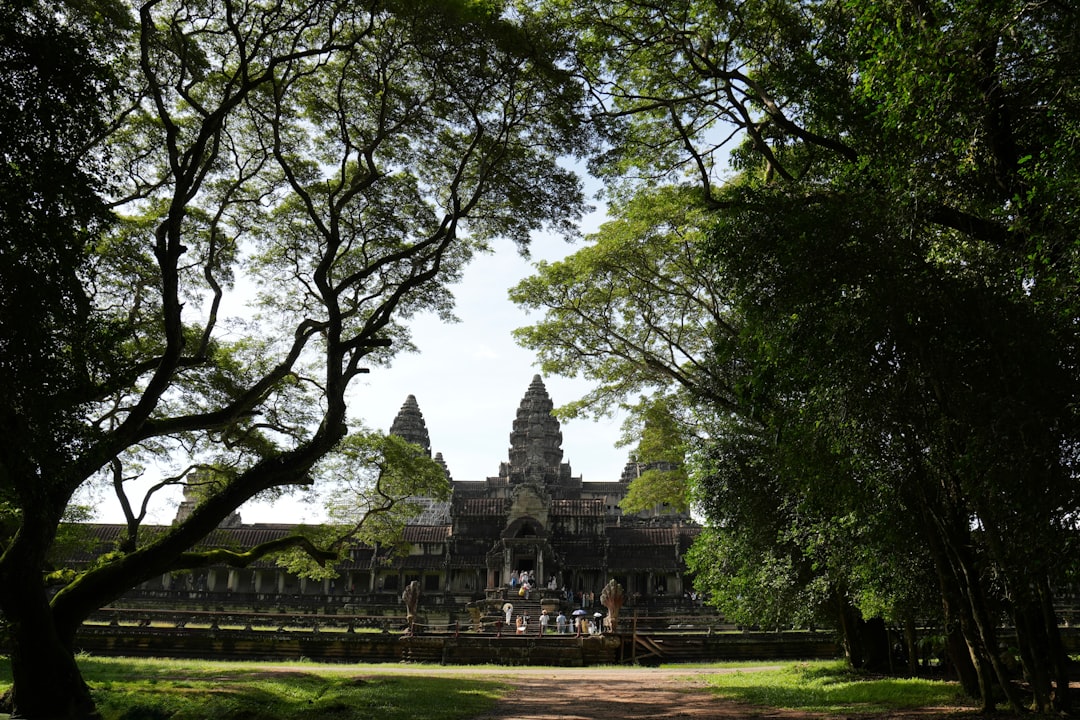
Access to Angkor Wat is regulated by Angkor Enterprise, the Cambodian authority that manages passes for the entire archaeological park. The daily ticket costs 37 US dollars, while the three-day pass is 62 dollars and the seven-day pass is 72 dollars. Passes can be purchased at the official ticket center on the road leading to the park, and entry is not allowed without one. It is important to bring a photograph or agree to have one taken on-site for the personal card.
To witness the sunrise, it is necessary to arrive before 5:30, ideally at 5:00. Tuk-tuks from Siem Reap take about 20-30 minutes and can be easily found outside hotels or in central areas of the city. It is advisable to agree on the price the night before — generally between 10 and 15 dollars for the whole day with a driver. Once inside, the most photographed reflecting pools are located just after the second western gopura, on the right and left of the walkway. Arriving early means finding a front-row spot; after 6:00, the space fills up quickly.
What to observe that group tours often skip
Among the things worth attention outside the standard itineraries is the North Library, one of the two symmetrical structures flanking the entrance avenue. Inside, at certain morning hours, light filters through the columned windows creating luminous streaks on the stone that last only a few minutes. It is an ephemeral and almost private spectacle, as most visitors proceed directly to the central tower.
It is also worth stopping on the terraces of the third level, where access is limited and requires advance reservation through the park rangers. From up there, with the central tower behind you, you embrace the entire surrounding forest and truly understand the scale of the project: not an isolated temple, but an entire universe built of stone in the middle of the Cambodian jungle.