 Top of the World






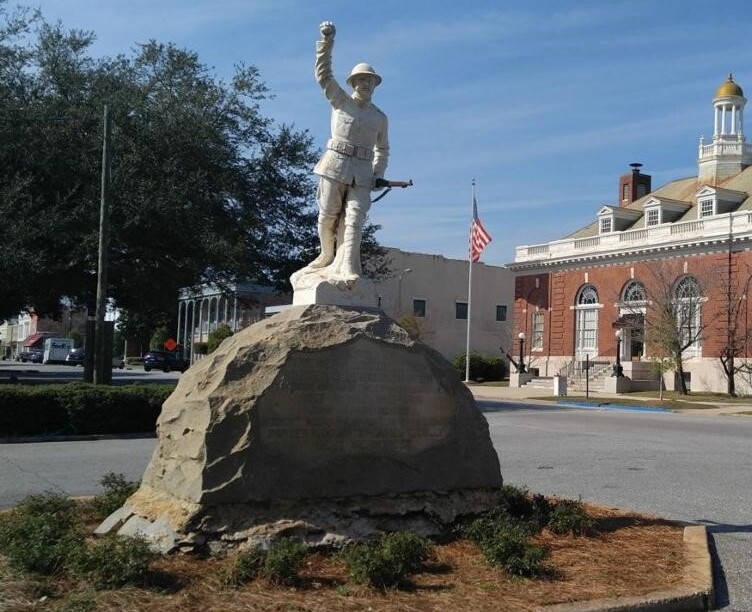
In the heart of Eufaula, Alabama, stands a poignant tribute to the brave soldiers of World War I—the Doughboy statue. This monument, one of only five known stone designs similar to E.M. Viquesney's iconic "Spirit of the American Doughboy," offers both locals and visitors a glimpse into the past, celebrating the valor of those who served during a time of great turmoil.
The origins of the Doughboy statue date back to the early 1920s when communities across America sought to honor their war heroes. Dedicated on January 11, 1925, at precisely 2:45 p.m., the statue was crafted by the McNeel Marble Company of Marietta, Georgia. Interestingly, the rifle held by the Eufaula statue was described as a "Winchester," setting it apart from the Viquesney versions that typically feature a Springfield 1903. This unique detail adds to the statue's charm and historical significance.
As visitors approach the statue, they are met with a sense of reverence. The Doughboy stands stoically, his posture embodying a mix of readiness and reflection, a representation of the soldiers who bravely faced the unknown. Unlike many of its counterparts, this statue lacks the full battle gear, which speaks to a more personal, humanized portrayal of the soldier. This artistic choice invites viewers to connect on a deeper emotional level.
Exploring Eufaula is not just about the Doughboy; it is also about immersing oneself in the rich tapestry of local culture. The town, founded in the early 19th century, has a history steeped in Southern traditions. Eufaula is known for its annual Eufaula Pilgrimage, where visitors can tour historic homes, many of which date back to the antebellum period. This event showcases the town's vibrant architecture and allows attendees to appreciate the stories and families that shaped this community.
Visitors to Eufaula will find a delightful blend of Southern hospitality and culinary delights. The local gastronomy features traditional dishes such as Fried Catfish, Gumbo, and Southern Biscuits, each reflecting the region's agricultural bounty and cultural influences. Don't miss the chance to enjoy a slice of Pecan Pie, a Southern staple that perfectly complements any meal.
One lesser-known curiosity about Eufaula is its connection to the Great Southern Land Lottery of 1832, which played a significant role in the town's development. This event drew settlers from various regions, leading to a diverse community that enriched Eufaula's cultural landscape. Additionally, the town is home to the Eufaula National Wildlife Refuge, a hidden gem for nature enthusiasts, offering opportunities for birdwatching and hiking amidst beautiful landscapes.
For those planning a visit, the best time to experience Eufaula is during the spring or fall when the weather is mild and the town's natural beauty is at its peak. When visiting the Doughboy, take a moment to explore the surrounding area, including the charming downtown district filled with unique shops and local art galleries. Don’t forget to engage with the friendly locals who are often eager to share stories about the town's history.
In conclusion, Eufaula’s Doughboy statue is more than just a monument; it is a gateway to understanding the sacrifices made during World War I and a reflection of the town's rich heritage. To enhance your experience, consider using the Secret World app to craft a personalized itinerary that celebrates the unique charm of Eufaula.