
← Back

Vilnius Choral Synagogue

Plačioji g., Vilnius 01140, Lituania ★★★★☆ 335 views
Liana Morra
Vilnius
🏆 AI Trip Planner 2026

Get the free app

Discover the best of Vilnius with Secret World — the AI trip planner with 1M+ destinations. Get personalized itineraries, hidden gems and local tips. Free on iOS & Android.

🧠 AI Itineraries 🎒 Trip Toolkit 🎮 KnowWhere Game 🎧 Audio Guides 📹 Videos
Scan to download iOS / Android
Scan for AppGallery Huawei users

About Vilnius Choral Synagogue

Vilnius Choral Synagogue - Vilnius | Secret World Trip Planner

You should know that before World War II, the city was called the Jerusalem of Lithuania, due to the large presence of Jews. Unfortunately, the years of Nazism were hard years for Vilnius and for the Jewish population here! The district, after the Independence was redeveloped and, today, the only original building is the Choral Synagogue, which stands majestically among the other buildings. The rest of the area was unfortunately destroyed by war and Soviet domination. Until the Second World War, the Jewish presence in Lithuania was very strong. Particularly in its main city where the Great Synagogue of Vilnius had already been inaugurated in 1633.

Vilnius Choral Synagogue - Vilnius | Secret World Trip Planner

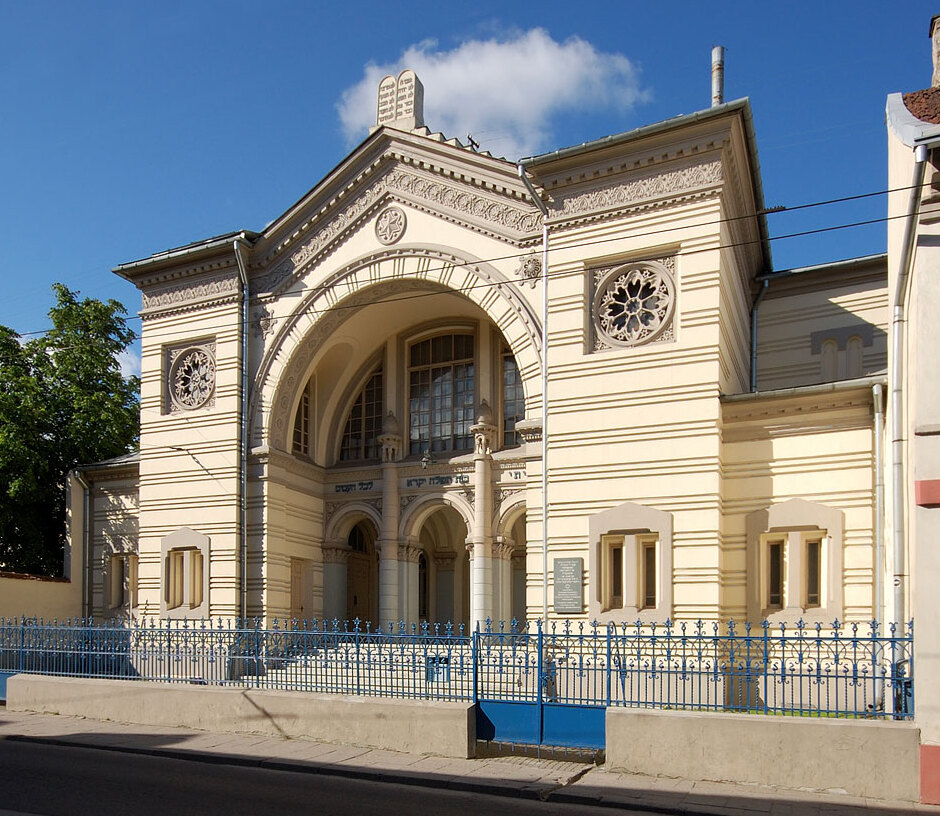
Therefore, between 1902 and 1903, the choral synagogue of Vilnius was also built according to the design of Dovydas Rosenhauzas. The architect revised the Moorish and neo-Byzantine elements in a decorative way.

He did so particularly on the façade where the central arch dominates the portals from a large semicircular window. Inside, on the other hand, the great blue dome of the choral synagogue of Vilnius lets down four pillars that circumscribe the central hall and support the galleries of the women's gallery.

Vilnius Choral Synagogue - Vilnius | Secret World Trip Planner

The Vilnius Choral Synagogue survived the Nazi period, but during the Communist period it was requisitioned and turned into a metal processing plant. Only with the end of the Soviet regime did the building become the property of the Jewish community again. And with the contribution of the World Monuments Fund in 2008, it was returned to its former glory.


🗺 L'app dei tesori italiani

Plan your visit to Vilnius

Suggested itinerary near Vilnius Choral Synagogue

MAJ+
500.000+ travelers worldwide
  1. 🌅
    Morning
    Vilnius Choral Synagogue
    📍 Vilnius
  2. ☀️
    Afternoon
    The Beautiful Vokieciu Street
    📍 0.3 km · Vilnius
  3. 🌆
    Evening
    Vilnius. Zydu Street:the Jewish area
    📍 0.5 km · Vilnius

Buy Unique Travel Experiences

Powered by Viator

See more on Viator.com

Explore nearby · Vilnius

Frequently Asked Questions

The Vilnius Choral Synagogue was constructed between 1902 and 1903 according to the design of architect Dovydas Rozenhauzas. The architect incorporated Moorish and neo-Byzantine decorative elements, particularly on the façade with its distinctive large semicircular window and central arch.
Before World War II, Vilnius earned this nickname due to its large and vibrant Jewish population. The city was home to the Great Synagogue of Vilnius, which was inaugurated in 1633, making it a major center of Jewish culture and religious life in Eastern Europe.
While the Choral Synagogue survived the Nazi period, it was requisitioned during the Communist era and converted into a metal processing plant. The building was returned to the Jewish community only after the fall of the Soviet regime and underwent restoration with support from the World Monuments Fund in 2008.
The interior is dominated by a great blue dome supported by four pillars that circumscribe the central hall and support the women's galleries. This architectural design creates an impressive spatial arrangement that showcases the building's neo-Byzantine influences.
The rest of the Jewish district was unfortunately destroyed during World War II and the subsequent Soviet domination. After Lithuania's Independence, the area was redeveloped, leaving the Choral Synagogue as the sole surviving original structure that now stands majestically among modern buildings.