




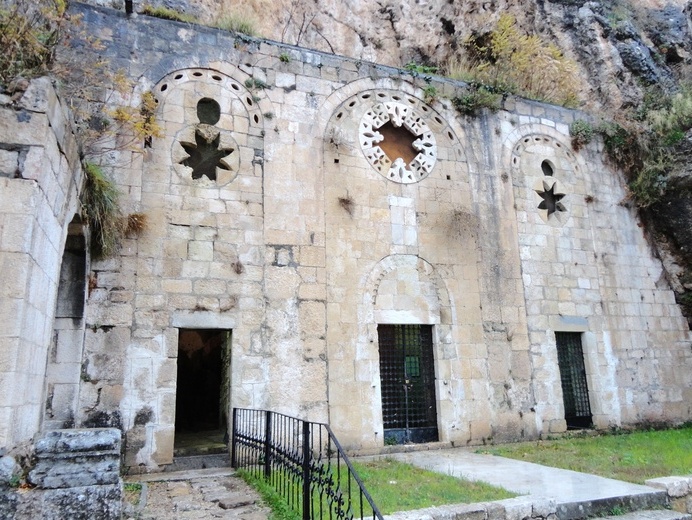
Nestled in the dramatic landscape of Mount Starius, Saint Peter's Church stands as a remarkable testament to early Christianity and a significant historical site in Antioch, Turkey. Carved directly into the mountainside, this ancient church offers not just a glimpse into the past but also an immersive cultural experience that resonates with the local community today.

### History and Origins
The origins of Saint Peter's Church trace back to the first century AD, coinciding with the formative years of Christianity. Antioch, known as Antiochia, was one of the first centers for the spread of Christianity outside Jerusalem. It played a pivotal role in the early church, as documented in the Acts of the Apostles, where it is mentioned that followers of Jesus were first called Christians here.

Tradition holds that Saint Peter, one of Jesus's apostles, preached in this region and may have established this sanctuary as a refuge for early Christians facing persecution. The church is believed to be one of the oldest Christian sites, with archaeological evidence supporting its use as a place of worship for over two millennia. Throughout history, it has witnessed significant events, including the rise of early church councils and the spread of Christian doctrine across the Roman Empire.
### Art and Architecture
The architectural style of Saint Peter's Church is a fascinating amalgamation of natural rock formations and early Christian design. The church itself is a cave-like structure, with its walls and altars hewn from the mountain’s limestone. The simplicity of its design reflects the humble beginnings of the Christian faith, prioritizing spirituality over opulence.
Inside, visitors can find remnants of ancient frescoes and inscriptions that depict biblical scenes, though many have faded over time. These artworks, while not as grand as those found in later cathedrals, carry immense artistic significance, embodying the early Christian iconography that influenced subsequent generations. The overall atmosphere of the church, combined with the natural acoustics of the stone, creates a unique spiritual experience that draws pilgrims and tourists alike.
### Local Culture and Traditions
The cultural significance of Saint Peter's Church extends beyond its historical roots; it is a vibrant part of the local community in Antioch. Every year, the church hosts a series of religious festivals that attract devotees from various parts of Turkey and beyond. One of the most notable events is the Feast of Saint Peter, celebrated on June 29th, which includes processions, prayers, and communal gatherings that highlight the enduring faith of the local population.
In addition to religious observances, the church serves as a focal point for cultural heritage in Antioch. Local traditions, such as folk dances and music, are often showcased during these festivals, reflecting the rich tapestry of influences that have shaped the region over centuries. The blending of Christian and local customs illustrates the church's role as a bridge between the past and the present.
### Gastronomy
No visit to Antioch would be complete without indulging in its renowned gastronomy, which is deeply intertwined with the region's history. The area is famous for its diverse culinary offerings, many of which have roots in ancient traditions. Dishes like kibbeh (a mixture of bulgur, minced onions, and ground meat) and manti (Turkish dumplings) reflect the culinary influences from surrounding cultures.
Local specialties such as Antakya künefesi, a sweet dessert made from thin noodle-like pastry soaked in syrup and layered with cheese, are must-try delicacies. Pairing these dishes with a glass of sahlep, a warm drink made from orchid tubers, provides an authentic taste of the region.
### Lesser-Known Curiosities
While Saint Peter's Church is well-known, several lesser-known facts add layers to its historical narrative. For instance, the church is often regarded as the world's first cathedral due to its early establishment and significance in Christian history. Additionally, the surrounding area is home to numerous ancient mosaics, some of which depict scenes from the life of Christ and the early church.
A surprising detail that many visitors miss is the nearby Cave of Saint Peter, believed to be the actual site where the apostle preached. This hidden gem, just a short walk from the church, offers a tranquil setting for reflection and prayer, away from the bustling crowds.
### Practical Visitor Information
The best time to visit Saint Peter's Church is during the spring and fall months, when the weather is mild and conducive to exploration. Early morning or late afternoon visits are ideal for avoiding the peak heat and crowds, allowing for a more intimate experience within this sacred space.
When planning your visit, be sure to check local schedules for any festivals or events that may coincide with your trip, as these occasions can greatly enrich your experience. Don’t forget to dress modestly, as this is a place of worship, and be respectful of the local customs and practices.
To truly appreciate the depth of history and culture at Saint Peter's Church and its surroundings, consider using the Secret World app to plan a personalized AI itinerary that highlights all that this magnificent region has to offer.