
← Back

Tomba at Henry Bataille

2 Rue du Bass., 11700 Moux, Francia ★★★★☆ 207 views
Kim Ambani
Moux
🏆 AI Trip Planner 2026

Get the free app

Discover the best of Moux with Secret World — the AI trip planner with 1M+ destinations. Get personalized itineraries, hidden gems and local tips. Free on iOS & Android.

🧠 AI Itineraries 🎒 Trip Toolkit 🎮 KnowWhere Game 🎧 Audio Guides 📹 Videos
Scan to download iOS / Android
Scan for AppGallery Huawei users

About Tomba at Henry Bataille

Tomba at Henry Bataille - Moux | Secret World Trip Planner

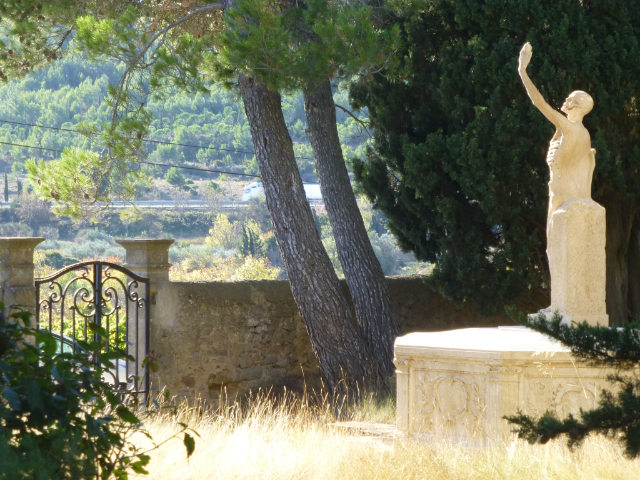
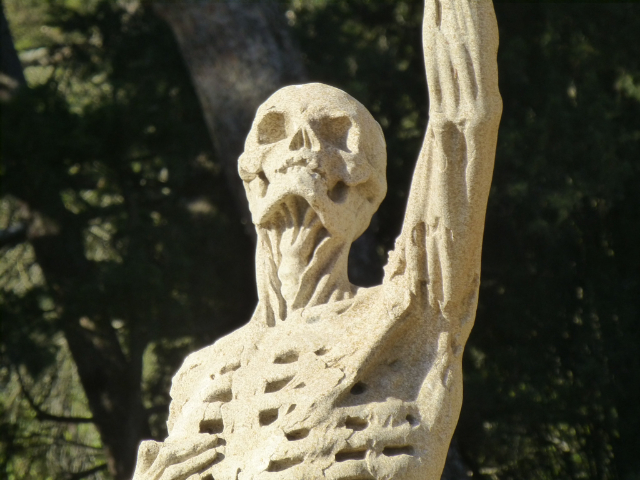
Located just outside the town of Moux is a curious mausoleum of which a creepy sculpture of a smiling corpse in an advanced state of decomposition stands out, raising in one of its skeletal hands a human heart.This curious and macabre tomb is the final resting place of the famous 19th- and 20th-century French poet and playwright Félix-Henri "Henry" Bataille. His works often featured recurring themes such as the power of untamable passion and the stifling, often hypocritical social conventions that oppressed the human spirit and individuality.The popularity of Bataille's poems and plays peaked in the decade between the turn of the 20th century and the beginning of World War I. Some of his plays were adapted for Broadway productions and early silent films in the United States. Although he had achieved great success and recognition in the arts, Bataille died in 1922, at a relatively young age of 49.Before his death, Bataille had given precise instructions for the construction of this tomb, which was to be a tribute to the Renaissance. The tomb included reproductions of his favorite monuments from that period, such as the Beaune marble fountain in Tours and the statue of Ligier Richer's corpse from the tomb of René de Chalons in Bar le Duc. (Unlike the sculpture that inspired it, the skeletal figure on Bataille's tomb does not contain his real heart.)As per his instructions, the corpse sculpture was to be prominently displayed to visitors to the tomb: "On top of all this I want the statue of Ligier Richer to be placed, one of the most beautiful works of French genius, expressing all the spirituality of death, all the beauty of human effort."The tomb can be seen for free just outside the town of Moux, although the location is somewhat isolated and requires a walk to reach it.

Tomba at Henry Bataille - Moux | Secret World Trip Planner
🗺 L'app dei tesori italiani

Plan your visit to Moux

Suggested itinerary near Tomba at Henry Bataille

MAJ+
500.000+ travelers worldwide
  1. 🌅
    Morning
    Tomba at Henry Bataille
    📍 Moux
  2. ☀️
    Afternoon
    Discover the Abbaye de Lagrasse: a Cultural Gem in Occitanie
    📍 10.9 km · Moux
  3. 🌆
    Evening
    Château de Villerouge-Termenès
    📍 19.1 km · Moux

Buy Unique Travel Experiences

Powered by Viator

See more on Viator.com

Explore nearby · Moux

Frequently Asked Questions

The Tomba at Henry Bataille is a macabre Renaissance-inspired mausoleum located outside Moux, France, housing the final resting place of 19th-20th century French poet and playwright Henry Bataille. It's famous for its striking skeletal corpse sculpture holding a human heart, which Bataille himself commissioned as a tribute to Renaissance art before his death in 1922.
No, despite the realistic appearance, the skeletal figure on Bataille's tomb does not contain a real heart. The sculpture was inspired by Ligier Richer's famous corpse statue from the tomb of René de Chalons in Bar le Duc, but Bataille's version is purely artistic and symbolic.
The tomb is located just outside the town of Moux and can be viewed for free. However, the location is somewhat isolated and requires a walk to reach it, so visitors should plan accordingly and wear appropriate footwear for the journey.
Henry Bataille was a celebrated 19th and 20th-century French poet and playwright whose works explored themes of unbridled passion and the oppressive nature of social conventions. His popularity peaked between 1900 and World War I, with several of his plays adapted for Broadway productions and early silent films in the United States.
Bataille's tomb includes reproductions of his favorite Renaissance monuments, specifically referencing the Beaune marble fountain in Tours and Ligier Richer's famous corpse sculpture from the tomb of René de Chalons in Bar le Duc. Bataille personally requested that the skeletal statue be prominently displayed, calling it 'one of the most beautiful works of French genius.'