
Nestled amidst the rolling hills of Tuscany, the Abbey of Monte Oliveto Maggiore stands as a testament to spiritual devotion and artistic brilliance. Founded in 1313 by the Benedictine monk Bernardo Tolomei, this serene monastery is not only a place of worship but also a treasure trove of Renaissance art. The abbey’s origins trace back to a time when Benedictine monasticism was flourishing, reflecting the spiritual aspirations of the period. Tolomei, seeking a more ascetic life, chose this picturesque location near Asciano, where he could live in harmony with nature and dedicate himself to prayer.
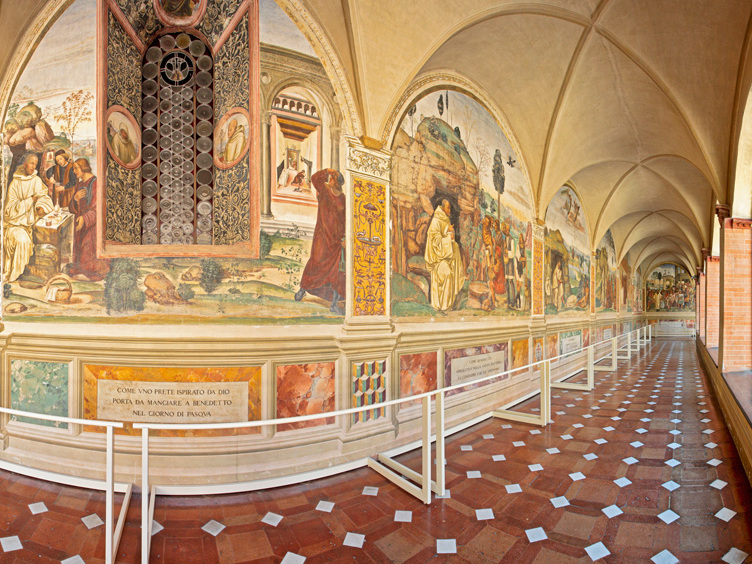
The most captivating feature of the abbey is undoubtedly the frescoes that adorn the large cloister. These vibrant paintings, executed between 1497 and 1530, narrate the life of St. Benedict through 35 exquisite scenes that envelop the viewer in a vivid visual story. The early work of Luca Signorelli set the stage for this grand project, followed by the equally talented Antonio Bazzi, known as Il Sodoma. The frescoes boast an impressive palette and intricate details, providing a fascinating glimpse into the Renaissance era and its cultural landscapes.
Architecturally, the Abbey of Monte Oliveto Maggiore is a blend of Gothic and Renaissance styles, characterized by its harmonious proportions and the tranquil beauty of its surroundings. The cloister itself, with its impressive arches and serene ambiance, invites contemplation and reflection. The abbey’s church, with its ornate altar and beautifully crafted wooden ceilings, further enhances the spiritual atmosphere.
Beyond its artistic and architectural significance, the abbey is deeply woven into the local culture of Asciano. The monks continue to uphold the Benedictine tradition, living a life dedicated to prayer, work, and community service. Visitors may witness the daily rhythm of monastic life, including the Liturgy of the Hours, which punctuates the day with moments of communal prayer.
Local customs often find expression during the numerous festivals held in the region, particularly the Festa di San Benedetto, celebrated in March. This event draws both locals and visitors who come together to honor the patron saint of the abbey with processions, music, and traditional Tuscan foods.
Speaking of gastronomy, the region surrounding Asciano is known for its rich culinary heritage. Traditional dishes such as pici, a hand-rolled pasta, and cacciucco, a hearty fish stew, reflect the rustic flavors of Tuscany. Pair these with a glass of Chianti or Brunello di Montalcino, and you have a delightful culinary experience that complements the artistic and spiritual journey through the abbey.
As you explore the abbey, keep an eye out for lesser-known curiosities. For instance, the abbey’s library houses ancient texts and manuscripts that are rarely seen by the public eye. Additionally, the monks’ pharmacy offers a glimpse into traditional herbal remedies, showcasing a blend of science and spirituality that has been practiced for centuries.
The best time to visit the Abbey of Monte Oliveto Maggiore is during the spring and autumn months when the weather is mild, and the surrounding landscapes are awash with color. Arrive early to enjoy the tranquil atmosphere before the crowds and take your time to absorb the beauty of the frescoes and the peaceful surroundings.
For a truly enriching experience, consider joining a guided tour, which can provide deeper insights into the history and significance of the abbey’s art and architecture. Don’t forget to explore the surrounding countryside, where picturesque paths lead you through Tuscany’s stunning landscapes, dotted with vineyards and olive groves.
Whether you're an art lover, a history buff, or simply seeking a serene escape, the Abbey of Monte Oliveto Maggiore offers a unique blend of spirituality, culture, and culinary delights. Plan your visit to Asciano and immerse yourself in the rich tapestry of experiences that await.
For a personalized journey through this enchanting region, consider using the Secret World app to craft your ideal itinerary.