




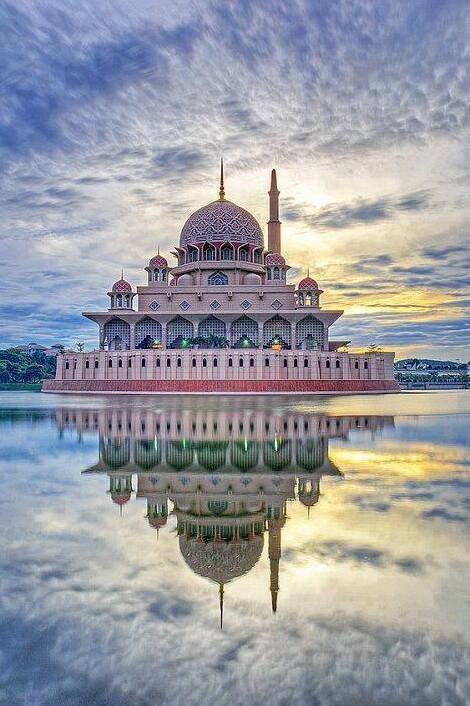
In the heart of Putrajaya, Malaysia, the Putra Mosque stands as a breathtaking symbol of modern Islamic architecture, seamlessly blending tradition with contemporary design. Its striking pink dome and intricate details draw visitors from around the globe, making it a pivotal landmark in this planned city, which serves as the administrative center of Malaysia.

### History and Origins
The construction of the Putra Mosque began in 1997 and was completed two years later, with its official opening taking place in 1999. The mosque was named after Putra Lake, which is located just adjacent to its grounds, symbolizing the connection between spirituality and nature. Designed by the renowned architect Rafael Benatar, its design reflects influences from both Middle Eastern and Malaysian architecture, serving as a testament to the country's commitment to fostering a modern Islamic identity.

As one of the key projects in Putrajaya’s development, the mosque was built to accommodate the growing population and the influx of visitors to the area, which was designed to reflect Malaysia's aspirations for progress and modernization while retaining its cultural roots. The architecture echoes the principles of harmony and balance, essential in Islamic teachings, and represents a new chapter in Malaysia's history of religious architecture.
### Art and Architecture
The architectural style of the Putra Mosque is predominantly Neo-Moorish, characterized by its elegant arches, intricate carvings, and the stunning pink hue of its granite façade. The mosque's dome, rising to a height of 250 feet, is supported by 12 columns that enhance the sense of grandeur within the prayer hall. Each column is adorned with detailed motifs, invoking the beauty of Islamic art.
Notably, the mosque’s minaret, which soars to 116 meters, is inspired by the design of the Sheikh Omar Mosque in Baghdad. With five tiers representing the Five Pillars of Islam, it stands as one of the tallest minarets in the region. The interior of the mosque features beautifully designed calligraphy and intricate tile work, emphasizing the importance of art in Islamic culture.
### Local Culture and Traditions
The Putra Mosque is not just a place of worship; it is a vibrant hub for cultural activities and community events. Visitors can often witness traditional Islamic ceremonies and educational programs aimed at fostering understanding and appreciation of Islam. The mosque plays a vital role during significant Islamic events, such as Hari Raya Aidilfitri and Ramadan, when it becomes a focal point for communal prayers and celebrations.
Local customs are deeply intertwined with the mosque's activities, from Friday prayers attended by thousands to the monthly Quran recitation competitions held on its grounds, which encourage both locals and visitors to engage with the Islamic faith and culture.
### Gastronomy
A visit to Putrajaya wouldn't be complete without indulging in the local gastronomy, which reflects the rich tapestry of Malaysian cuisine. Near the mosque, you can find a variety of food stalls and restaurants offering traditional dishes. Nasi lemak, considered Malaysia’s national dish, is a must-try. This fragrant rice dish is served with sambal (spicy chili paste), fried crispy anchovies, peanuts, and boiled egg, embodying the essence of local flavors.
Another popular dish is satay, skewered and grilled meat served with a rich peanut sauce. For those with a sweet tooth, kuih (traditional pastries) come in colorful varieties and are often enjoyed during festivals and family gatherings. Don’t forget to accompany your meal with a refreshing glass of teh tarik, a frothy milk tea that is a beloved beverage across Malaysia.
### Lesser-known Curiosities
While many visitors are captivated by the mosque's exterior, few realize that the basement wall of the Putra Mosque bears resemblance to that of the King Hassan Mosque in Casablanca, Morocco. This subtle nod connects two distinct cultures through architecture.
Another intriguing aspect is the Sahn, or courtyard, which is not just a beautiful space but also serves a practical purpose. The landscaped area features decorative water features, providing a serene environment for contemplation and prayer. Many visitors miss the opportunity to explore the learning facilities and function rooms, which host various educational programs that enhance understanding of Islamic teachings.
### Practical Visitor Information
The best time to visit the Putra Mosque is during the cooler months, from November to March, when the weather is more pleasant. Early mornings or late afternoons are ideal for catching the mosque bathed in soft, golden light, perfect for photography.
Visitors should dress modestly, as the mosque is a place of worship. Women are required to wear a hijab and loose-fitting clothing, which can be borrowed at the entrance if needed. Guided tours are available, providing insights into the mosque’s history and architectural significance, enhancing the overall experience.
As you explore the Putra Mosque, take a moment to appreciate the intricate details and the peaceful ambiance that surrounds it. The blend of spirituality, culture, and art makes this mosque a significant part of Malaysia’s heritage.
For a tailor-made experience to explore the wonders of Putrajaya, consider using the Secret World app for personalized itinerary planning.