← Back

The Park Shelter

Parc Dalmau, s/n, 08370 Calella, Barcelona, Spain ★★★★☆ 186 views
Serena Logiggiani
Calella
🏆 AI Trip Planner 2026

Get the free app

Discover the best of Calella with Secret World — the AI trip planner with 1M+ destinations. Get personalized itineraries, hidden gems and local tips. Free on iOS & Android.

🧠 AI Itineraries 🎒 Trip Toolkit 🎮 KnowWhere Game 🎧 Audio Guides 📹 Videos
Scan to download iOS / Android
Scan for AppGallery Huawei users

About The Park Shelter

The Park Shelter - Calella | Secret World Trip Planner

The military coup d’état on July 18, 1936, against the legal government of the Republic, led to the outbreak of the Spanish Civil War (1936-1939). One of the most decisive factors for the Francoist victory was the war in the air. Franco’s army, supported by the Italian and the German air forces, systematically bombarded the civil population, turning the rearguard into yet another battle front.
The Park Shelter - Calella | Secret World Trip Planner

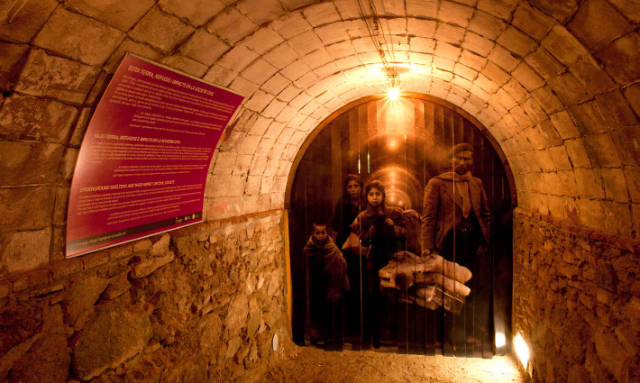
This led to the building of public and private air-raid shel- ters all over Catalonia. With this aim, in June 1937 the Government of Catalonia created the Passive Defence Committee, which spread to the different local levels. In Calella three shelters were built: the Roser, the Park and the Farm. The Park Shelter has a main gallery with 66 metres long, 2 metres high and 2 metres wide, and three transversal galleries, each one with more than 20 metres long.

Calella was bombed twice. The first one took place on April 4, 1937. A three-engine aircraft coming from the Majorca island, bombed the Llobet-Guri factory, causing substantial material damage but no human victims. The bombing of November 24, 1938 was more serious. Four bombs were dropped causing three deaths and wound- ing several citizens, likewise causing major damage to almost 40 houses. Today the Park Shelter is a represent- ative relic of the fight to secure democratic rights and freedoms in Catalonia.


The Park Shelter - Calella | Secret World Trip Planner
🗺 L'app dei tesori italiani

Plan your visit to Calella

Suggested itinerary near The Park Shelter

MAJ+
500.000+ travelers worldwide
  1. 🌅
    Morning
    The Park Shelter
    📍 Calella
  2. ☀️
    Afternoon
    Museu del Turisme
    📍 0.2 km · Calella
  3. 🌆
    Evening
    LLOBET-GURI FACTORY
    📍 0.2 km · Calella

Buy Unique Travel Experiences

Powered by Viator

See more on Viator.com

Explore nearby · Calella

Frequently Asked Questions

The Park Shelter is an air-raid shelter built in Calella, Catalonia during the Spanish Civil War (1936-1939) to protect civilians from aerial bombardments. It was constructed in 1937 after the Government of Catalonia created the Passive Defence Committee to build public shelters across the region in response to systematic bombing campaigns by Franco's forces supported by Italian and German air forces.
The Park Shelter features a main gallery that is 66 metres long, 2 metres high, and 2 metres wide, along with three transversal galleries each measuring more than 20 metres in length. This expansive underground structure was designed to accommodate multiple citizens during air raids.
Calella experienced two bombing raids during the Spanish Civil War: the first on April 4, 1937, which targeted the Llobet-Guri factory causing material damage but no deaths, and a more devastating second bombing on November 24, 1938, that killed three people, wounded several citizens, and damaged nearly 40 houses. The Park Shelter provided crucial protection during these attacks.
Three air-raid shelters were constructed in Calella during the Spanish Civil War: the Roser, the Park, and the Farm shelters. The Park Shelter is now the most representative and well-preserved of these three structures.
The Park Shelter stands as a representative relic and memorial to the struggle for democratic rights and freedoms in Catalonia during the Spanish Civil War. Visiting this shelter provides visitors with a tangible connection to the civilian experience of war and the resilience of the Catalan people during Franco's bombardment campaigns.