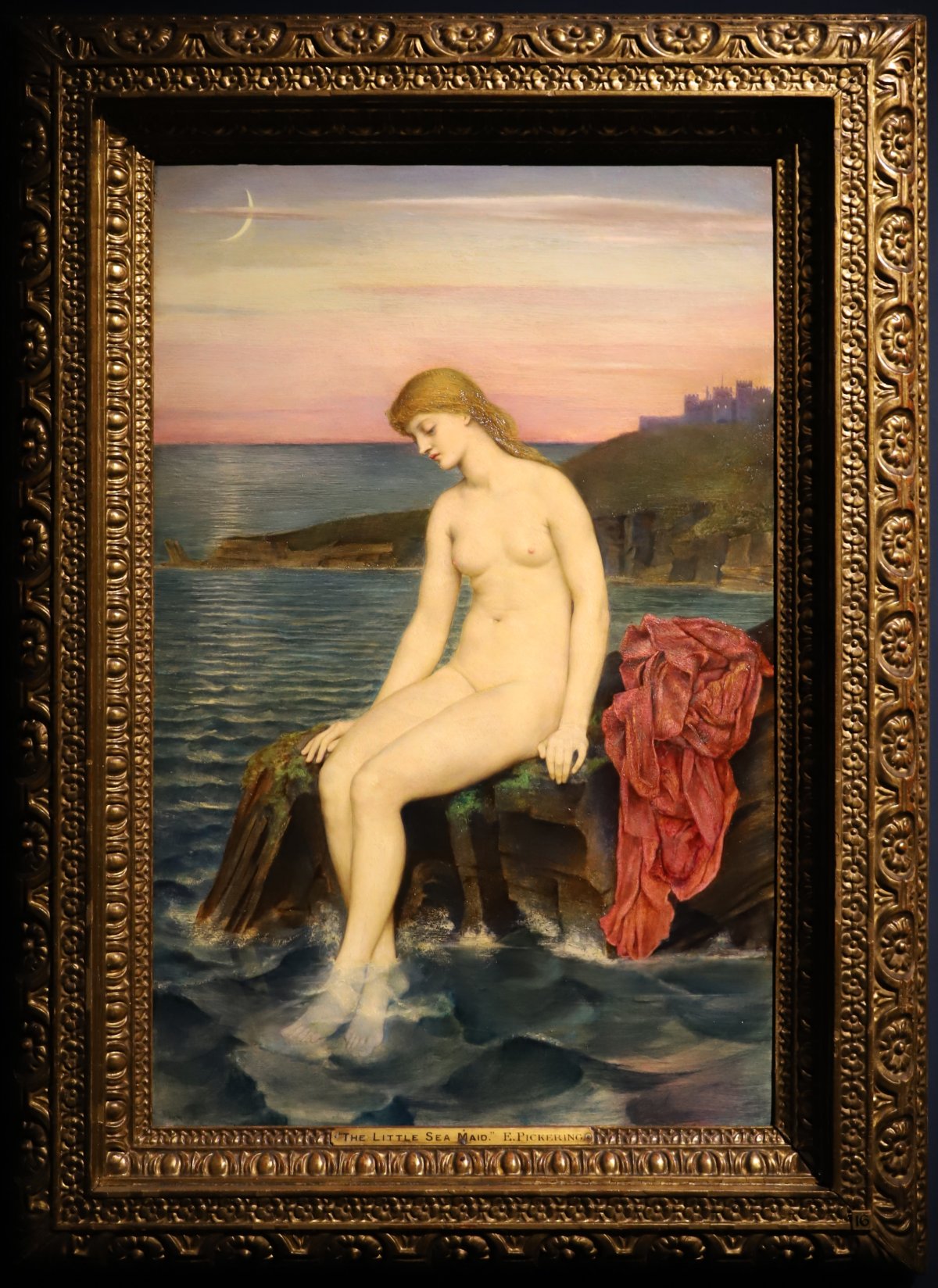

It is small. Much smaller than one would expect. The Little Mermaid of Copenhagen measures just 125 centimeters in height and weighs about 175 kilograms, yet it attracts millions of visitors each year who stroll along the Langelinie promenade specifically to see her. Sitting on a rock overlooking the water of the harbor, the bronze statue gazes out to sea with a melancholic and dreamy expression, just like the protagonist of the fairy tale by Hans Christian Andersen.
The sculpture was created by the Danish sculptor Edvard Eriksen and inaugurated on August 23, 1913, on commission from the founder of the Carlsberg brewery, Carl Jacobsen, who was captivated by a theatrical representation of the fairy tale. The model for the body was Eriksen's own wife, Eline, while he drew inspiration for the head from the ballerina Ellen Price. This detail, little known to most, tells how the statue is the result of a blend of personal and artistic stories typically Danish.
A work of art with a troubled history
Observing the Little Mermaid up close, it is possible to notice signs of restoration on the surface of the bronze: the statue has undergone numerous acts of vandalism throughout the twentieth and twenty-first centuries. The head has been decapitated at least twice, in 1964 and in 1998, and the right arm was sawed off in 1984. Each time, the city of Copenhagen has taken care to restore or recast it using the original molds preserved by the artist.
This story of resilience has ultimately added a layer of meaning to the statue itself: it is not just a literary monument, but also a symbol of a city's ability to cherish what it loves, despite everything. The granite base on which the Little Mermaid rests emerges directly from the water, and during high tide, the rock seems to almost float, making the scene even more evocative.
The Fairy Tale of Andersen and the Connection to Copenhagen
Hans Christian Andersen wrote The Little Mermaid in 1837, and the story is set in a northern sea that inevitably evokes the waters of the Sound that surround Copenhagen. The original fairy tale, much darker than the famous Disney film adaptation of 1989, tells of sacrifice, unrequited love, and transformation. The statue by Eriksen captures that very ambiguity: the figure is halfway between the aquatic world and the terrestrial one, with legs that still merge into a barely hinted fish tail.
Walking along Langelinie, one can sense how deeply rooted this monument is in Danish identity. It is not a contrived attraction for tourism, but an object of collective affection that the Danes have defended and celebrated for over a century. In the souvenir shops of Strøget, the city's most famous pedestrian street, reproductions of the Little Mermaid are everywhere, but none truly convey the idea of her silent presence on the water.
How to visit the Little Mermaid the right way
The statue is located along the Langelinie Promenade, in the northern harbor of Copenhagen, reachable on foot from the historic center in about 25-30 minutes or by bus. The visit is free and accessible at any time of the day and year. The best time to photograph it without crowds is early in the morning, preferably before 8:00 AM, when the slanting light of dawn creates golden reflections on the bronze and the waterfront is still deserted.
It is useful to know that the statue is located on a rock in the water and it is not possible to physically approach it without getting your feet wet: many tourists are surprised by this detail. It is advisable to wear comfortable shoes and, on windy days typical of the Danish climate, a jacket even in summer. The visit typically takes 15-20 minutes, but by combining it with a walk along Langelinie to the Kastellet Fortress, which is just a few minutes' walk away, you can enjoy one of the most beautiful walks in all of Copenhagen.
What to see in the surroundings
Less than ten minutes on foot from the Little Mermaid is Kastellet, a star-shaped fortress from the 17th century still perfectly preserved, with moats, bastions, and an internal church. Entrance is free, and the park around it is frequented by locals for jogging and picnics. A little further away, the SMK Museum of Modern Art and Churchillparken complete an itinerary that combines military history, art, and nature in just a few square kilometers.
Copenhagen offers an efficient public transport network: the metro, inaugurated in 2002 and expanded in 2019, covers much of the city, but to reach Langelinie, the most pleasant solution remains the walk from the Nyhavn district, the famous colorful harbor, which is about a 20-minute walk. This way, you cross the historic heart of the city before arriving at its most silent and contemplative icon.