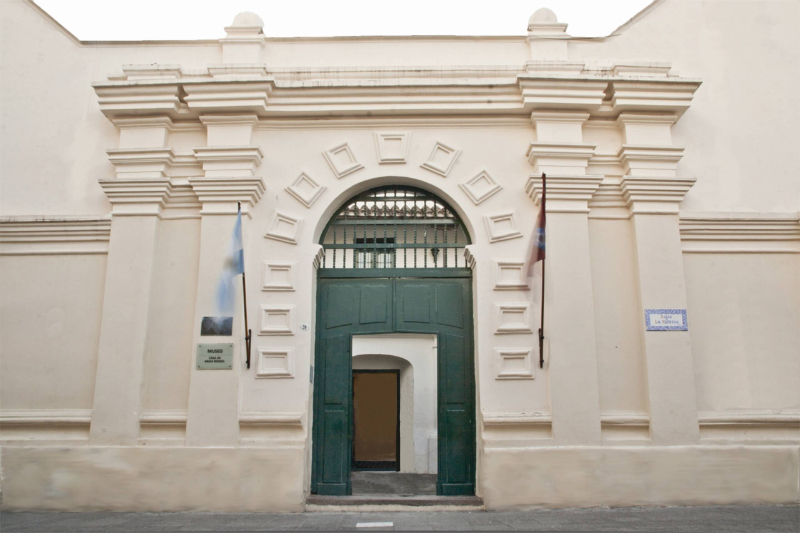

This house is one of the most important examples of the stately architecture of the viceregal period of the 18th century in the city of Salta. It was built in 1752 for General Félix Arias Rengel.
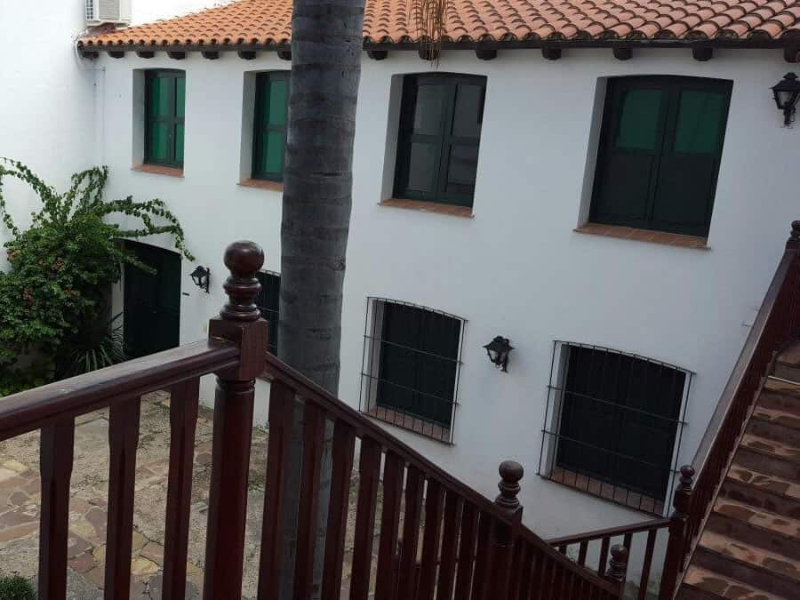
Through the years, this building had multiple uses, in addition to housing, it functioned as a museum of Fine Arts; currently it is the Arias Rengel Museum, where permanent collections such as Campomar and Litania Prado stand out. In January 2009 the Museum obtained, through the donation of Mrs. Marta Campomar, the first collection consisting of African pieces and works by artists Eduardo Mac Entyre, Andrés Barragán and Guillermo Mac Loughlin.
The Campomar Collection is composed of African tribal pieces from the 18th, 19th and 20th centuries, selected with artistic criteria by the collector; sculptures, masks, ivories, bronzes, all deconsecrated objects belonging to the ancient animist cultures of African ethnic groups.
Also part of this collection are pictorial works by the artist Eduardo Mac Entyre -African Perceptions-, inspired by certain African pieces, which were captured in his work with a contemporary vision. Accompanying this proposal is the series by photographer Andrés Barragán, África más allá de lo ancestral (Africa beyond the ancestral); and finally the silkscreen prints made in Guillermo Mac Loughlin's workshop.
The collection also includes bibliographic material on African art and the work of the artists for consultation and research on the pieces, the authors and African cultures.
At the end of the same year the artist Esdras Luis Gianella and his wife Nila Díaz donated the sculptural work of the artist, together with drawings, sketches, written and photographic documentation, as personal objects.
The Gianella Collection is composed of sculptures made in different techniques such as carvings, castings and ceramics, among others; made between 1946 and 1984 and an important collection of drawings made in 1948/49, during his study trip to Europe; as well as personal objects and the artist's library.
Litania Prado
Litania Prado, from the Chaqueña Mission in Embarcación, in the north of the province of Salta, is one of the first painters of the Wichí people. Her work reveals the daily life of the community, highlighting above all, the role of women. Litania, made a pictorial work of singular vitality giving rise to a group of artists who followed her and thus her school was born.
In her pictorial expressions, she narrated the relationships of the Wichí women and men with the Chaco environment, giving us the opportunity to integrate ourselves to the forest and the practices of the culture of her people.
His works take us to imagine the experiences of fishing in the river, weaving in chaguar, collecting honey and fruits of the forest.
In his work it is possible to appreciate the intimate relationship that the Wichís maintain with the Chaco forest, highlighting a meticulous knowledge that speaks of an ecological situation of interdependence with the land and the animals, manifested in representations that serve to build and reconstruct a way of thinking and relating to each other, to others and to the world.
If you enter the museum you will be able to get closer to their profound world and share the scenes of their daily life: the algarrobeada, the rain, the rainbow, the women in the house and the mountain, the men and the river, the birds and nature above all things.