





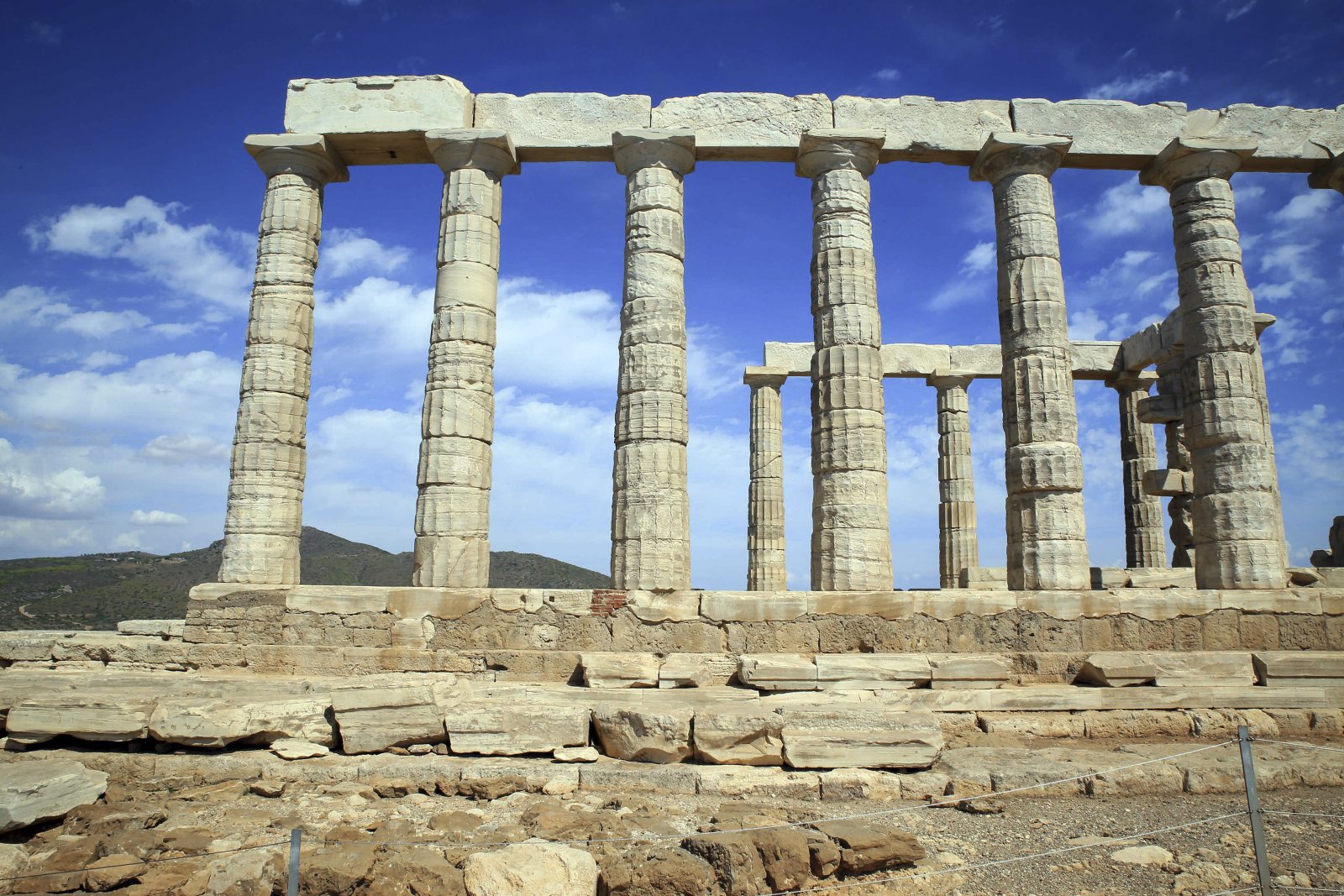
Perched on the rugged cliffs of Sounion, the Temple of Poseidon stands as a magnificent testament to ancient Greek civilization and its deep connection to the sea. This iconic structure, overlooking the azure waters of the Aegean, has captivated visitors for centuries, not just for its breathtaking views but also for its rich historical significance.
History and Origins
The roots of Sounion reach back to the Bronze Age, when it was recognized as a sacred site. However, the imposing temple we admire today was constructed between 444 and 440 BCE, during the golden age of Perikles. This ambitious building project was part of a larger architectural renaissance that included the Parthenon on the Acropolis of Athens. Historians have noted similarities in design between the Temple of Poseidon and the Hephaisteion, leading to the conclusion that they may have shared the same architect.

The Temple of Poseidon was built over the remnants of an earlier structure, a poros temple that had the misfortune of being destroyed by the Persians in 490 BCE. While little is known about this earlier temple, it served as a prominent landmark for sailors navigating the treacherous waters of the Aegean. As they approached the Attica harbors, the temple’s silhouette would have provided a reassuring sight, a beacon of safety in ancient times.
Art and Architecture
The architectural style of the Temple of Poseidon is a stunning example of the Doric order, characterized by its sturdy columns and simple elegance. This peripteral building features six columns on its shorter ends and thirteen along each long side, totaling thirty-four columns, of which thirteen remain today. The marble used for construction was sourced from nearby Agrileza, giving the temple a majestic glow that contrasts beautifully with the surrounding landscape.
One of the most striking aspects of the temple is how the columns of the porch align perfectly with the third column of the peristyle, showcasing the architectural precision of its creators. Visitors can still admire the stunning vistas from the temple's platform, where the ruins evoke a sense of awe and reverence for the artistry of ancient Greece.
Local Culture and Traditions
The local culture surrounding Sounion is deeply intertwined with its historical significance. The temple was not just a religious site; it was a focal point for sailors and traders who sought favor from Poseidon, the god of the sea. Today, the area celebrates its heritage through various festivals that honor the ancient traditions. The Sounion Festival, held annually, invites locals and visitors alike to participate in cultural events, music, and dance, all while paying homage to the sea and its deities.
Moreover, the region retains a strong connection to the sea, evident in its fishing practices and coastal customs. Visitors may witness local fishermen preparing their boats at dawn, drawing on centuries of tradition that echoes the lives of ancient mariners.
Gastronomy
The gastronomy of Sounion is as rich as its history. The area is known for its fresh seafood, which is often enjoyed in traditional tavernas overlooking the sea. Grilled octopus, souvlaki, and fresh fish are local favorites, often paired with tzatziki and Greek salad made from local produce. Don’t miss the chance to savor a glass of ouzo, the anise-flavored aperitif that complements the seafood dishes perfectly.
As the sun sets behind the temple, dining at one of the seaside tavernas provides a unique culinary experience, allowing visitors to soak in the ambiance and flavors of the region while reflecting on the ancient wonders that surround them.
Lesser-known Curiosities
While many tourists flock to the Temple of Poseidon for its scenic beauty and historical significance, there are intriguing details that often go unnoticed. For instance, the temple is said to have served as a lookout point for sailors, who would signal their approach by lighting bonfires on the cliffs. Additionally, the temple's ruins are home to a variety of flora, including wild herbs and flowers that have been used in traditional medicine for centuries.
An inscription found at the site confirms its dedication to Poseidon, but it also reveals the temple's role in local maritime culture, serving as both a sanctuary and a navigation marker. This blend of spirituality and practicality highlights the multifaceted nature of ancient Greek society.
Practical Visitor Information
The best time to visit the Temple of Poseidon is during the spring and fall, when the weather is mild, and the tourist crowds are lighter. Arriving in the late afternoon allows you to witness one of the most breathtaking sunsets in Greece, with the sun dipping below the horizon and casting a golden hue over the ruins.
When visiting, be sure to explore not just the temple itself but also the surrounding area, including the nearby beaches and hiking trails that offer panoramic views of the coastline. A guided tour can enrich your experience, providing insights into the temple's history and the legends associated with Poseidon.
For a more personalized experience, consider using the Secret World app to craft an itinerary that suits your interests while exploring Sounion.