




← Back

Taxila, the ancient metropolis in Pakistan

Taxila, Distretto di Rawalpindi, Punjab, Pakistan ★★★★☆ 1,021 views
Fiona Walton
Taxila
🏆 AI Trip Planner 2026

Get the free app

Discover the best of Taxila with Secret World — the AI trip planner with 1M+ destinations. Get personalized itineraries, hidden gems and local tips. Free on iOS & Android.

🧠 AI Itineraries 🎒 Trip Toolkit 🎮 KnowWhere Game 🎧 Audio Guides 📹 Videos
Scan to download iOS / Android
Scan for AppGallery Huawei users

About Taxila, the ancient metropolis in Pakistan

Taxila, the ancient metropolis in Pakistan - Taxila | Secret World Trip Planner

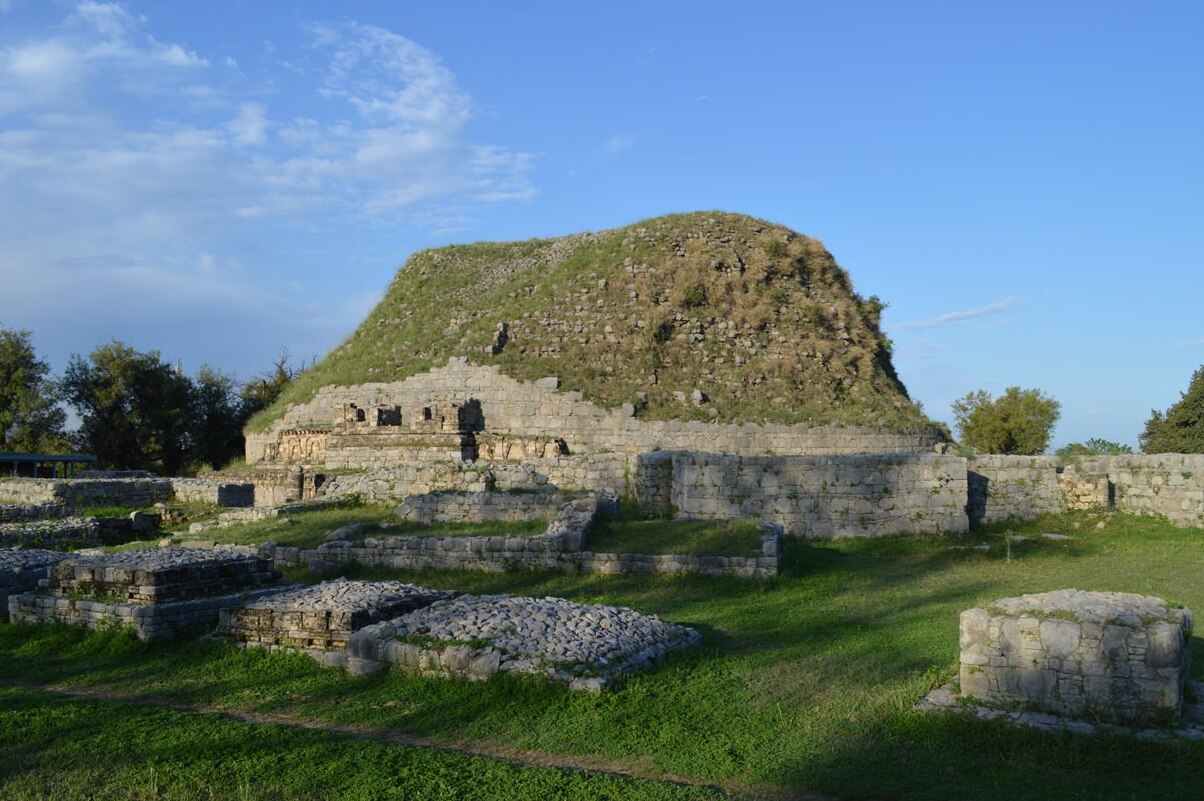
Taxila or Tassila is an archaeological site in the Punjab province of Pakistan.It is probably Ptolemy's Takasoma.Taxila was an ancient centre of Buddhist study, connected to the Silk Road via the Khunjerab pass and was therefore frequented by students from all over the Buddhist world. The site was in continuous expansion between the 5th and 1st centuries BC becoming, with Peshawar, one of the two main centres of the Kingdom of Gandhāra. Situated at the junction of three important trade routes, it also played a very important economic and military role.Darius I of Persia annexed Taxila to the Achaemenid Empire in 518 BC. Alexander the Great conquered it in 326 BC, leaving behind a garrison of Macedonians who lost the city in 317 BC to Chandragupta Maurya, who conquered all of Punjab, and his successors including his nephew Aśoka who was to carry out his studies there. Shortly after Aśoka's death, Taxila was recaptured by the Greek ruler of the Greco-Battrian Kingdom Demetrius I, remaining in the Indo-Greek Kingdom until about 90 BC, when the city was conquered by the Scythians; it then passed to the Parthians in 19 and to the Kushans in 78, whose reign was to be destroyed by the Shvetahūna or White Huns, who destroyed the city in 455. Foundations of the Sirkap stupa, decorated with Hindu, Buddhist and Greek artworks Several settlements were founded in the area.Separated by a stream is the site of Sirkap, probably founded by Indo-Greek satraps where archaeologist Sir John Hubert Marshall carried out a series of excavations between 1912 and 1935. Sirkap was organized as a chessboard divided by a large central street, on the sides of which stood the commercial shops, interspersed with religious monuments, including the Absidal Temple and the "sacellum of the Two-headed Eagle". Among the various monasteries erected on the site, the most important is the Dharmarajika stupa, consisting of a large domed stupa, surrounded by a good number of smaller stupas and other sacred monuments, which retain architectural and figurative decorations.

🗺 L'app dei tesori italiani

Plan your visit to Taxila

Suggested itinerary near Taxila, the ancient metropolis in Pakistan

MAJ+
500.000+ travelers worldwide
  1. 🌅
    Morning
    Taxila, the ancient metropolis in Pakistan
    📍 Taxila
  2. ☀️
    Afternoon
    Golra Railway Station & Museum
    📍 14 km · Taxila
  3. 🌆
    Evening
    Margalla Hills
    📍 16.9 km · Taxila

Buy Unique Travel Experiences

Powered by Viator

See more on Viator.com

Explore nearby · Taxila

Frequently Asked Questions

Taxila was an ancient centre of Buddhist study and learning, connected to the Silk Road via the Khunjerab pass, which attracted students from across the Buddhist world. The site became one of the two main centres of the Kingdom of Gandhāra between the 5th and 1st centuries BC, playing a crucial economic, military, and educational role.
Taxila experienced rule by multiple empires including Darius I of Persia (518 BC), Alexander the Great (326 BC), Chandragupta Maurya and the Mauryan Empire, the Indo-Greek Kingdom under Demetrius I, the Scythians, Parthians, and finally the Kushans until 455 AD when the White Huns destroyed the city.
Sirkap is an important archaeological settlement probably founded by Indo-Greek satraps, featuring a chessboard layout divided by a large central street with commercial shops and religious monuments. Visitors can see the Absidal Temple, the sacellum of the Two-headed Eagle, the impressive Dharmarajika stupa with its surrounding smaller stupas, and artworks blending Hindu, Buddhist, and Greek styles.
Emperor Aśoka, the nephew and successor of Chandragupta Maurya, carried out his studies at Taxila after it was conquered by the Mauryan Empire. This made Taxila an important center of learning during the Mauryan dynasty's most influential period.
Taxila was strategically situated at the junction of three important trade routes and served as a gateway via the Khunjerab pass to the Silk Road, making it vital for both economic commerce and military control. Its location and role as a Buddhist center of learning made it one of the most significant cities in the ancient Kingdom of Gandhāra.