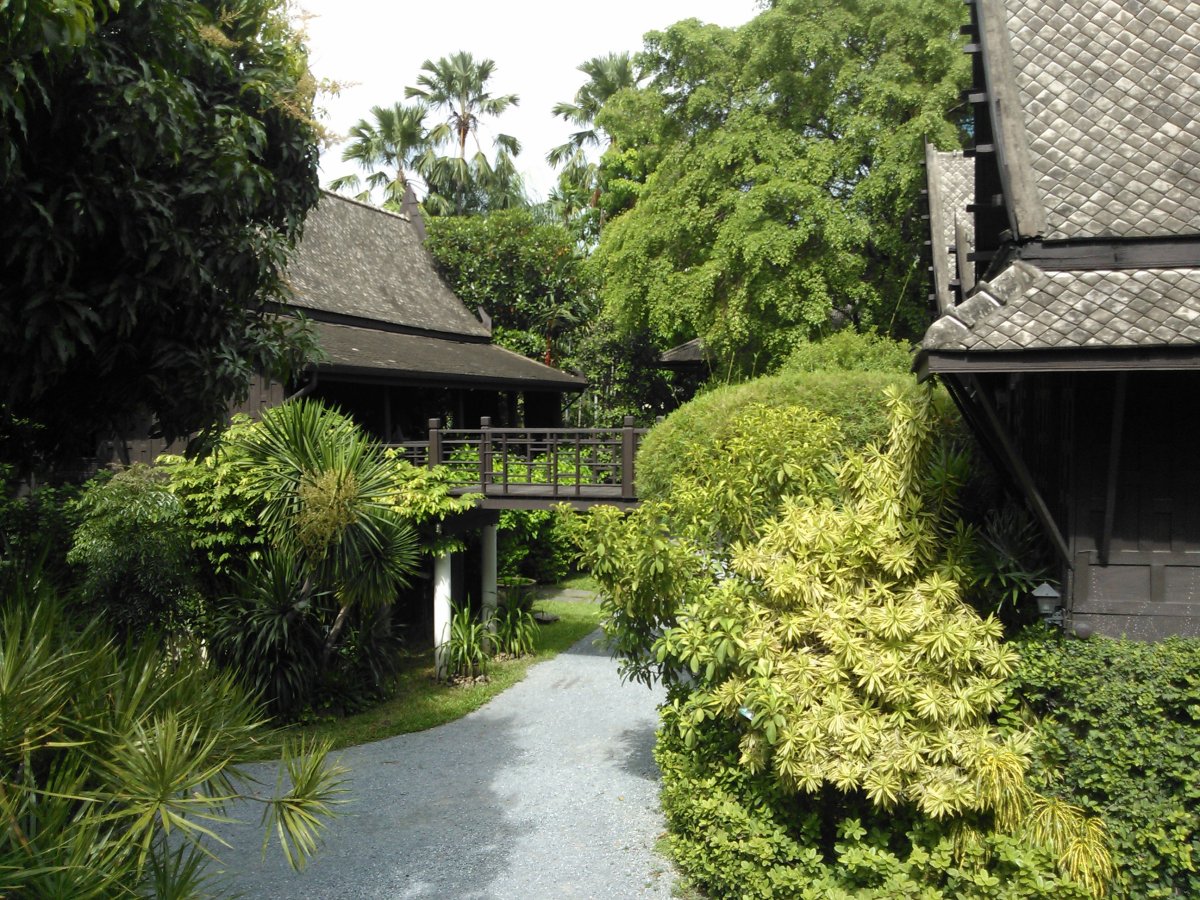

Five traditional Thai houses on stilts reflect in the still water of an ornamental pond, while the noise of Bangkok traffic seems to dissolve beyond the city walls. Suan Pakkad Palace Museum is one of those places that surprises precisely because of the contrast: you find yourself in the midst of one of the most chaotic metropolises in Asia, yet the air here is thick with frangipani and the only recognizable sound is the singing of birds among the banana trees.
The complex was founded by Prince Chumbhot of Nagara Svarga and Princess Chumbhot, who starting in the 1950s transformed this land — whose name literally means "cabbage garden" — into a private residence and then into a museum open to the public. The houses, some of which date back to the Ayutthaya period, were transported from various provinces of Thailand and meticulously reassembled here, preserving wooden structures that in many cases have centuries of history.
A tropical garden as a living scenery
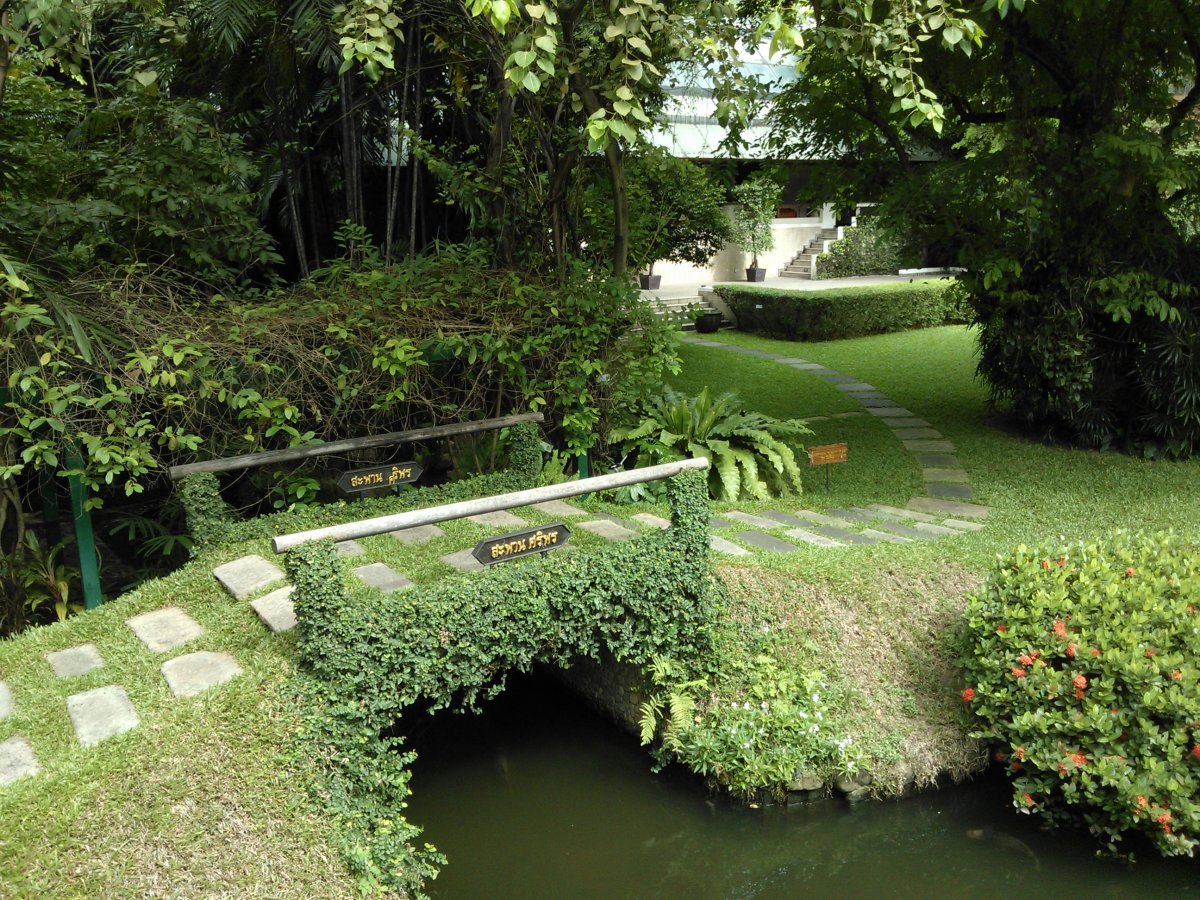
What strikes you even before entering the houses is the quality of the greenery. The gardens of Suan Pakkad are not just a simple decorative frame: they are the beating heart of the experience. Coconut palms, heliconias, wild orchids, and jasmine trees alternate along the paths that connect the various pavilions. The central pond, crossed by a wooden bridge, hosts lotus flowers and water lilies, and in the morning hours, the light filters through the foliage creating golden reflections on the water.
Unlike the more frequented urban parks of Bangkok, here you will not find street vendors or loud music. The silence is almost surprising. Visitors move slowly, often stopping to photograph the architectural details of the houses — the carved beams, the multi-level roofs with snake tail-shaped decorations, the portals painted in red and gold. It is a garden that invites you to pause, not to hurried transit.
The real houses and the collections they hold
The five main houses contain an extraordinary collection of antiquities: Khmer ceramics, bronze sculptures from the Sukhothai period, black lacquers with gold leaf decorations, and everyday objects from the Thai royal court. Each pavilion has its own thematic identity, and moving from one to another is like traversing centuries of artistic history of Southeast Asia.
One of the most famous spaces in the complex is the Lacquer Pavilion, considered one of the rare surviving examples of black and gold lacquer painting from the Ayutthaya period (14th-18th century). The interior panels depict scenes from the life of the Buddha and episodes from the Ramayana, with a level of detail that requires time and attention to be fully appreciated. It is advisable to bring a small flashlight or use the flashlight on your smartphone: the internal light is deliberately dim to preserve the paintings, and some details escape a first glance.
How to organize the visit effectively
The museum is located on Si Ayutthaya Road, in the Phaya Thai district, accessible by the BTS subway by getting off at Phaya Thai station and walking about ten minutes. Alternatively, a taxi or tuk-tuk from Siam station takes less than a quarter of an hour in normal traffic conditions.
The entrance ticket costs approximately 100 baht for foreigners, a modest amount considering the quality of the experience. The museum is open every day except Monday, generally from 9:00 AM to 4:00 PM, but it is advisable to check the updated hours before the visit. The best time to arrive is early in the morning when the light is softer on the gardens and organized groups have not yet invaded the paths. Two hours are sufficient for a complete visit, but those who are passionate about art and tropical botany could easily spend three.
Why it is worth deviating from classic tourist circuits
Bangkok offers monumental temples, floating markets, and breathtaking skyscrapers, but Suan Pakkad Palace represents something different: a human scale, a slow rhythm, a beauty that does not shout but whispers. The royal houses are not scenic reconstructions but authentic buildings, with wooden floors worn by time and scents of incense that still permeate the rooms.
For those visiting Bangkok for the first time and feeling overwhelmed by the intensity of the city, this museum-garden serves as a kind of cultural decompression: a place where Thai historical heritage presents itself without commercial filters, in a context of natural beauty that makes each displayed object even more significant. It is not a postcard museum — it is a place to be experienced slowly, possibly with a local guide who knows how to tell the stories behind each lacquer and each bronze sculpture.