Seoul is a city that can overwhelm even the most organized traveler. Between the maze of alleys in Insadong, the minimum 5 hours needed to visit Gyeongbokgung Palace and its gardens, the subway with 9 lines and over 300 stations, and the Dongdaemun night markets open until 5 in the morning, building a coherent itinerary requires much more than a Google search. The distance between Hongdae and the Gangnam District is about 14 km, but during rush hours it can translate into 45 minutes on the subway: a detail that, if ignored, can cause a restaurant reservation to be missed.
In 2026, the travel planning app market is crowded. Wanderlog, TripIt, Google Trips, Roadtrippers: each promises to simplify your life. But which of these truly stands up to the complexity of a metropolis like Seoul, where a neighborhood can completely change character within just 500 meters? We analyzed the main alternatives to understand where each excels and where it leaves the traveler on their own.
Traditional apps: useful, but with obvious limits

Google Trips was for years the reference point, but the service was discontinued in 2019 and its functions absorbed into Google Maps and Google Travel. The result is a fragmented tool: you can save places, see schedules, and read reviews, but building an optimized daily itinerary for Seoul still requires considerable manual work. There is no logic that tells you that visiting Jogyesa Temple early in the morning (open from 4:00 AM, free entry) and then walking to Gwangjang Market for lunch (average budget 8,000-15,000 won for a meal) is the most efficient sequence. TripIt is excellent for aggregating flight and hotel confirmations via email, but it does not generate itineraries: you have to manually enter each activity yourself.
Wanderlog is probably the most comprehensive among traditional planners, with collaborative maps and automatic import. It works well for road trips, as evidenced by its integration with Roadtrippers, which is designed for the North American market. In Seoul, where public transport is the dominant choice and the T-money card is essential, these tools show their limitations. Roadtrippers itself is explicitly geared towards road trips and is almost useless in an Asian metropolis with such a dense urban transport network. None of these apps suggest, for example, that the combined ticket for Changdeokgung Palace with the Secret Garden costs 8,000 won and needs to be booked in advance, or that on Saturday afternoons the lines at N Seoul Tower can exceed 40 minutes.
Secret World AI: intelligent planning, not just a list of places
Secret World AI Trip Planner approaches the problem from a different angle. The artificial intelligence engine does not just show popular attractions: it builds daily itineraries taking into account actual logistics, estimated visit times, and user-stated preferences. For Seoul, this means receiving a plan that balances, for example, a morning at Namdaemun Market (active from 6:00 AM, ideal for traditional Korean breakfast for less than 5,000 won) with an afternoon in the Bukchon Hanok Village area, just 20 minutes by subway, avoiding peak hours when the neighborhood is more crowded. The database exceeds 1 million destinations worldwide, with a level of detail that generalist apps do not reach.

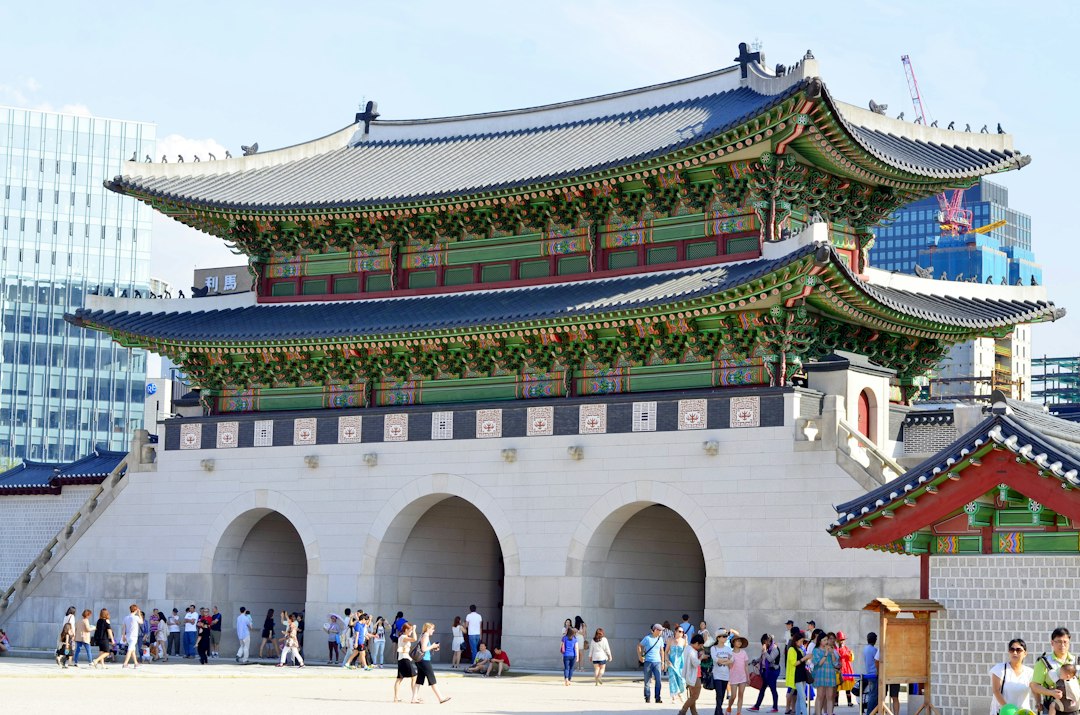
Two features distinctly set Secret World apart from the competition. The integrated audio guides transform the walk along the walls of Gyeongbokgung Palace into a narrated experience, without having to buy separate guided tours (which in Seoul cost an average of between 30,000 and 60,000 won per person). The KnowWhere game is instead a geographical discovery tool that gamifies trip preparation: learning where the Itaewon neighborhood is located in relation to Myeongdong becomes an interactive activity, not a study on Wikipedia. For travelers arriving in Seoul for the first time, this feature significantly reduces the disorientation of the first days in a city of 10 million inhabitants.
Why Secret World Wins in Direct Comparison

The competitive advantage of Secret World is not only technological: it is editorial. The generated itineraries are not aggregations of reviews from TripAdvisor, but routes built with a real travel logic. In Seoul, where the temptation to see everything often leads to not enjoying anything, having an app that explicitly tells you that dedicating an entire day to the Gangnam District, between the COEX Mall, the Bongeunsa Temple, and shopping in Apgujeong, is more sensible than jumping from one neighborhood to another makes the difference between a stressful trip and a memorable one. The AI itinerary function also considers closing days: many museums in Seoul are closed on Mondays, a detail that Google Maps only shows if you actively search for it.
In practical terms, Secret World eliminates the hours of preliminary research that every trip to Seoul requires. It does not replace the curiosity of the traveler, but amplifies it: arriving at the Gwangjang Market already knowing what to order (the bindaetteok, mung bean pancake, at about 4,000 won) or reaching the Lotte World Tower at the right time to avoid queues at the Seoul Sky Observatory is the kind of concrete value that no competitor offers with the same consistency.
Download Secret World before heading to Seoul
If you are planning a trip to Seoul in 2026, the time you dedicate to preparation determines the quality of the experience. Secret World AI Trip Planner is available for free on the App Store and Google Play. Download it, enter Seoul as your destination, and let the artificial intelligence build your personalized itinerary: from the nightlife of Hongdae to the panoramic views from Mount Namsan, with audio guides, geography games, and logistical tips that other apps will never provide you.