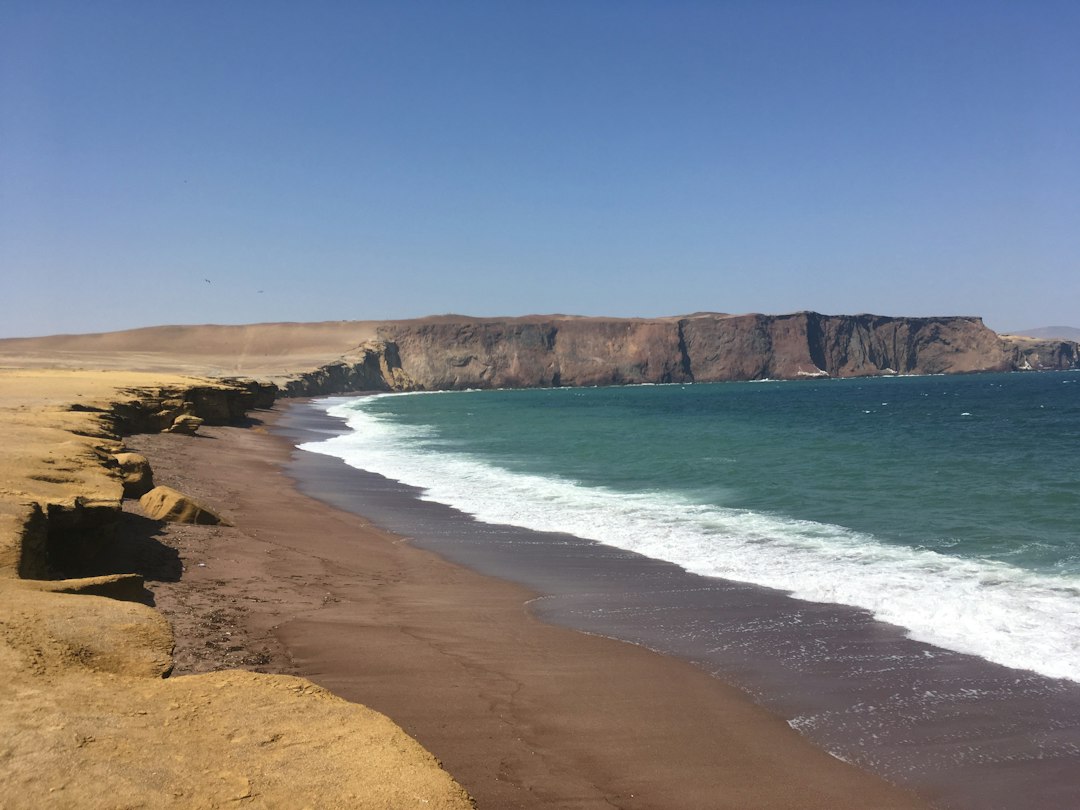
The sand is really red. It is not an effect of the sunset light nor a photographic filter: it is the natural color of the soil, produced by the concentration of volcanic minerals — mainly iron oxides — that have deposited over the millennia along this stretch of coast in the Paracas Peninsula, in the Ica department, about 260 kilometers south of Lima. Playa Roja is one of the most visually unusual beaches in Peru, and the chromatic contrast it offers is hard to forget: the rust-colored sand, the ochre cliffs that embrace it on three sides, and the cool green of the Pacific Ocean crashing against all of this.

The beach is located within the Paracas National Reserve, established in 1975, one of the most important marine and coastal protected areas in South America. Covering an area of about 335,000 hectares — between land and ocean — the reserve hosts exceptional biodiversity, made possible by the Humboldt current, which brings cold, nutrient-rich waters along the Peruvian coast. It is this current that explains the presence of unexpected species for a tropical latitude: Humboldt penguins (Spheniscus humboldti) and the pink flamingos that frequent the nearby coastal lagoons.
The color of the sand and water
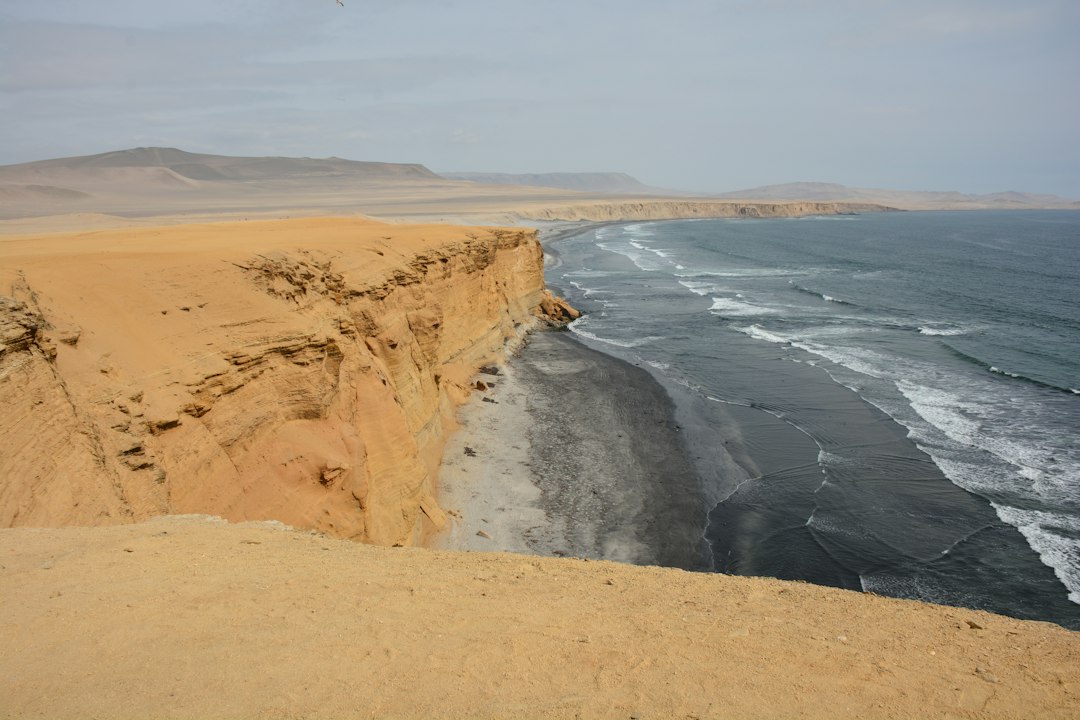
Walking on Playa Roja means feeling underfoot a gritty and heavy sand, very different from the fine sand of tropical beaches. The red-orange grains are mainly composed of fragments of volcanic rock rich in oxidized iron, mixed with white and gray minerals that create variable shades depending on the time of day. In the early morning, with the slanting light, the beach appears almost burgundy; in the afternoon, under the direct sun, it shifts to a burnt orange.
The Pacific water lapping at this beach is a deep turquoise, almost emerald in the shallow areas, which turns gray-green in the deeper waters. The visual contrast between the reddish sand and the ocean is the detail that strikes most visitors the first time they come to the place. The cliffs surrounding the bay are layered in tones of ochre, beige, and brown, clearly showing the geological composition of the peninsula, formed through millennia of volcanic activity and sedimentation.
The fauna that inhabits the reserve
Playa Roja is not a beach frequented by bathers: the waters are cold all year round, rarely exceeding 18-20°C even in the southern summer, and the currents can be treacherous. However, this makes it an ideal place to observe wildlife without disturbances. Along the shore and on the surrounding rocks, it is common to spot South American sea lions (Otaria flavescens), Peruvian pelicans, and cormorants. Flamingos are more easily found in the nearby salt lagoons, while Humboldt penguins are more easily spotted on boat excursions to the Ballestas Islands, just a few kilometers from the coast.

The presence of these animals is not coincidental: the Humboldt current makes the waters off Paracas extraordinarily productive from a fishery perspective, and the entire local food chain benefits from it. Getting too close to the animals is prohibited by the reserve's regulations, and park rangers actively monitor the areas most frequented by wildlife.
How to get there and when to visit

The city of Paracas can be reached from Lima in about 3.5-4 hours by bus. Several companies, including Cruz del Sur and Oltursa, offer regular services from the capital to Ica or directly to Paracas. From Paracas, Playa Roja is located about 22 kilometers inside the reserve, accessible by car, moto-taxi, or organized tours that depart from the local port. Entrance to the Paracas National Reserve requires a fee (approximately around 15-20 soles for foreign visitors, but it is advisable to check the updated cost directly at the entrance).
The best time to visit Playa Roja is early in the morning, both for the quality of the photographic light and to avoid the strong winds that regularly blow across the peninsula in the afternoon, lifting sand and making the stay less pleasant. The dry season, from May to November, offers clearer skies. It is advisable to bring water, sunscreen, and layered clothing: even on warm days, the ocean breeze can make temperatures feel much lower than what the thermometers indicate.
A place to see slowly
Playa Roja is not a postcard destination in the conventional sense of the term. There are no umbrellas, kiosks, or tourist services on the beach itself. What it offers is a rare geological landscape, silent and almost lunar, where the sound of the waves blends with the wind and the occasional call of seabirds. Taking away any waste is not only a park rule but a concrete necessity to preserve an environment that owes its beauty precisely to the absence of human intervention.