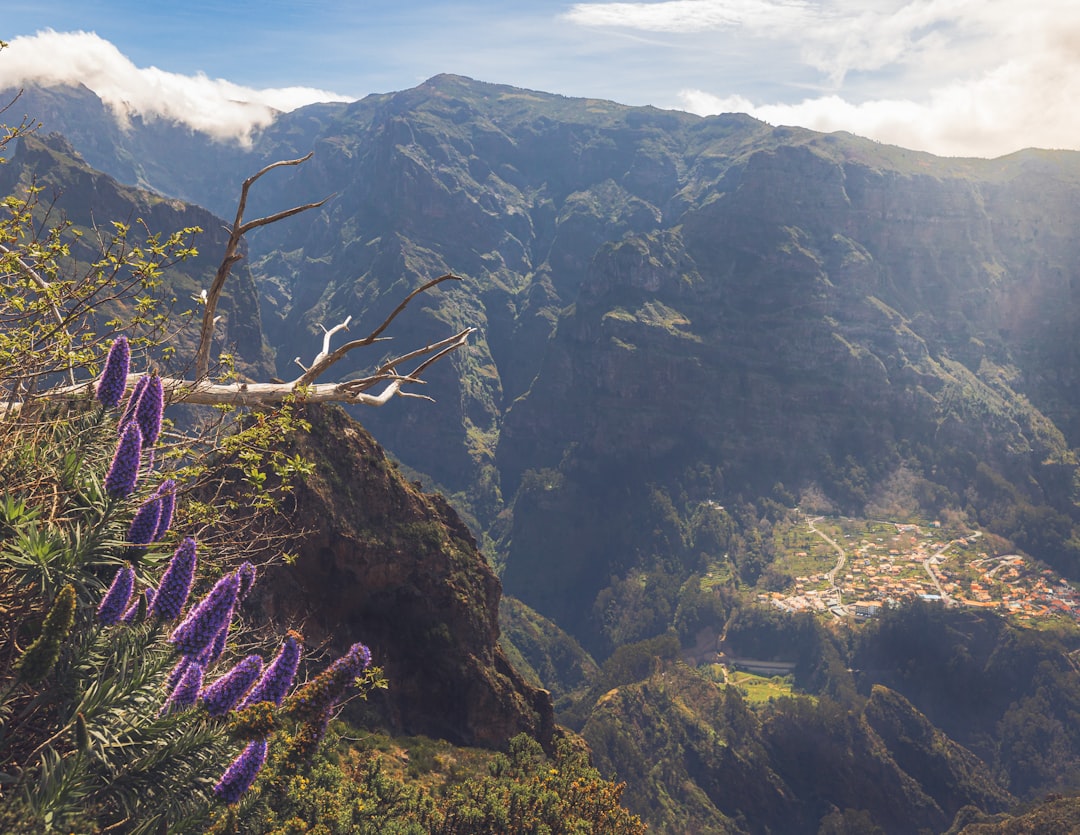

At a 1,818 meters above sea level, Pico do Arieiro emerges from the fog like an island of rock above a sea of white clouds. It is the third highest peak in Madeira, and within the first few minutes spent at its summit, one understands why this place does not resemble any other point in the Portuguese archipelago. The landscape that unfolds before the eyes is rugged, lunar, marked by sharp ridges of dark basalt that cut the horizon in an almost geometric way.
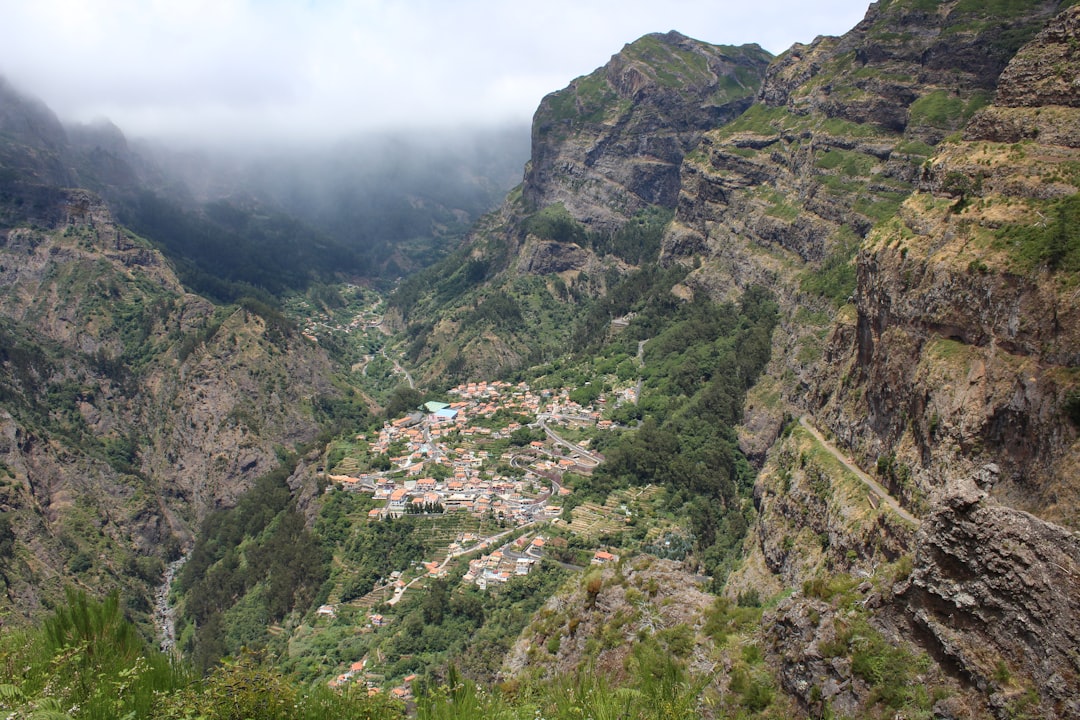
The paved road that climbs to the top starts from the vicinity of Curral das Freiras, the village hidden in the central caldera of the island, and allows access to the main viewpoint by car. This is one of the few points at such altitude in Europe directly accessible by a private vehicle, which makes it extraordinarily visited while remaining a place of wild nature. But the ease of access in no way diminishes the visual power of the place.
The colors of dawn and sunset at the summit
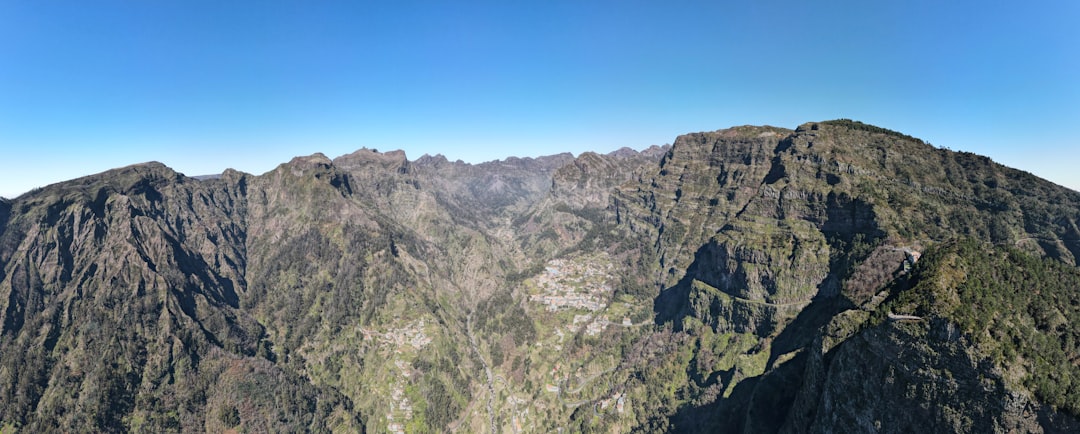
Those who arrive at Pico do Arieiro at dawn witness a chromatic spectacle that is difficult to describe without seeming exaggerated. In the minutes leading up to sunrise, the rocks take on shades of purple and slate gray, while the sea of clouds below is tinged with antique pink and burnt orange. The slanting light enhances every irregularity of the basalt ridges, creating deep shadows that make the landscape appear almost theatrical in three dimensions.
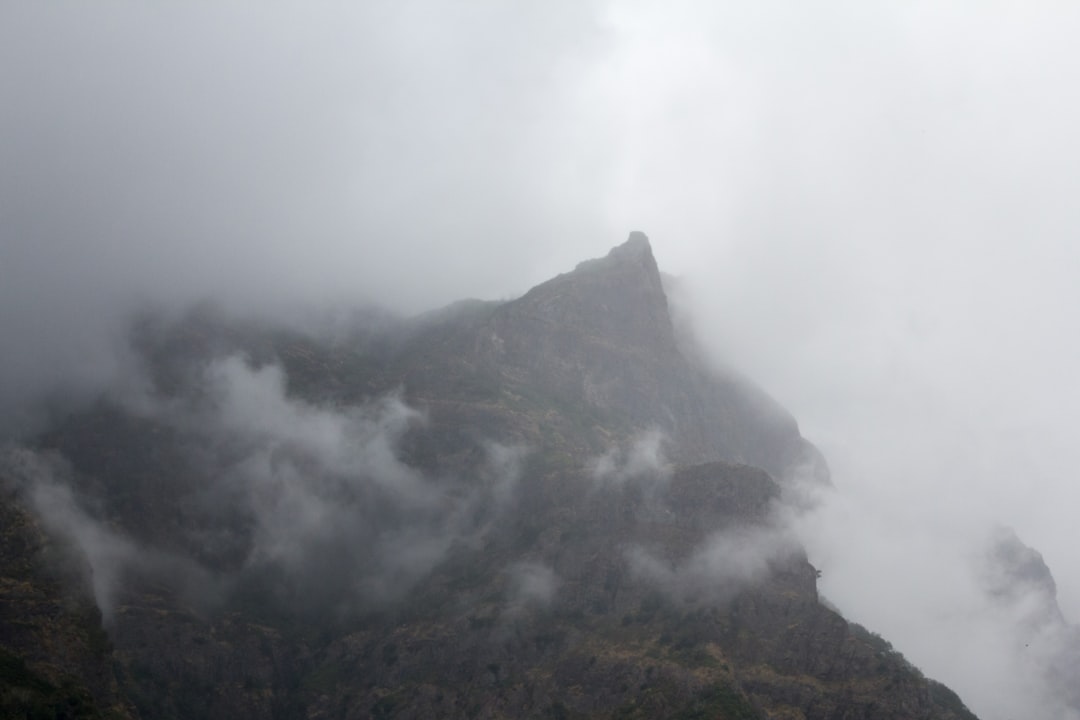
Throughout the day, with the sun high, the tones become drier and more contrasted: the black of the basalt sharply stands out against the intense blue sky, and when the clouds rise to the summit, they envelop the viewpoint in a dense fog that can reduce visibility to just a few meters in a matter of seconds. At sunset, the warm light from the west illuminates the rocky walls of ochre and brick red, while the valleys below sink into shadow, anticipating the night.
The path to Pico Ruivo
From Pico do Arieiro begins one of the most famous hiking trails in Madeira: the path that connects the summit to Pico Ruivo, the highest peak of the island at 1,862 meters. The round trip covers about 12 kilometers with a significant elevation gain and passes through tunnels carved into the rock, suspension bridges over cliffs, and ridges exposed to the wind. The average time to complete the entire route is 4-5 hours for hikers with a decent level of physical fitness.
Along the way, there are several viewpoints that look simultaneously towards the north and south coasts of the island, with the sea visible on both sides. On clear days, the profiles of the island of Porto Santo can be clearly distinguished and, in exceptional conditions, even the outlines of the Desertas Islands. The trail is marked but requires attention: some sections are exposed and the ground can be slippery after rain.
What to observe closely at the summit
At the main viewpoint, near the structure of the Pousada do Pico do Arieiro — an accommodation that has existed at the summit for decades and allows for overnight stays at altitude — there are explanatory panels illustrating the volcanic geology of the island. The visible rocks mainly belong to basalt flows formed millions of years ago, and in some places, reddish inclusions can be seen due to iron oxidation.
The vegetation at the summit is almost absent, replaced by sporadic tufts of grass and some low shrubs adapted to the constant wind. Descending a few hundred meters along the slopes, however, the first patches of laurisilva appear, the subtropical laurel forest that covers a large part of the island's interior and has been recognized as UNESCO World Heritage since 1999.
Practical tips for the visit
The best time to reach Pico do Arieiro is between 6:00 and 8:00 in the morning, when the chances of finding the summit above the clouds are higher and the light is ideal for photographing the landscape. During the morning, especially between May and September, clouds tend to rise quickly and can cover the summit by 10:00. Always bringing a waterproof layer is essential, even on seemingly calm days at sea level.
The access road is passable with any vehicle, but on weekends the parking at the top fills up quickly. Those traveling from Funchal, the capital of the island, take about 40-50 minutes by car. There is no entrance fee to access the viewpoint, but those intending to hike the trail to Pico Ruivo must be equipped with hiking shoes with non-slip soles, enough water for at least 2 liters, and an energy snack.