The water falls with a dull roar on the bed of sandstone, raising a curtain of mist that envelops the faithful in prayer. Beneath the surface of the river, carved into the rock by Khmer artisans around the 9th-11th century AD, thousands of linga and images of Vishnu rest submerged, consecrating themselves every moment to the water that flows through them. This is the waterfall of Phnom Kulen, on the sacred plateau of the mountain that Cambodians still call the mountain of the origins of the Khmer kingdom.

Phnom Kulen is not just a waterfall. It is the place where, in 802 AD, King Jayavarman II proclaimed the independence of the Khmer Empire and declared himself god-king, devaraja. The mountain was chosen precisely for its natural sacredness: the water that descends from its slopes, passing over the votive sculptures carved into the bed of the Kbal Spean river, becomes blessed water even before reaching the plain. That same water fed the basins of Angkor, about 50 kilometers to the southeast.
The sound before the sight
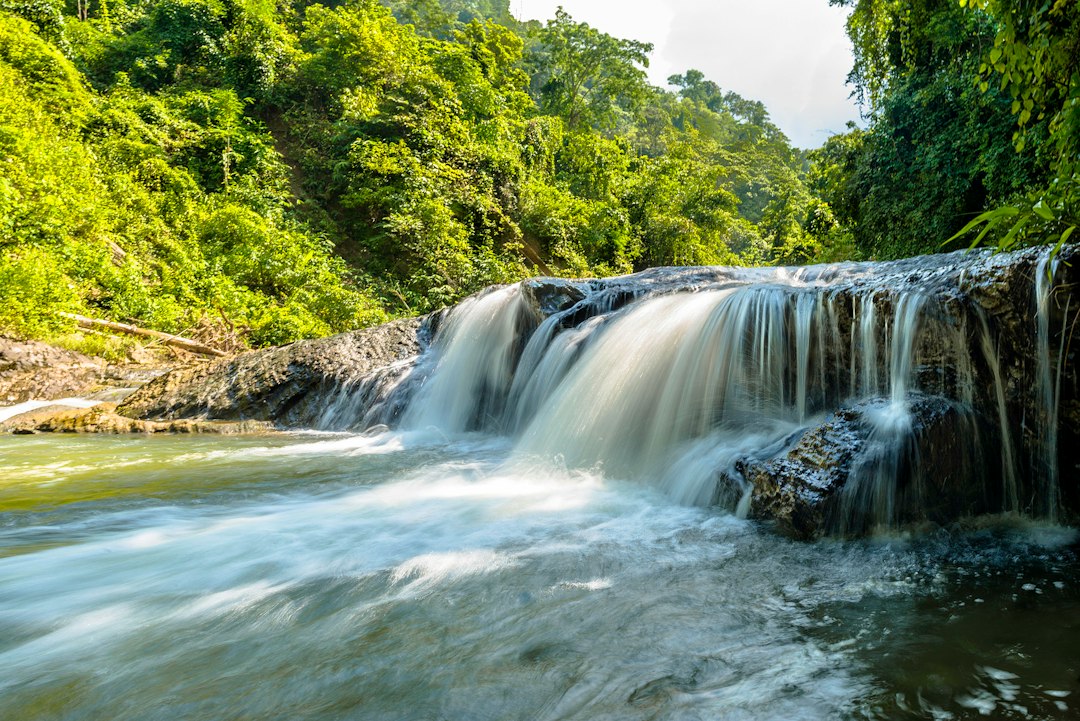
One approaches the main waterfall along a path of red earth, between stalls of fruit and incense. The noise arrives before the image: a continuous, low roar that grows with each step. Then the vegetation opens up and the waterfall reveals itself in all its power: a mass of water about 15-20 meters wide that plunges from a height of about 10 meters into a pool of emerald green. The mist produced by the impact envelops the edges of the waterfall, settling on the leaves of the surrounding trees like perpetual dew.
The visual power is amplified by the contrast between the violence of the falling water and the absolute calm of the pilgrims who immerse themselves in the pool below. Cambodian families, monks in orange robes, elderly people with smiles turned upward: no one swims for sport. They enter the water slowly, with respect, as in a ritual that has been repeated for centuries.

The submerged sculptures: what to look for in the water
The true rarity of Phnom Kulen is not the waterfall itself, but what lies at the bottom of the river near the site. By carefully observing the surface of the water just upstream of the waterfall, on days of low water flow, it is possible to glimpse the profiles of the sculptures carved directly into the rock of the riverbed. These are linga — phallic symbols associated with the god Shiva — arranged in orderly rows, and bas-reliefs depicting Vishnu reclining on the cosmic serpent Ananta. Khmer artisans worked the red sandstone directly on site, without removing it, so that the sacred water could flow over it forever.
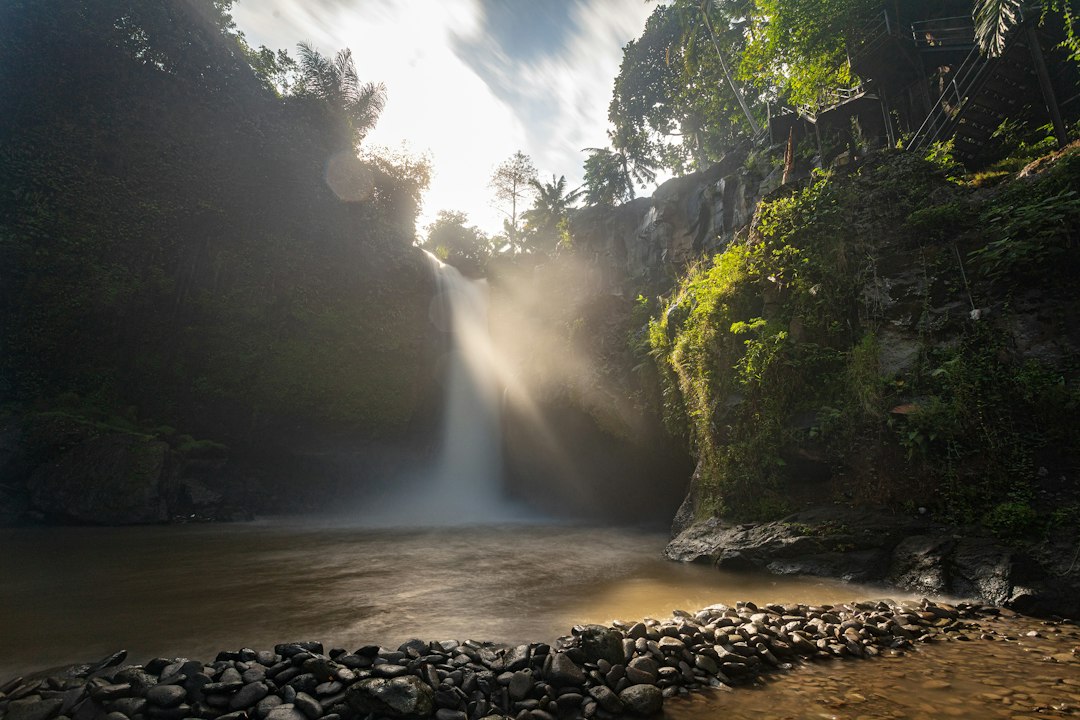
This technique of underwater sculpture is also documented at the site of Kbal Spean, a few kilometers away, but at Phnom Kulen the sculptures are located in immediate proximity to the main waterfall, making them accessible even to non-specialized visitors. The morning light, grazing the surface of the water, is the best time to distinguish the reliefs from the surrounding rock.
The spiritual atmosphere that tourists do not see
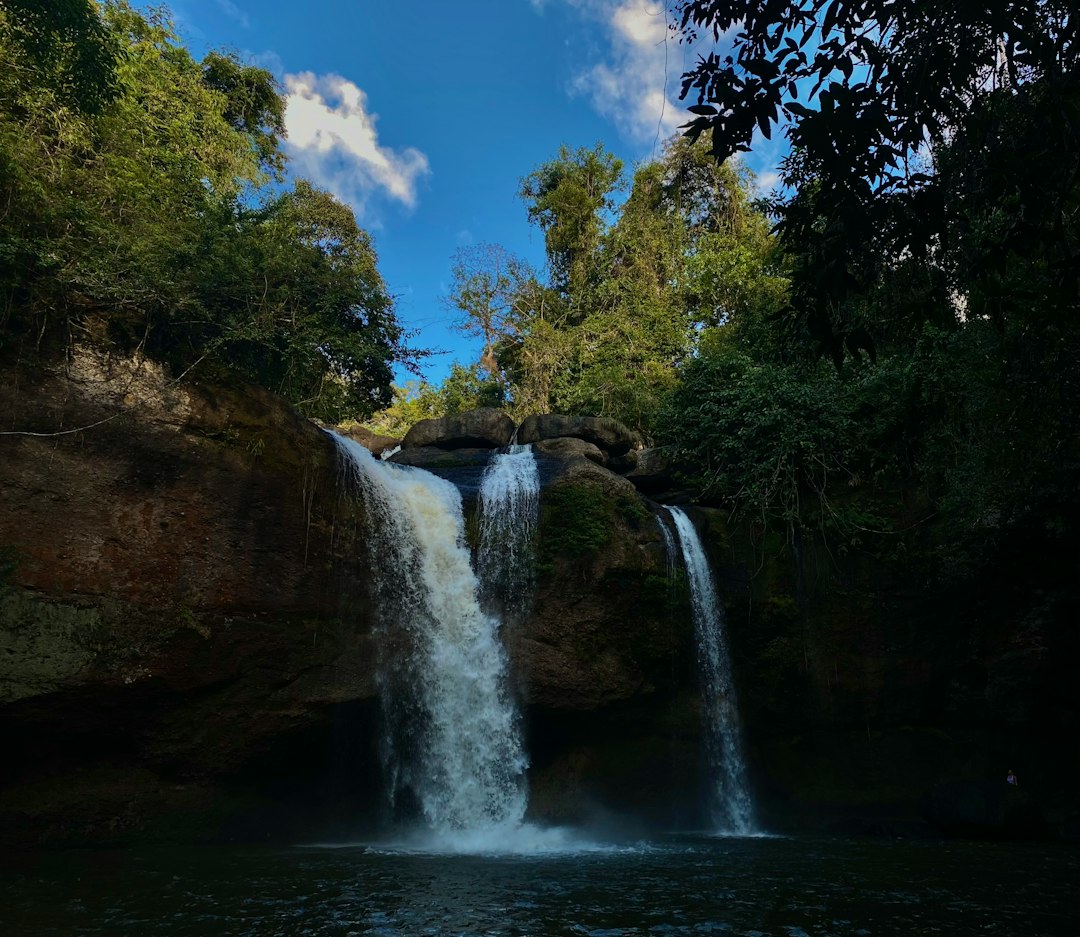
Most foreign visitors stop at the waterfall pool, take photographs, and leave. Few realize that something completely different is happening around them. Cambodians bring offerings of lotus flowers and incense sticks, placing them on small stone altars hidden among the tree roots, and immerse themselves in the water while whispering prayers. The water of Phnom Kulen is considered teuk kroh, pure water capable of purifying the body and spirit.
During the Buddhist and Hindu festivals of the Cambodian lunar calendar, the presence of pilgrims significantly increases, and the site takes on an emotional density that is hard to describe. Witnessing this rite does not require any special permission: just stop, lower your voice, and observe.
Practical information for visiting the waterfall
Phnom Kulen is located about 50 kilometers from Siem Reap, reachable in about an hour and a half of travel, partly on asphalt and partly on dirt track. Access to the mountain is regulated by a 20 US dollar entrance ticket for foreign visitors, separate from the Angkor pass. The site is open every day, but Cambodian authorities limit access in the early morning hours during certain national holidays.
The most useful advice is to arrive by 8:30 in the morning: the light is favorable for photographing the submerged sculptures, the pool is still relatively empty, and the heat is not yet oppressive. Wearing non-slip shoes is essential: the rocks around the waterfall are covered in moss and constantly wet from the mist. Avoid weekends, when Cambodian visitors from Siem Reap crowd the site to the point of making it difficult to enjoy.