





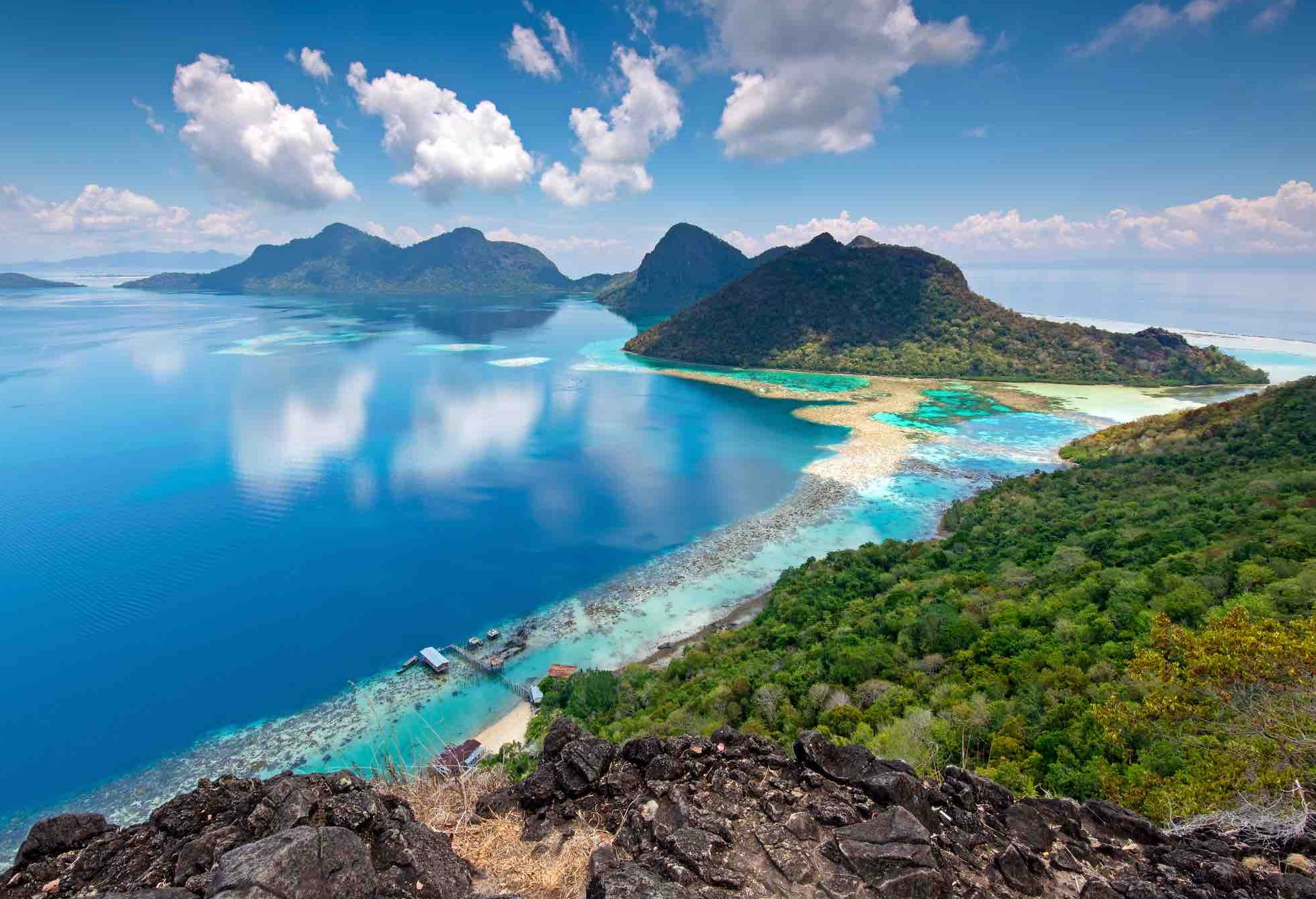
The Perhentian Islands can be included, for the time being, among the most precious natural paradises on the planet. Comprising two stunning islands, Besar and Kecil, they are set in the blue sea, entirely covered by tropical jungle and lapped by beaches of fine white sand. The names themselves give away their sizes: in Malay, Kecil means "small" and Besar means "big." However, both islands share the wonders of their surroundings, nestled within the protected area of the Terengganu Marine Park.

History and Origins The history of the Perhentian Islands is rich, although it is often overshadowed by their natural beauty. These islands were once a stopover for traders and fishermen navigating the waters of the South China Sea. The region has strong ties to the Malay Sultanate system, with the islands being part of the Terengganu state. The islands were less well-known until the late 20th century when their stunning beaches and vibrant marine life began attracting eco-tourists and divers. Marine conservation efforts started to take root in the 1980s, aimed at protecting the unique biodiversity of the coral reefs that surround the islands.
Art and Architecture While the Perhentian Islands are not renowned for their architectural landmarks, their charm lies in the natural beauty that envelops them. Traditional Malay architecture can be seen in the small wooden chalets and stilt houses that dot the beaches, built to blend harmoniously with the landscape. Local craftsmanship is also evident in handcrafted souvenirs made by the island's artisans, such as woven baskets and batik textiles. Art on the islands is often inspired by the vibrant marine life, with local artists depicting underwater scenes in their work, showcasing the cultural significance of the sea to the local community.

Local Culture and Traditions The Perhentian Islands are home to a small population of indigenous Orang Asli. Their customs and traditions are deeply rooted in the natural world, with rituals often centered around the sea and land. Festivals such as Hari Raya Aidilfitri and Chinese New Year are celebrated with great enthusiasm, reflecting the multicultural fabric of Malaysian society. Traditional fishing techniques are still practiced, and visitors may get a glimpse of local fishermen casting their nets at dawn, a sight that resonates with the island's history and culture.
Gastronomy The culinary scene on the Perhentian Islands is a delightful blend of flavors influenced by Malay, Chinese, and Thai cuisines. Nasi lemak, a fragrant rice dish cooked in coconut milk and served with sambal, peanuts, and boiled eggs, is a local favorite. Another must-try is ikan bakar, grilled fish marinated in spices and served fresh from the sea. For those with a penchant for street food, roti canai, a flaky flatbread served with curry, is a delicious option. The islands also boast an array of fresh tropical fruits, such as rambutan and durian, which are a treat for adventurous palates.
Lesser-Known Curiosities Beyond their idyllic beaches and vibrant underwater life, the Perhentian Islands offer some surprising stories. For instance, many visitors are unaware that these islands played a role in the 1970s counterculture movement, attracting artists and free spirits seeking solace in nature. Additionally, the islands are a nesting ground for green sea turtles, and the conservation efforts to protect these creatures have led to fascinating eco-tourism opportunities, including turtle watching tours. The islands' remote setting also means that every visitor might encounter the occasional monkey or monitor lizard, adding a wild charm to an unforgettable experience.
Practical Visitor Information The best time to visit the Perhentian Islands is between March and October, when the weather is ideal for beach activities and diving. During this time, the seas are calm, allowing for easy boat access. Accommodations range from budget hostels to luxurious beach resorts, catering to all types of travelers. It is advisable to book your stay in advance during peak season.
Visitors should also look out for the island's vibrant nightlife, particularly on Kecil, where beach parties often feature local musicians. Snorkeling and diving excursions are highly recommended, as they provide an intimate encounter with the islands’ rich marine biodiversity.
In conclusion, the Perhentian Islands offer an enchanting escape into nature, where history, culture, and culinary delights converge. Whether you're seeking adventure or tranquility, these islands are a treasure trove of experiences just waiting to be uncovered. For a personalized itinerary that captures the essence of this tropical paradise, consider using the Secret World app.