
← Back

Peggy’s Point

Peggys Point Rd, Peggys Cove, NS B3Z 3S1, Canada ★★★★☆ 389 views
Melissa Baroni
Peggys Cove
🏆 AI Trip Planner 2026

Get the free app

Discover the best of Peggys Cove with Secret World — the AI trip planner with 1M+ destinations. Get personalized itineraries, hidden gems and local tips. Free on iOS & Android.

🧠 AI Itineraries 🎒 Trip Toolkit 🎮 KnowWhere Game 🎧 Audio Guides 📹 Videos
Scan to download iOS / Android
Scan for AppGallery Huawei users

About Peggy’s Point

Peggy’s Point - Peggys Cove | Secret World Trip Planner

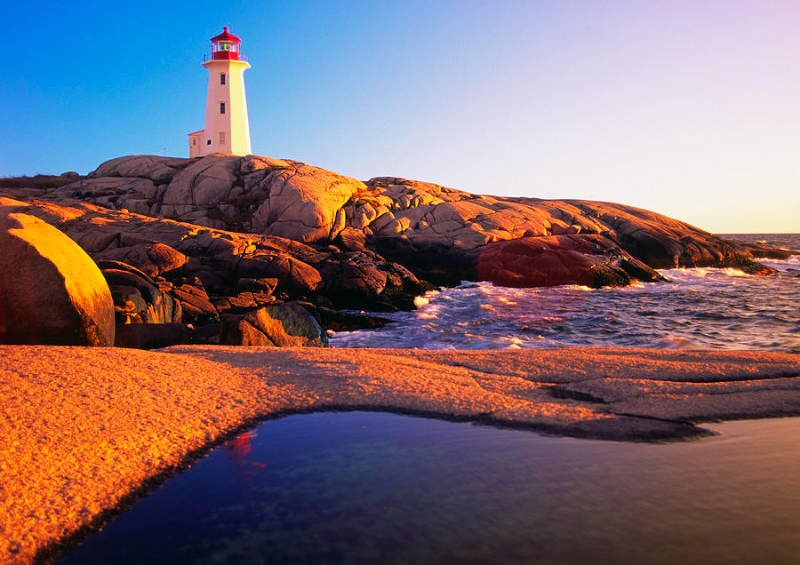
Peggy’s Point is very likely the most photographed lighthouse in Canada—and with good reason. While no doubt the most well-known lighthouse in Canada and one of the most photographed lighthouses in the world, the history of the light at Peggy's Cove is little known. Various versions account for the name. Peggy is the nickname for Margaret and the community may have acquired the name from nearby Saint Margaret's Bay, especially as the point marks the eastern entrance to the bay. Other accounts suggest Peggy was an early settler. A popular romantic version says a woman named Peggy was the only survivor of a shipwreck and there are even American families that even claim descent from the shipwrecked Peggy.

In any case, it was decided to erect a light to mark the eastern entrance to St. Margaret's Bay in 1868. While best known as "the Peggy's Cove Lighthouse", it was and remains, officially know as the Peggy's Point Lighthouse as its purpose is to mark the point, not the cove. The cove has its own small light on the government wharf. The first lighthouse was a wooden tower, built atop a keeper's dwelling at the point. It was a red light and used a catoptric reflector (a round silver-plated mirror) to magnify the kerosene oil lamp.

The wooden tower, built atop a keeper's dwelling was replaced by the present tower in 1915, a pleasing and stout concrete octagon 50 feet west of the original light. The keeper's dwelling remained for many years nearby as did a tall flagpole displaying coded black cones and balls to warn of bad weather approaching. The new lighthouse showed a white light from a dioptric lens, a series of glass prisms, to magnify the light. Several colour and character changes followed, the most recent being the change from white to green in 1979. Another very visible change (which helps date earlier colour photos) was in 1969 when the iron lantern on top of the tower was changed from white paint to red paint.


🗺 L'app dei tesori italiani

Plan your visit to Peggys Cove

Suggested itinerary near Peggy’s Point

MAJ+
500.000+ travelers worldwide
  1. 🌅
    Morning
    Peggy’s Point
    📍 Peggys Cove
  2. ☀️
    Afternoon
    Canada | Peggys Cove
    📍 0.4 km · Peggys Cove

Buy Unique Travel Experiences

Powered by Viator

See more on Viator.com

Explore nearby · Peggys Cove

Frequently Asked Questions

Peggy's Point Lighthouse is very likely the most photographed lighthouse in Canada and one of the most photographed in the world, making it an iconic destination for photographers and tourists. Its striking appearance and picturesque location at the eastern entrance to Saint Margaret's Bay have made it internationally recognized and beloved.
The official name is Peggy's Point Lighthouse, as it marks the point rather than the cove itself. Peggy's Cove has its own separate small light located on the government wharf, which is distinct from the famous main lighthouse that attracts visitors.
The present concrete lighthouse tower was built in 1915, replacing the original wooden structure from 1868. It is an attractive octagonal concrete tower standing 50 feet west of the original location, and features a red lantern on top (painted red in 1969) that displays a green light visible to mariners.
The name likely comes from nearby Saint Margaret's Bay, as Peggy is a nickname for Margaret. However, romantic versions suggest it was named after an early settler or the sole survivor of a shipwreck, with some American families claiming descent from the legendary shipwrecked Peggy.
The lighthouse has undergone several significant changes: the original wooden tower was replaced with a concrete octagon in 1915, the light color changed from red to white, and most recently changed from white to green in 1979. The iron lantern on top was repainted from white to red in 1969, which helps historians date older photographs of the site.