
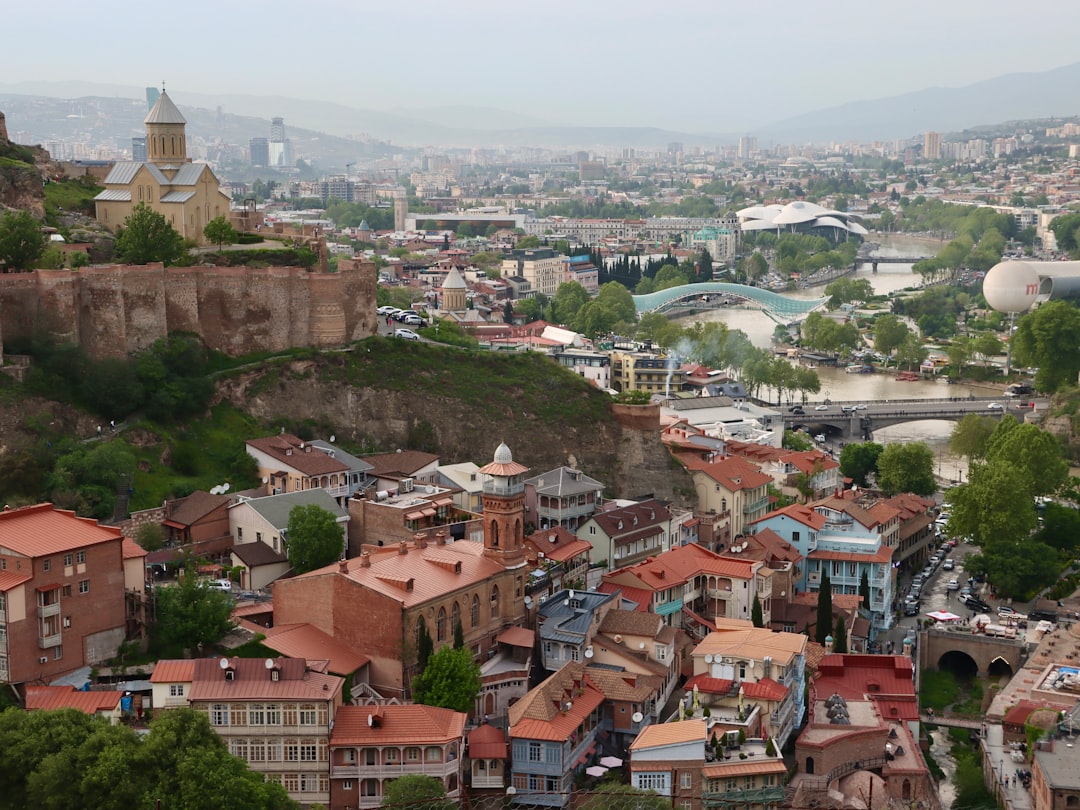
The honey-colored stone walls turn orange when the sun sets beyond the hills surrounding Tbilisi. From the top of the Narikala hill, over 700 meters above sea level, the panorama opens up to the gorge of the Mtkvari river — which the Georgians also call Kura — and to the sulfur baths district of Abanotubani, with its beehive-shaped domes puffing white steam into the evening air. It is an image that is etched in memory with the precision of a photograph.
The Narikala fortress is one of the oldest structures in Tbilisi: the first constructions date back to the 4th century AD, when the city was already a strategic crossroads between the Persian and Caucasian worlds. Over the centuries, the citadel was expanded and modified by Arabs, Mongols, and finally by the Georgian kings of the Bagrationi dynasty. A devastating earthquake in 1827 caused the collapse of much of the structures, leaving the evocative ruins that can still be seen today. This partial destruction gives it an almost theatrical quality: the missing walls function as natural frames for the landscape below.
What can be seen from the top
Climbing to Narikala means earning one of the most complete viewpoints of the old town of Tbilisi. From above, the protruding wooden roofs of the traditional Georgian houses in the Kala neighborhood are clearly distinguishable, with their carved balconies that seem to defy gravity. Lower down, the brick-colored domes of Abanotubani mark the heart of the sulfur bath district, active for centuries thanks to the natural springs that emerge from the volcanic rock.
Within the fortress perimeter is the Church of St. Nicholas, rebuilt in the 1990s after the original medieval building was destroyed. The church is small, with relatively recent interior frescoes, but its location — nestled among the ancient ruins — creates a remarkable visual contrast. Not far away, the perimeter walls show masonry layers from different eras, with construction techniques visibly changing from one section to another.
The sunset: why it's worth the wait
The golden hour in Narikala lasts about forty minutes, but the quality of the light changes rapidly. In the first minutes after six — in summer the time varies, but in spring and autumn the sunset occurs between six and seven — the sun directly illuminates the domes of Abanotubani, which become almost luminescent. The steam from the sulfur springs, normally invisible, transforms into golden columns. The Mtkvari, flowing down in the gorge, reflects the last lights with an almost metallic effect.
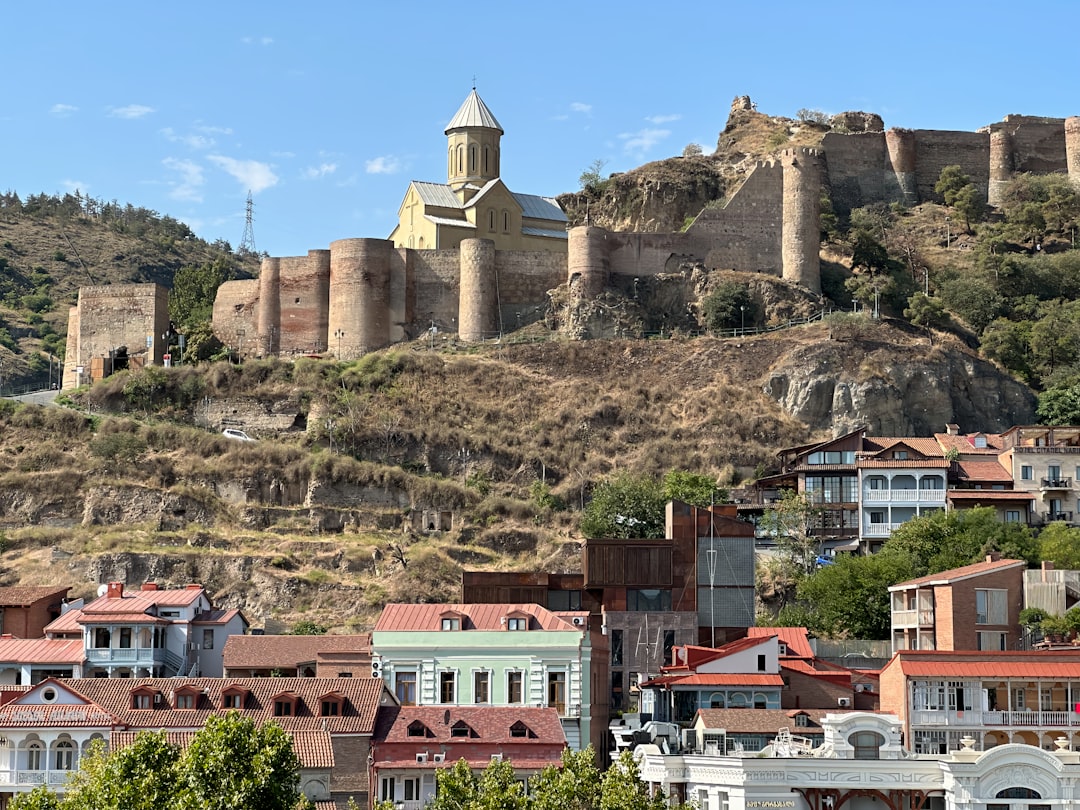
As the sun descends, the shadows lengthen over the ruins and the stone walls take on shades ranging from amber to dark red. The old town progressively lights up with evening lights, and the smell of grilled meat begins to waft from the restaurants in the lower neighborhood. It is one of those sunsets that are watched in silence, not for lack of words, but because words seem insufficient.
How to get there and practical advice
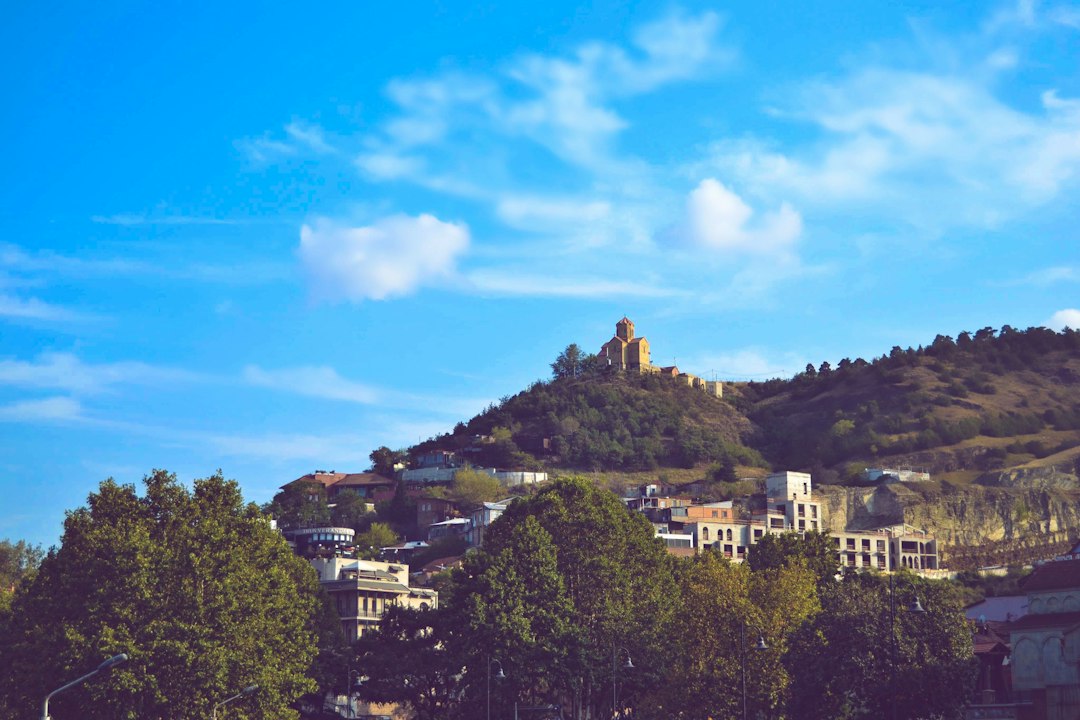
The most convenient way to reach Narikala is the cable car that departs from Rike Park, on the left bank of the Mtkvari. The ticket costs a few Georgian lari — equivalent to less than two euros — and in a few minutes takes you directly near the fortress. Alternatively, you can walk up from the Abanotubani neighborhood via a paved path that takes about twenty minutes of uphill walking.
Access to the fortress is free of charge. The most useful advice is to arrive at least an hour before sunset to calmly choose the best observation point: the sections of the walls on the west side offer the widest view of the gorge, while those on the east side look towards the more modern neighborhoods of the city. During summer weekends, the hill gets crowded, so those seeking tranquility should prefer weekdays or shoulder months like March, April, and October. Wearing comfortable shoes is essential: the ground is uneven and some sections of the walls can only be traversed on uneven stone surfaces.
Before and after: what to pair with the visit
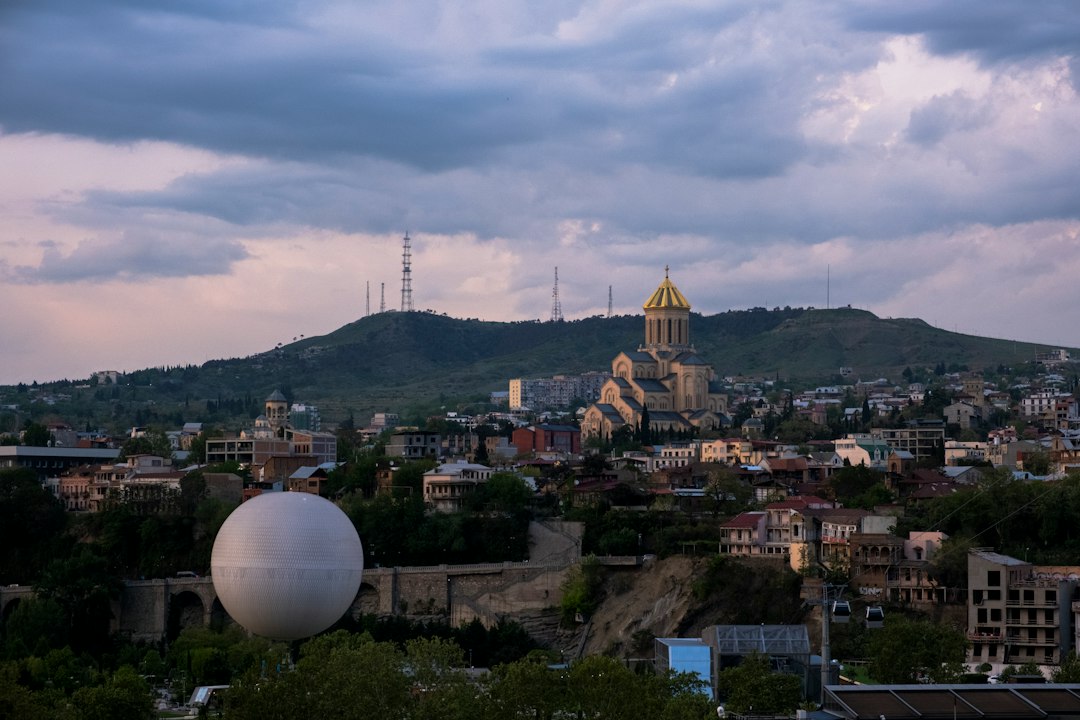
Descending from the cable car towards Rike Park, you pass by the Tbilisi Holy Trinity Cathedral, known as Sameba, whose golden dome is visible from almost every point in the city. It is not located in Narikala, but the evening walk from the fortress to the Abanotubani district is one of the most pleasant in Tbilisi: you cross the Peace Bridge, a glass and steel structure inaugurated in 2010, and enter directly into the heart of the sulfur baths, where many visitors conclude the evening with a soak in the warm waters that emerge from the rock at a constant natural temperature.