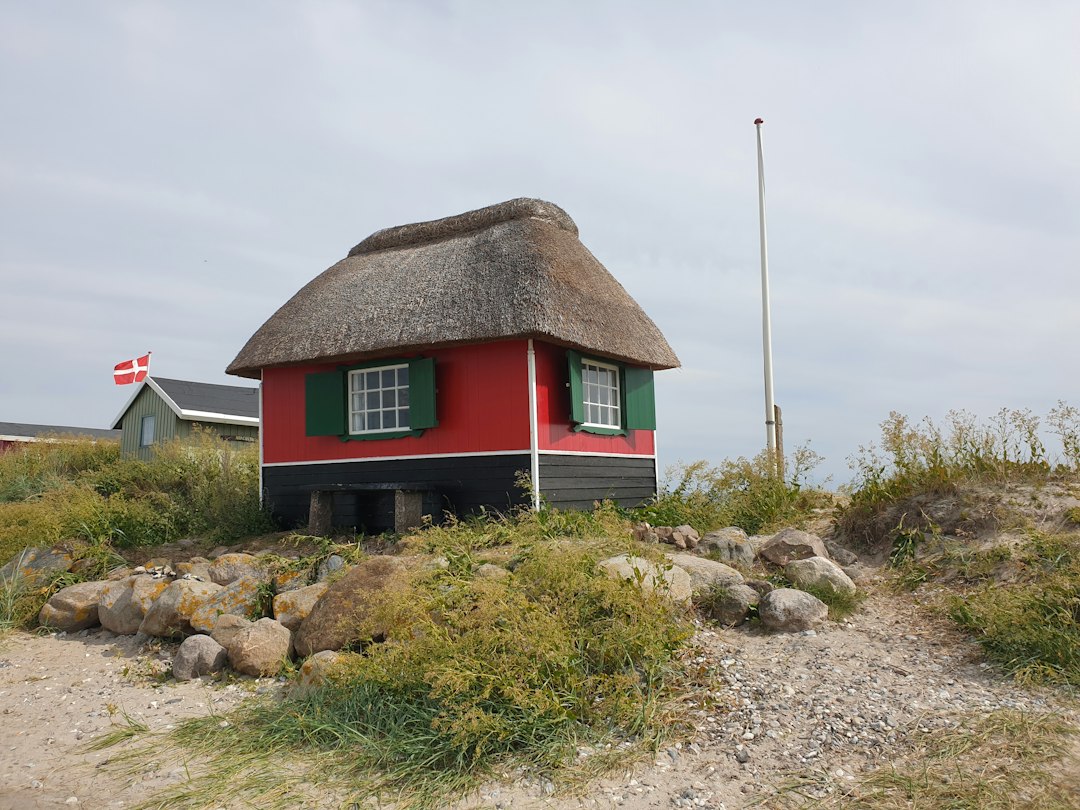

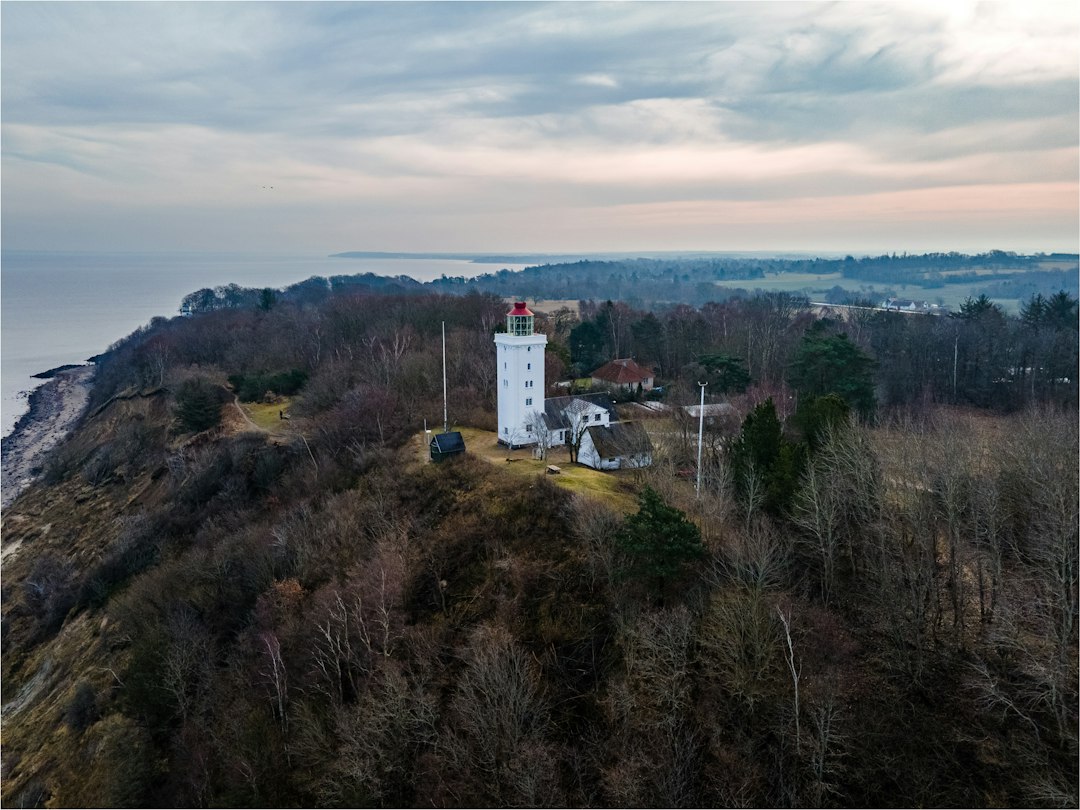
Two white towers emerge from the beech forest like silent sentinels: it is the first image encountered when approaching Nakkehoved Fyr, at the northern tip of Sjælland, just east of Gilleleje. The twin lighthouses rise above wooded cliffs that plunge into the Kattegat, the strait that separates Denmark from Sweden, and on clear days the Swedish coast appears on the horizon as a thin gray-blue strip. It is not a generic postcard: it is a concrete geographical perspective, that of a point where the North Sea and the Baltic Sea brush against each other, and where sailors have sought orientation in fog and storms for centuries.
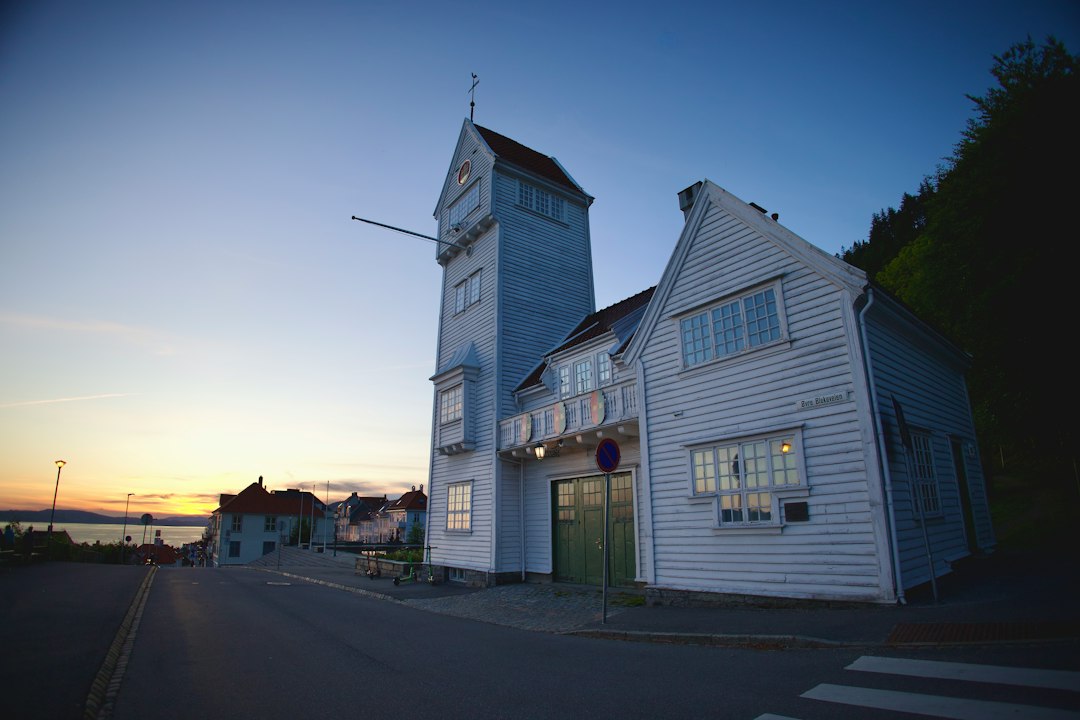
The complex now belongs to the Museum Nordsjælland and is open to the public as a visitable historical site. The uniqueness that makes Nakkehoved stand out in the landscape of Danish lighthouses is precisely the presence of two distinct towers, built in different eras to meet evolving navigation needs. Walking between the two structures, connected by paths that weave through the beech forest, is an experience that blends maritime history, Nordic nature, and almost total silence — at least off-season.
Two towers, two centuries of history
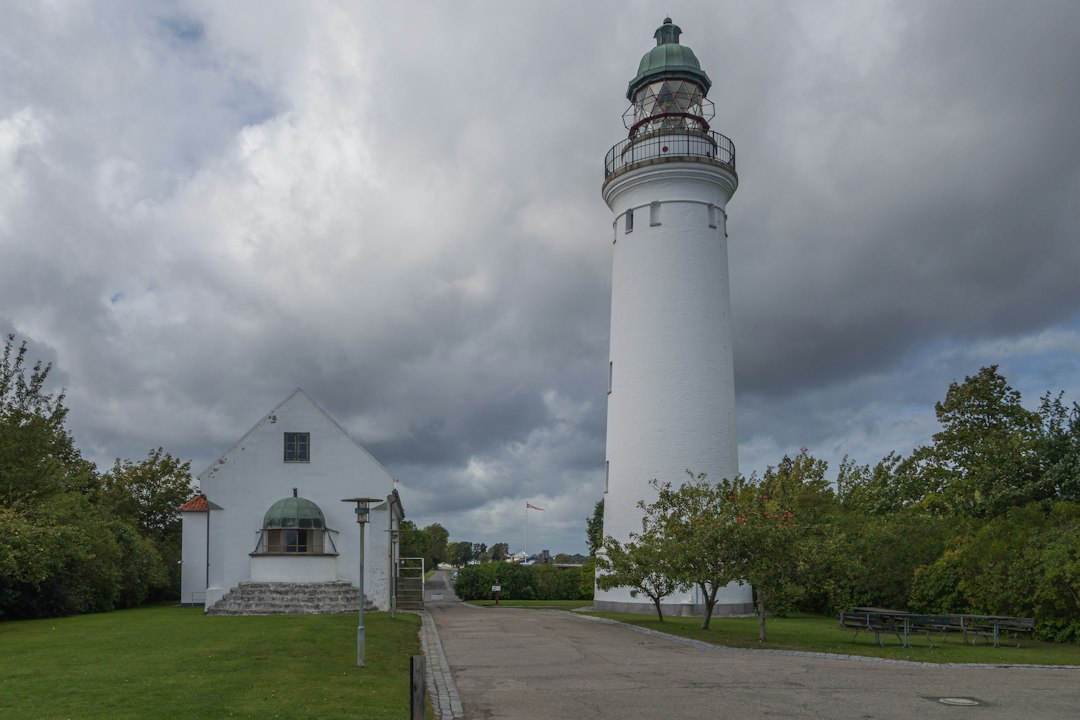
The oldest lighthouse of Nakkehoved was erected in 1772, making it one of the longest-standing historical lighthouses in Denmark. The most recent tower was built in 1884 to integrate and improve the light signaling system: the two lights, visible from different angles, allowed captains to calculate their position relative to the coast with greater accuracy. This double lighthouse system — technically called alignment system or directional lighthouse — was a common engineering solution in the 19th century for the busiest maritime routes.
Approaching the towers, one immediately notices the architectural differences between the two structures: the older one has a stockier and more massive profile, with brick masonry that clearly shows the signs of time, while the 19th-century one is more slender and features construction details typical of the period. The attached buildings — the lighthouse keepers' houses — are still standing and contribute to restoring the atmosphere of a functioning maritime settlement, not that of an abandoned ruin.
The beech forest and the view of the Kattegat
The natural context is an integral part of the experience. The paths connecting the two towers traverse a typical beech forest of northern Sjælland: in autumn, the foliage takes on shades of copper and gold that contrast with the white of the towers, while in spring the undergrowth fills with wild anemones. The walking route between the lighthouses is short — just a few minutes — but it is worth slowing down and following the paths that lead to the edge of the cliffs.
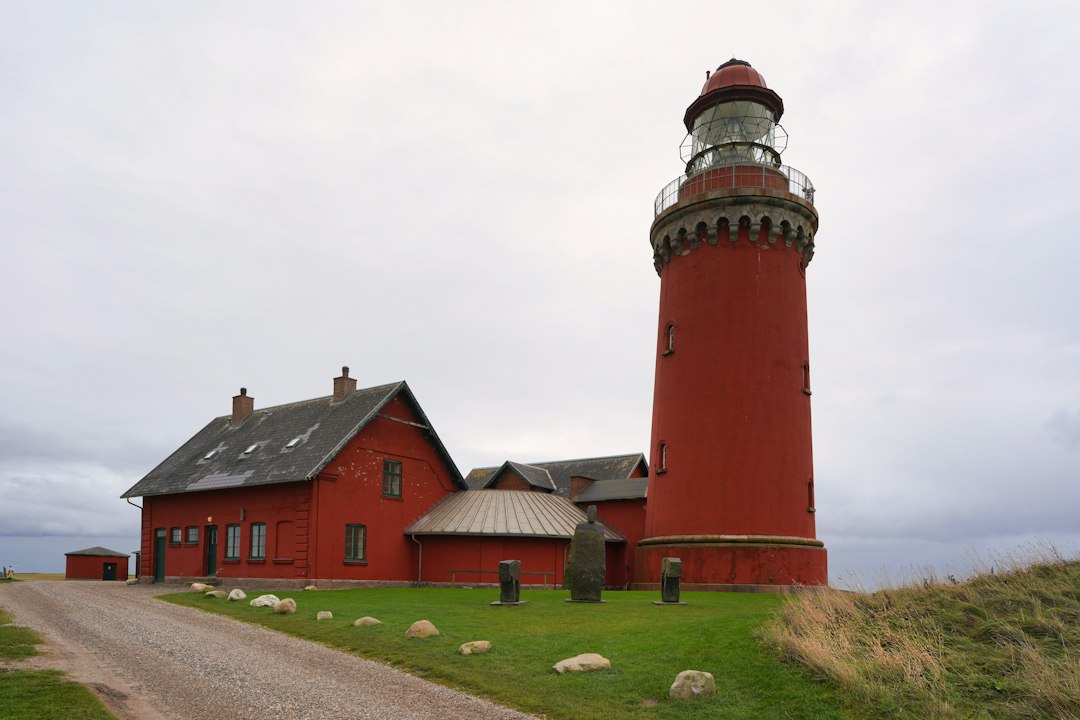
From up there, the Kattegat opens up in all its breadth. On windy days, the waves crash against the rocks with considerable force, and it is immediately clear why this coast required a permanent light signal. Modern cargo ships continue to transit this route, and observing contemporary maritime traffic from the same point where the 19th-century guardians scanned the horizon adds a level of historical continuity that is hard to find elsewhere.
How to organize the visit
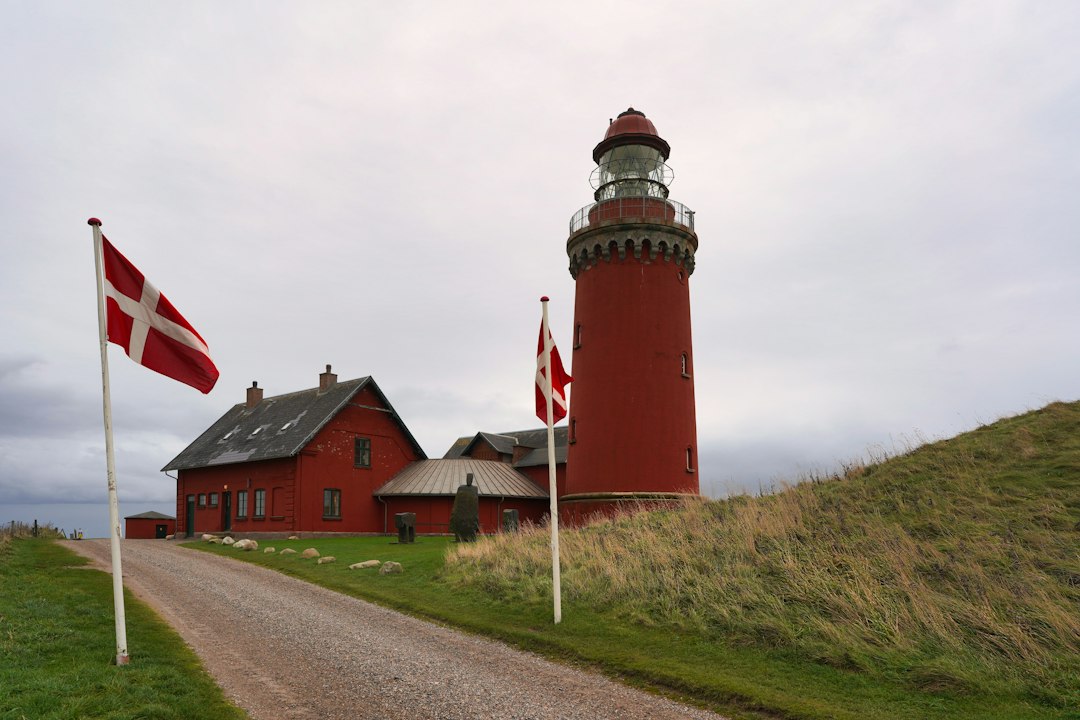
Nakkehoved Fyr is easily reachable by car from Gilleleje, which is a few kilometers to the west. Gilleleje is regularly connected by the Kystbanen railway line that departs from Copenhagen, and from there it is possible to continue by bicycle or with a short taxi ride. The site has a small parking area. The best time to visit is late spring or early autumn: it avoids the summer crowd of Danish tourists, the light is softer, and the beech trees offer spectacular colors. In high season, the site can be lively on weekends.
Checking the opening hours on the official Museum Nordsjælland website before departing is essential, as access to the towers and indoor buildings may vary seasonally. Wearing suitable shoes for the woodland terrain is advisable if you intend to follow the paths to the cliffs. The complete visit, including the walk in the woods, takes between one hour and one and a half hours.
Why the trip is worth it
Nakkehoved is not a conventional museum site with exhibition halls and educational panels. It is a place where historical architecture, natural landscape, and maritime geography converge organically. The two twin towers, with their over two centuries of construction difference, tell the evolution of navigation technology without the need for captions: just observe them side by side. For those traveling in northern Sjælland in search of something more authentic than the crowded beaches of Hornbæk, this corner of wooded and windy coast offers a different perspective on maritime Denmark.