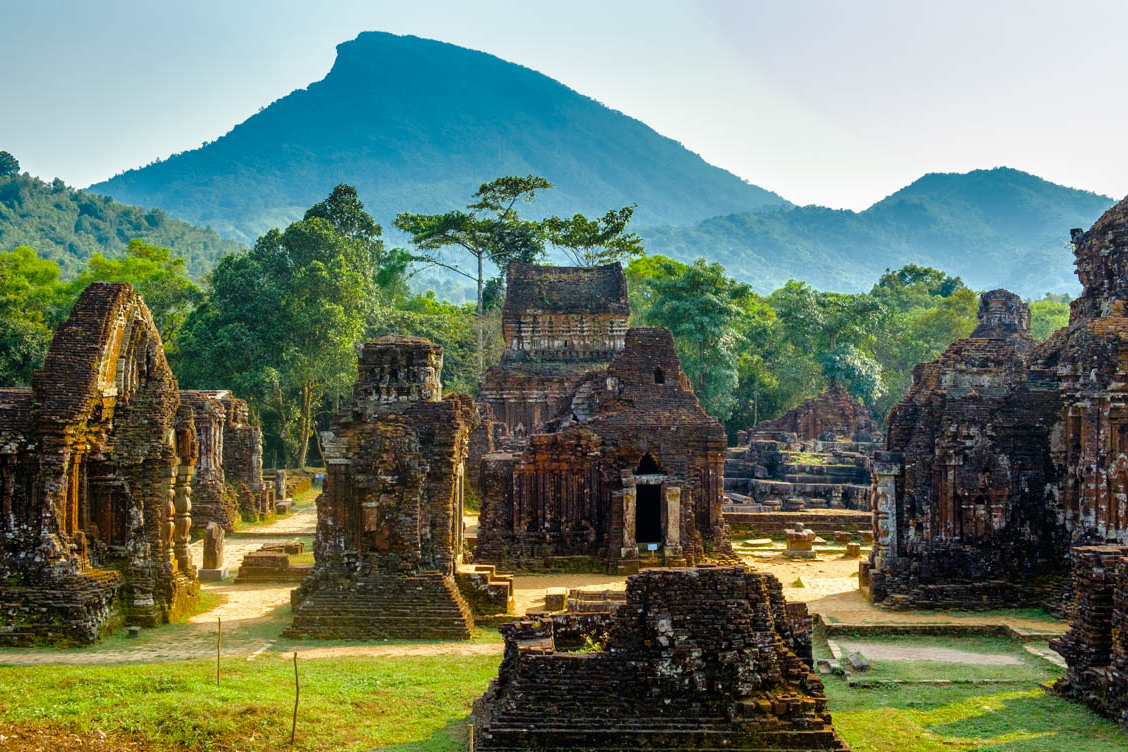

Nestled in the lush landscape of Mỹ Sơn, the My Son temples offer a captivating glimpse into the long-lost Champa civilization. This UNESCO World Heritage site, dating from the 4th to the 13th century, stands as a testament to the architectural prowess and spiritual depth of a culture that thrived long before Vietnam's unification. The temples, dedicated primarily to the Hindu god Shiva, are a fascinating mix of history, art, and culture, set against the backdrop of the tranquil Vietnamese countryside.
The Champa civilization, originating around the 2nd century AD, was a powerful kingdom that controlled central and southern Vietnam for over a millennium. It was known for its maritime trade and cultural exchanges with neighboring cultures, such as those from India and Indonesia. The My Son sanctuary, believed to have been founded in the 4th century by King Bhadravarman, served as a religious center and burial ground for the Champa kings. Over the centuries, it became an important site for the worship of Shiva, reflecting the kingdom's deep-rooted Hindu traditions.
Architecturally, the My Son temples are a striking example of Champa art, characterized by intricately carved sandstone blocks and brick structures that blend seamlessly with the natural landscape. The temples exhibit a unique style, using red bricks that have stood the test of time, some even displaying carvings that are remarkably well-preserved. Notable temples include Temple A1, with its large central tower, and Temple B, adorned with exquisite sculptures depicting scenes from Hindu mythology. These structures not only highlight the artistic capabilities of the Champa but also their spiritual beliefs, as many carvings illustrate tales of gods and celestial beings.
Local culture around Mỹ Sơn is deeply influenced by this historical heritage. The surrounding communities maintain traditional practices that reflect the region’s Champa roots. Festivals such as the My Son Sanctuary Festival, held annually in March, celebrate the cultural significance of the site, featuring traditional music, dance, and rituals that pay homage to the ancient deities. Visitors can often witness local artisans practicing traditional crafts, from weaving to pottery, preserving the cultural legacy of their ancestors.
When exploring Mỹ Sơn, don’t miss the opportunity to indulge in the local gastronomy. The region is known for its distinctive dishes, such as Cao Lau, a flavorful noodle dish made with local wheat, and fresh herbs. Another must-try is Banh Xeo, crispy pancakes filled with shrimp and bean sprouts, often served with a tangy dipping sauce. Pair your meal with a refreshing glass of Tra Da, a traditional Vietnamese iced tea, to immerse yourself fully in the local culinary experience.
While many tourists flock to the more popular sites in Vietnam, Mỹ Sơn harbors lesser-known curiosities that enhance its allure. The local graveyard, perched on a nearby hill, features vividly painted headstones that resemble miniature dollhouses. This unique sight offers a stark contrast to the ancient ruins of the temples, providing a glimpse into how modern traditions continue to intertwine with historical legacies. Additionally, the site has been a subject of study for archaeologists, with ongoing excavations revealing new insights into Champa culture and practices.
For those planning a visit to My Son, the best time to go is from December to March, when the weather is cooler and less humid. Arriving early in the morning allows you to experience the tranquility of the site before the crowds descend. Wear comfortable shoes, as the terrain can be uneven, and don't forget your camera to capture the breathtaking temples and lush surroundings.
As you stroll through the ruins, take a moment to absorb the atmosphere, reflecting on the mysteries of the Champa civilization that remain unsolved. Understanding the historical context and cultural significance of this sanctuary enhances the experience, making it more than just a visit to ancient ruins.
Whether you are a history buff, an architecture enthusiast, or simply looking to explore the lesser-known treasures of Vietnam, My Son offers a compelling journey through time. For a personalized itinerary that captures your interests, consider using the Secret World app for your visit to Mỹ Sơn.