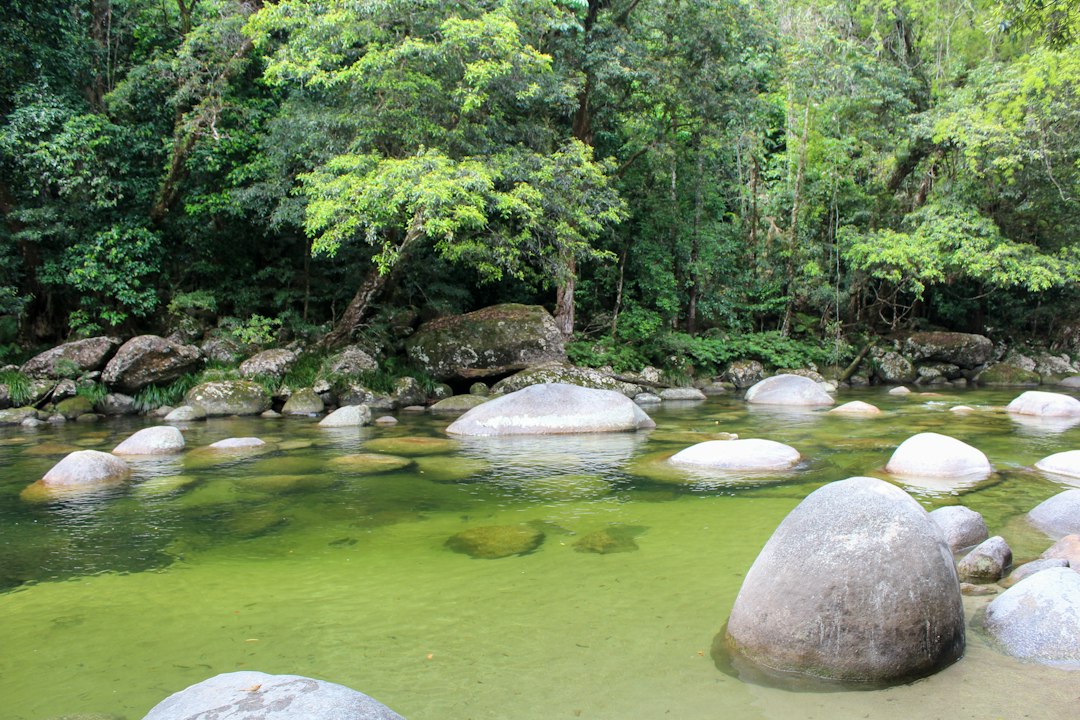
The water of the Mossman River flows cold and clear between granite boulders smoothed over millennia, creating pools of emerald green that seem unreal under the canopy of the rainforest. We are in Mossman Gorge, a gorge carved in the heart of the Daintree Rainforest, in northern Queensland, Australia. This forest is not simply ancient: at about 180 million years, it is considered the oldest tropical rainforest on the planet, even predating the Amazon. Walking here means moving through an ecosystem that has remained virtually intact since the age of dinosaurs.

The gorge is located near the small town of Mossman, about 75 kilometers north of Cairns, and is accessible via the Mossman Gorge Centre, the visitor facility managed in partnership with the indigenous Kuku Yalanji people, the traditional custodians of these lands. It is not just any park: it is a place where biodiversity reaches a density that is hard to imagine before seeing it with your own eyes.
A forest that breathes natural history
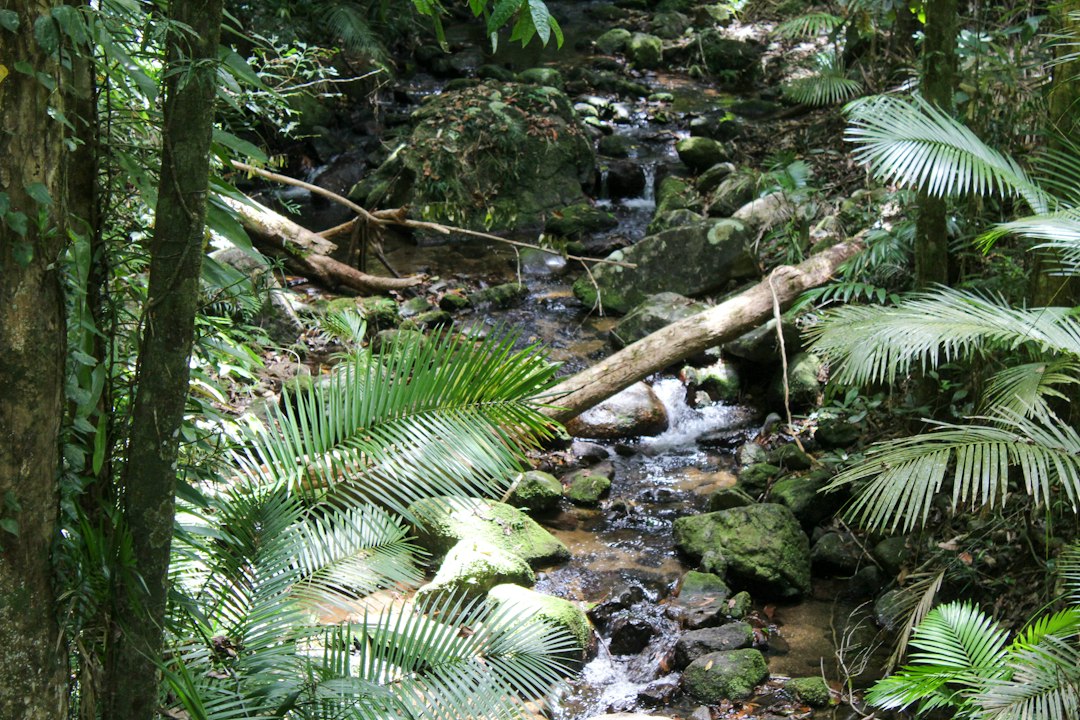
Entering Mossman Gorge means immersing oneself in a layering of plant life that has no easily accessible equivalents for the average tourist. The trees here do not simply grow: they wrap around, suffocate, and support each other in a silent competition for light. Strangler figs start as harmless epiphytes and end up completely embracing the host trunk, ultimately leaving only their hollow structure. The buttress roots of some species rise several meters from the ground, like natural architectures designed to distribute weight on nutrient-poor soil.
The Daintree hosts an extraordinary percentage of the bird and marsupial mammal species found in Australia. In the early hours of the morning, the call of the australian cassowary — a flightless bird that can exceed one and a half meters in height — can be heard in the forest, although spotting it requires luck and silence. Along the banks of the Mossman River, it is more common to encounter lizards and, with patience, catch a glimpse of the stealthy movement of a platypus in the calmer waters.
The Kuku Yalanji and the Knowledge of the Forest
One of the most significant experiences that Mossman Gorge offers is the Ngadiku Dreamtime Walk, a guided walk led by members of the Kuku Yalanji community. Indigenous guides accompany visitors along paths that their people have walked for generations, illustrating the use of medicinal plants, traditional hunting and fishing techniques, and the spiritual significance of the places. This is not a folkloric reconstruction: this knowledge has been passed down orally in a continuous manner, and some plants pointed out during the walk are still used for therapeutic purposes in the local community.
During the walk, it is possible to physically observe how the forest is read in a completely different way by those who have always inhabited it: a bark, a fallen fruit, the direction of a root become precise information about seasons, resources, and dangers. The tour lasts about 90 minutes and includes a welcome ceremony with smoke from aromatic plants. It is advisable to book in advance, especially from July to September, when the influx of visitors is greater.
The river and its granite boulders
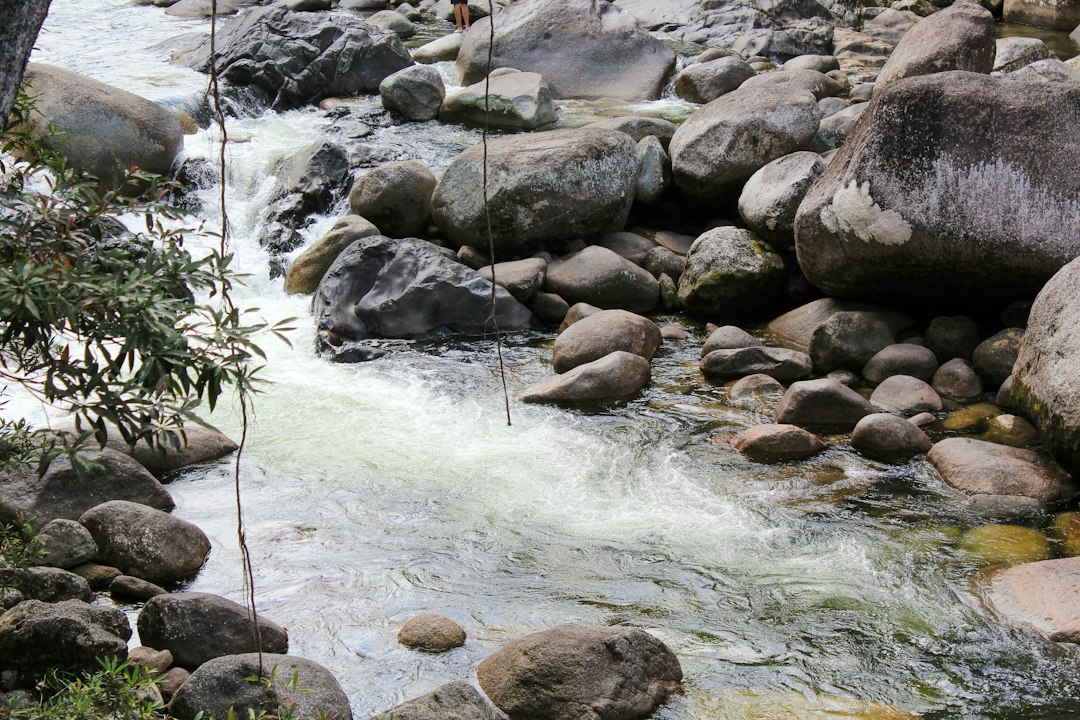
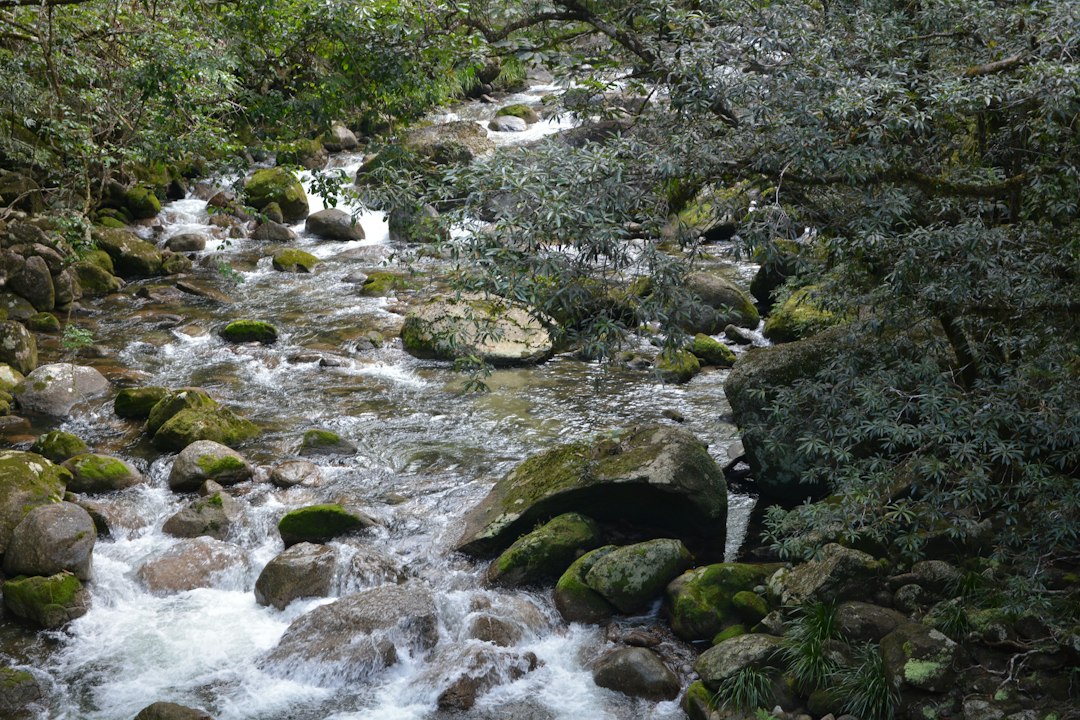
The most physically spectacular point of the gorge is the stretch where the Mossman River makes its way between enormous granite blocks, creating rapids and natural swimming holes. The water is significantly colder compared to the outside temperature — a pleasant surprise in the tropical climate of Queensland — and its transparency allows for a clear view of the rocky bottom even in the deepest pools. Swimming is permitted in designated areas and is an experience that many visitors remember as the most memorable moment of their visit.
The boulders themselves deserve attention: their surface is often covered with mosses and lichens that form color patterns ranging from silvery gray to deep green, and in some places, small ferns can be seen growing directly in the cracks of the rock. The contrast between the immovable solidity of the granite and the speed of the water creates a constant soundscape, dominated by the noise of the rapids.
Practical tips for the visit
The best time to visit Mossman Gorge is in the early morning, preferably before 8:00 AM, when the light filters through the trees in a more evocative way and the wildlife is more active. The Mossman Gorge Centre generally opens at 8:00 AM, and from there, paid shuttle buses depart to the entrance of the gorge — it is not possible to reach the area on foot from the main parking lot. Wearing hiking shoes with non-slip soles is essential, as the trails near the river can be slippery. Insect repellent and plenty of water are indispensable. Allow at least three hours to combine the self-guided walk with the Kuku Yalanji guided tour.