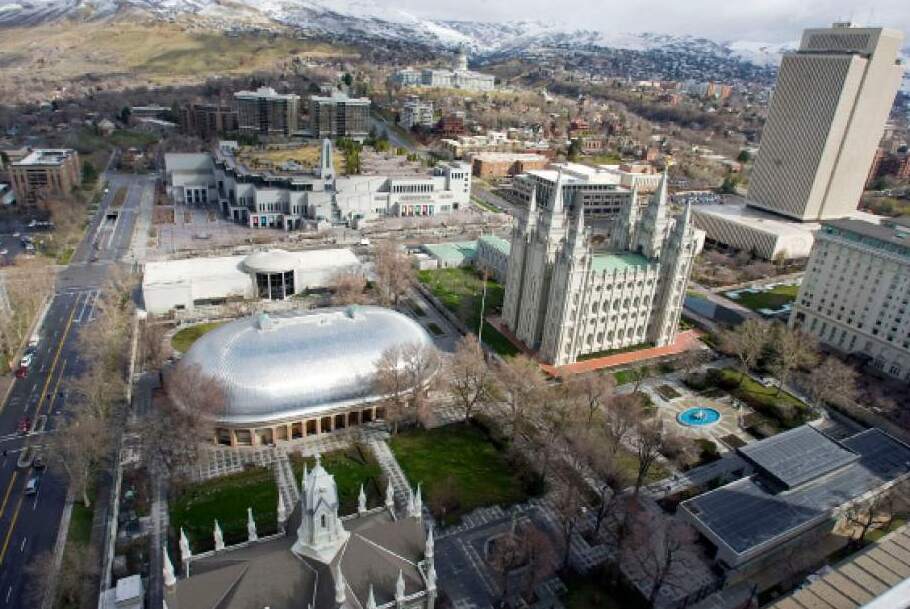

The Mormon Tabernacle, an architectural gem and cultural landmark, stands as a testament to the pioneering spirit of Salt Lake City. This magnificent structure, located at coordinates 40.7704468, -111.8931261, showcases a rich history intertwined with the founding of the Church of Jesus Christ of Latter-day Saints (LDS Church) and the development of the region itself.

History and Origins Construction of the Tabernacle began in 1863, spearheaded by Brigham Young, who envisioned a central place of worship for the growing community of Latter-day Saints. The building was completed in 1867, and its unique oval shape was designed to enhance acoustics, allowing the voices of the congregation to resonate beautifully within its walls. The Tabernacle has witnessed numerous significant events, including the early days of the LDS Church, inspiring sermons, and even music festivals, making it a focal point of Salt Lake City’s cultural landscape.
Art and Architecture The Mormon Tabernacle is an exemplary model of Romanesque Revival architecture. Its most striking feature is the massive, self-supporting dome that soars 20 meters (65 feet) high without any internal pillars, allowing unobstructed views for the audience. This engineering marvel ranks among the largest timber-roof frames globally, demonstrating the ingenuity of its builders. Inside, the Tabernacle features a simple yet elegant design, emphasizing functionality over ostentation. The 11,000-pipe organ, one of the largest in the world, further enhances the building's artistic significance and is a marvel of craftsmanship.

Local Culture and Traditions The Mormon Tabernacle is not only a religious site but also a cultural hub, hosting the renowned Mormon Tabernacle Choir. The choir, with its rich history dating back to 1847, performs every Sunday and holds open practices on Thursday evenings, inviting the public to experience the breathtaking harmonies firsthand. Throughout the year, the Tabernacle plays host to various events, including special performances during the Christmas season, showcasing the community's dedication to music and tradition.
Gastronomy While the Tabernacle itself may not be a culinary destination, the surrounding area offers a delightful taste of Salt Lake City’s local gastronomy. Visitors can savor traditional Mormon dishes, such as funeral potatoes (a creamy potato casserole), and Jell-O salads, which often appear at community gatherings. Don’t miss out on trying a classic Fry Sauce dip, a local favorite that adds a unique twist to fries and other snacks. Pair your meal with a locally brewed soda from one of the many shops in the vicinity, and you’ll experience a true taste of Utah.
Lesser-known Curiosities Many visitors to the Mormon Tabernacle are unaware of its remarkable acoustics, which allow a whisper to be heard clearly from one end of the building to the other. This phenomenon has made it a favorite venue for concerts and events beyond worship services. Additionally, the Tabernacle is home to the Mormon Pioneer National Historic Trail, which commemorates the journey of early LDS settlers. The Tabernacle's golden angel moroni statue, perched atop the dome, is also noteworthy; it is a symbol of the faith and serves as a beacon for the faithful.
Practical Visitor Information The best time to visit the Mormon Tabernacle is during the spring and fall when the weather is mild, and the crowds are more manageable. It's advisable to check the official website for the Mormon Tabernacle Choir to plan your visit around their performance schedule. Make sure to arrive early to secure your spot for the free recitals, and don’t forget to explore the surrounding Temple Square, where you can delve deeper into the history of the LDS Church and its community.
Whether you are drawn to its architectural beauty, rich history, or vibrant musical traditions, the Mormon Tabernacle offers a unique glimpse into the heart and soul of Salt Lake City. For a personalized itinerary that includes this iconic site and more, consider using the Secret World app to help plan your visit.