← Back

Marsh's Library

St Patrick's Close, Dublin 8, D08 FK79, Ireland ★★★★☆ 218 views
Corinne Geanty
Dublin 8
🏆 AI Trip Planner 2026

Get the free app

Discover the best of Dublin 8 with Secret World — the AI trip planner with 1M+ destinations. Get personalized itineraries, hidden gems and local tips. Free on iOS & Android.

🧠 AI Itineraries 🎒 Trip Toolkit 🎮 KnowWhere Game 🎧 Audio Guides 📹 Videos
Scan to download iOS / Android
Scan for AppGallery Huawei users

About Marsh's Library

Marsh's Library - Dublin 8 | Secret World Trip Planner

Marsh's Library, situated in St. Patrick's Close, adjacent to St. Patrick's Cathedral, Dublin, Ireland is a well-preserved library of the late Renaissance and early Enlightenment. Marsh’s Library, built by Archbishop Narcissus Marsh (1638-1713), was the first public library in Ireland. It was designed by Sir William Robinson (d.1712) the Surveyor General of Ireland, and is one of the very few 18th century buildings left in Dublin that is still being used for its original purpose. Many of the collections in the Library are still kept on the shelves allocated to them by Marsh and by Elias Bouhéreau, the first librarian, when the Library was opened.

Marsh's Library - Dublin 8 | Secret World Trip Planner

The Library was formally incorporated in 1707 by an Act of Parliament called An Act for settling and preserving a public library for ever. The Act vested the house and books in a number of religious and state dignitaries and officials and their successors as Governors and Guardians of the Library.

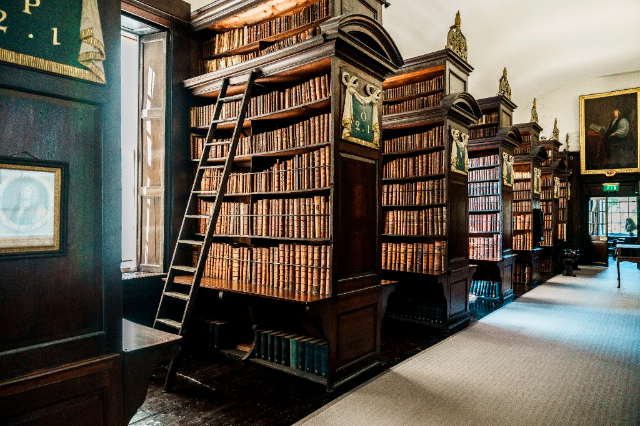
The interior of the library, with its beautiful dark oak bookcases each with carved and lettered gables, topped by a mitre, and the three elegant wired alcoves or ‘cages’ where the readers were locked in with rare books, remains unchanged since it was built over three hundred years ago. It is a magnificent example of a 17th century scholars’ library.

Marsh's Library - Dublin 8 | Secret World Trip Planner
🗺 L'app dei tesori italiani

Plan your visit to Dublin 8

Suggested itinerary near Marsh's Library

MAJ+
500.000+ travelers worldwide
  1. 🌅
    Morning
    Marsh's Library
    📍 Dublin 8
  2. ☀️
    Afternoon
    Saint Patrick Church in Dublino
    📍 0.1 km · Dublin 8
  3. 🌆
    Evening
    Dublin Castle: the Chester Beatty Library
    📍 0.4 km · Dublin 8

Buy Unique Travel Experiences

Powered by Viator

See more on Viator.com

Explore nearby · Dublin 8

Frequently Asked Questions

Marsh's Library is Ireland's first public library and one of the very few 18th century buildings in Dublin still used for its original purpose. It houses collections arranged on the same shelves where they were placed over 300 years ago by Archbishop Narcissus Marsh and the first librarian, Elias Bouhéreau, making it a living time capsule of Renaissance and Enlightenment scholarship.
Marsh's Library is situated in St. Patrick's Close, directly adjacent to St. Patrick's Cathedral in Dublin, Ireland. Its central Dublin location makes it easily accessible by public transport, and it's positioned right next to one of Dublin's most famous landmarks, so you can combine visits to both sites.
The library features magnificent dark oak bookcases with carved and lettered gables topped by mitres, and three elegant wired alcoves or 'cages' where readers were historically locked in while consulting rare books. The interior remains virtually unchanged since the 17th century, offering an authentic glimpse into a scholar's library from that era.
Archbishop Narcissus Marsh (1638-1713) built the library, which was designed by Sir William Robinson, the Surveyor General of Ireland. The library was formally incorporated in 1707 by an Act of Parliament called 'An Act for settling and preserving a public library for ever,' making it an officially protected institution for over three centuries.
Yes, many of the original collections remain on the shelves exactly as they were organized when the library opened, and visitors can experience these in the library's authentic setting. The famous 'cages' or wired alcoves where readers were once locked in with rare books are still visible and represent a unique preservation method from the Renaissance period.