
← Back

Lala Mustafa Pasha Mosque

Liman Yolu Sk 12, Gazimağusa 99450 ★★★★☆ 448 views
Freyan Ronaldo
Gazimağusa
🏆 AI Trip Planner 2026

Get the free app

Discover the best of Gazimağusa with Secret World — the AI trip planner with 1M+ destinations. Get personalized itineraries, hidden gems and local tips. Free on iOS & Android.

🧠 AI Itineraries 🎒 Trip Toolkit 🎮 KnowWhere Game 🎧 Audio Guides 📹 Videos
Scan to download iOS / Android
Scan for AppGallery Huawei users

About Lala Mustafa Pasha Mosque

Lala Mustafa Pasha Mosque - Gazimağusa | Secret World Trip Planner

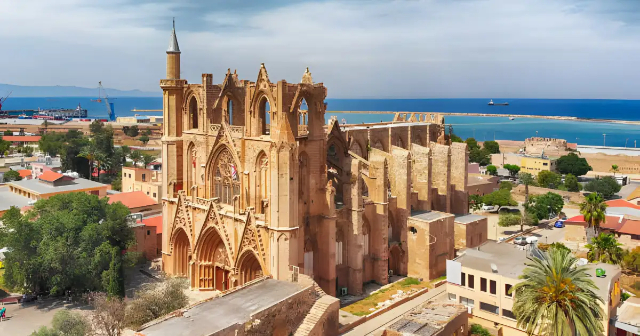
Lala Mustafa Pasha Mosque in Famagusta, Northern Cyprus, is a striking example of the historical and architectural blending that characterizes many of the region's structures. Originally built as St. Nicholas' Cathedral between 1298 and 1312 during the Lusignan period, this building was converted into a mosque in 1571 following the Ottoman conquest of Cyprus. It was later renamed in 1954 after Lala Mustafa Pasha, the Ottoman general who led the siege of Famagusta.

Lala Mustafa Pasha Mosque - Gazimağusa | Secret World Trip Planner

The mosque is renowned for its impressive Gothic architecture, which bears a close resemblance to the Cathedral of Rheims in Paris, France. This similarity underscores the Gothic style's widespread influence across medieval Europe, including in regions far from its origins. The structure's features include towering spires, intricate stone carvings, and the grand scale typical of Gothic cathedrals.

Despite its conversion into a mosque, much of the original Christian architectural elements have been preserved. The transition from a cathedral to a mosque involved minimal structural changes, primarily the addition of Islamic features such as the mihrab (a niche indicating the direction of Mecca) and the removal of overt Christian symbols.

Lala Mustafa Pasha Mosque - Gazimağusa | Secret World Trip Planner

Today, Lala Mustafa Pasha Mosque stands as the largest medieval building in Famagusta and is a significant cultural and historical landmark. It is not only a place of worship but also a testament to the region's layered history, representing centuries of religious and cultural shifts. This mosque is a focal point for visitors interested in the rich tapestry of Mediterranean history and architecture.


🗺 L'app dei tesori italiani

Plan your visit to Gazimağusa

Suggested itinerary near Lala Mustafa Pasha Mosque

MAJ+
500.000+ travelers worldwide
  1. 🌅
    Morning
    Lala Mustafa Pasha Mosque
    📍 Gazimağusa
  2. ☀️
    Afternoon
    Cyprus: The beach of Nissi
    📍 15.4 km · Gazimağusa
  3. 🌆
    Evening
    Ayia Napa Sculpture Park: A Harmonious Blend of Art and Nature
    📍 16.9 km · Gazimağusa

Buy Unique Travel Experiences

Powered by Viator

See more on Viator.com

Explore nearby · Gazimağusa

Frequently Asked Questions

Originally built as St. Nicholas' Cathedral between 1298 and 1312 during the Lusignan period, the structure was converted into a mosque in 1571 following the Ottoman conquest of Cyprus. It was renamed in 1954 after Lala Mustafa Pasha, the Ottoman general who led the siege of Famagusta, making it a remarkable example of the region's layered religious and cultural history.
The mosque's striking Gothic architecture closely resembles the Cathedral of Rheims in Paris, featuring towering spires, intricate stone carvings, and grand scale typical of medieval European Gothic cathedrals. This architectural style reflects the widespread influence of Gothic design across medieval Europe, even in regions far from its origins.
The mosque retains much of its original Christian architectural elements while incorporating Islamic features such as the mihrab, a niche indicating the direction of Mecca. The conversion from cathedral to mosque involved minimal structural changes, primarily the addition of Islamic features and removal of overt Christian symbols, creating a unique blend of both traditions.
Yes, Lala Mustafa Pasha Mosque stands as the largest medieval building in Famagusta and is a significant cultural and historical landmark. It serves as both an active place of worship and a testament to the region's rich Mediterranean history spanning centuries of religious and cultural transitions.
This mosque is a must-visit for travelers interested in Mediterranean history and architecture, as it uniquely demonstrates the blending of Gothic and Islamic architectural styles. It offers visitors insight into Cyprus's complex past and the region's layered cultural heritage, making it an exceptional focal point for understanding the intersection of Christian and Ottoman influences.