





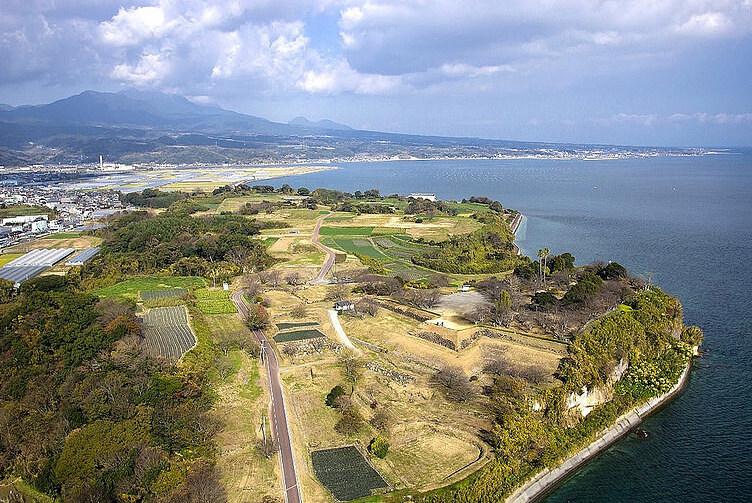
Nestled in the scenic landscape of Minamishimabara, overlooking the glistening waters of the Ariake Sea, Hara Castle (原城, Harajō) stands as a poignant reminder of Japan's turbulent past. Built in 1604 by the feudal lord Matsukura Takanobu, the castle was strategically positioned to defend against naval incursions and to control the surrounding area. However, it is most renowned for its role in the Shimabara Rebellion of 1637, an uprising that would leave an indelible mark on the region's history.
The Shimabara Rebellion was a significant revolt led by discontented peasants, many of whom were Christians facing persecution under the Tokugawa shogunate's stringent policies. Heavy taxation and oppressive governance ignited their frustrations, culminating in a fierce battle against the ruling shogunate forces. Hara Castle became the last bastion for the rebels, who held out against overwhelming odds for more than a year. The siege ended tragically, with the castle's fall on April 24, 1638, leading to widespread devastation and loss of life, including that of the charismatic rebel leader Amakusa Shiro.
Today, visitors to Hara Castle can witness the remnants of its fortifications, which include the outlines of the former baileys, stone walls, and the foundation stones of its gates. The honmaru (main bailey) has been transformed into a small park, where a stone monument pays tribute to the brave souls who fought in the rebellion. A striking bronze statue of Amakusa Shiro stands nearby, immortalizing the youthful leader whose passion and courage inspired many.
The architectural style of Hara Castle reflects the typical Japanese castle design of its time, characterized by a combination of defensive fortifications and aesthetic elements. Though little of the original structure remains, the surviving stone walls give insight into the engineering prowess of the era, with their skillfully arranged stones serving not only a functional purpose but also a visual one. The castle's strategic height allowed for expansive views of the surrounding landscape, a feature that continues to enchant visitors today.
Local culture in Minamishimabara is deeply intertwined with the legacy of the Shimabara Rebellion. Each year, the town hosts the Shimabara Rebellion Festival, celebrating the spirit of the uprising through parades, traditional performances, and reenactments. This festival draws not only locals but also visitors from across Japan, offering a glimpse into the region's rich history and cultural identity. The festival is also an opportunity to explore local customs, such as the practice of Christianity that faced persecution during the Edo period, which still influences the community today.
When it comes to gastronomy, Minamishimabara is known for its seafood, thanks to its coastal location. The region is particularly famous for sazae (turban shell), which is often grilled and served with a splash of soy sauce. Ikameshi, squid stuffed with rice and simmered in a savory sauce, is another local delicacy that captures the essence of the sea. Additionally, the area produces Shiranui mikan, a sweet and juicy citrus fruit that is a must-try when visiting.
For those seeking lesser-known curiosities, the site of Hara Castle has intriguing stories beyond its historical significance. The area is said to have been a refuge for Christians during the Edo period, and remnants of Christian symbols can still be found in certain locations. Furthermore, the battle that took place here not only shaped the region’s history but also influenced the spread of Christianity in Japan, making it a profound chapter in the narrative of faith and rebellion.
The best time to visit Hara Castle is during the spring and autumn months when the weather is mild and the surrounding landscapes are particularly picturesque. Early April is ideal for cherry blossom viewing, while late November offers a stunning display of autumn foliage. Visitors should take their time exploring the park, engaging with the local guides who often share captivating tales of the castle's past.
To enhance your experience, consider bringing a camera to capture the breathtaking views of the Ariake Sea from the castle grounds, and be sure to try some local delicacies at nearby eateries. For a deeper dive into the history and culture of Minamishimabara, the Secret World app can help you craft a personalized itinerary that suits your interests perfectly.