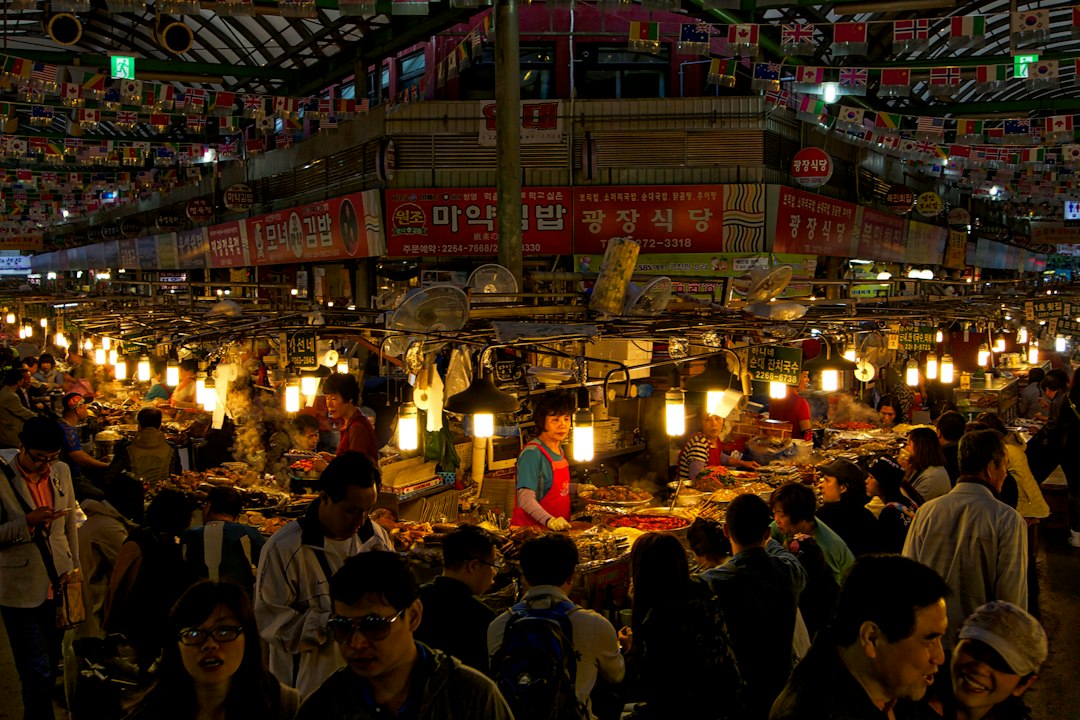

The smell of hot oil and mung bean paste sizzling on the grill arrives even before seeing the stalls. At Gwangjang Market in Seoul, founded in 1905, food is not a secondary attraction: it is the reason why thousands of people cross its covered corridors every day. It is considered the oldest market in South Korea still in operation, and this continuity is felt in every detail, from the worn counters to the recipes passed down from generation to generation.
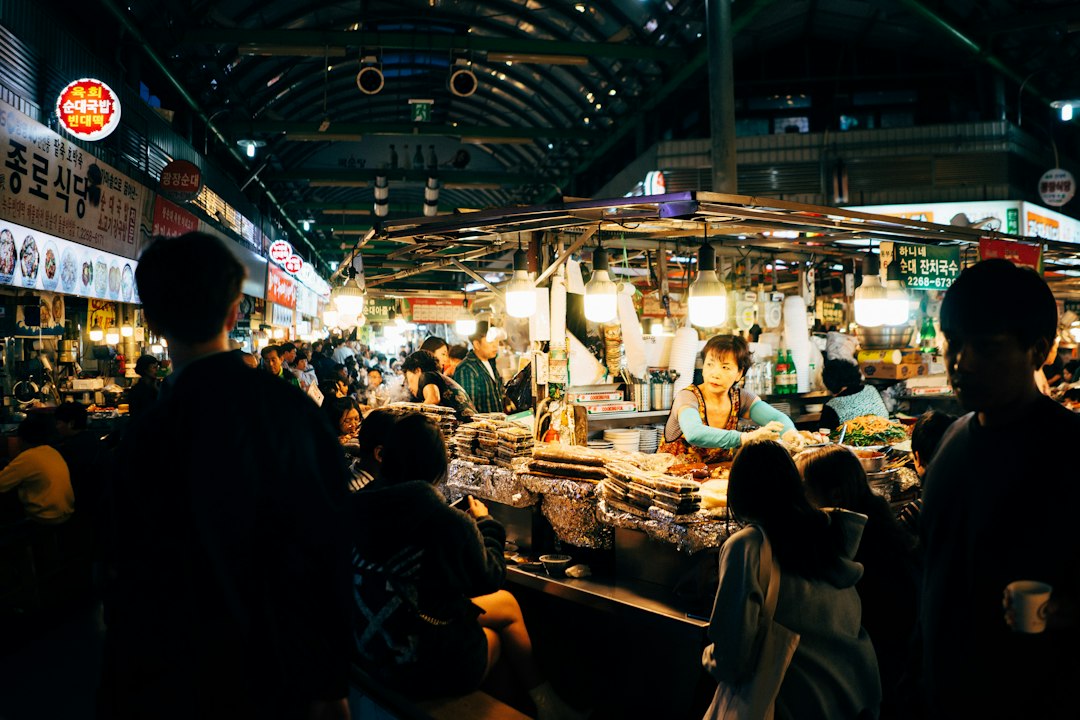
The market is located in the Jongno-gu district, easily accessible by subway by getting off at Jongno 5-ga station (line 1). The main entrance opens onto a covered gallery hundreds of meters long, where the sections dedicated to food are mainly concentrated in the central and eastern areas. Here, communal tables — wooden benches or plastic stools placed directly in front of the kitchens — are occupied at any hour of the day by local workers, students, and a few tourists who have found the right way.
Bindaetteok: the pancake that defines the market
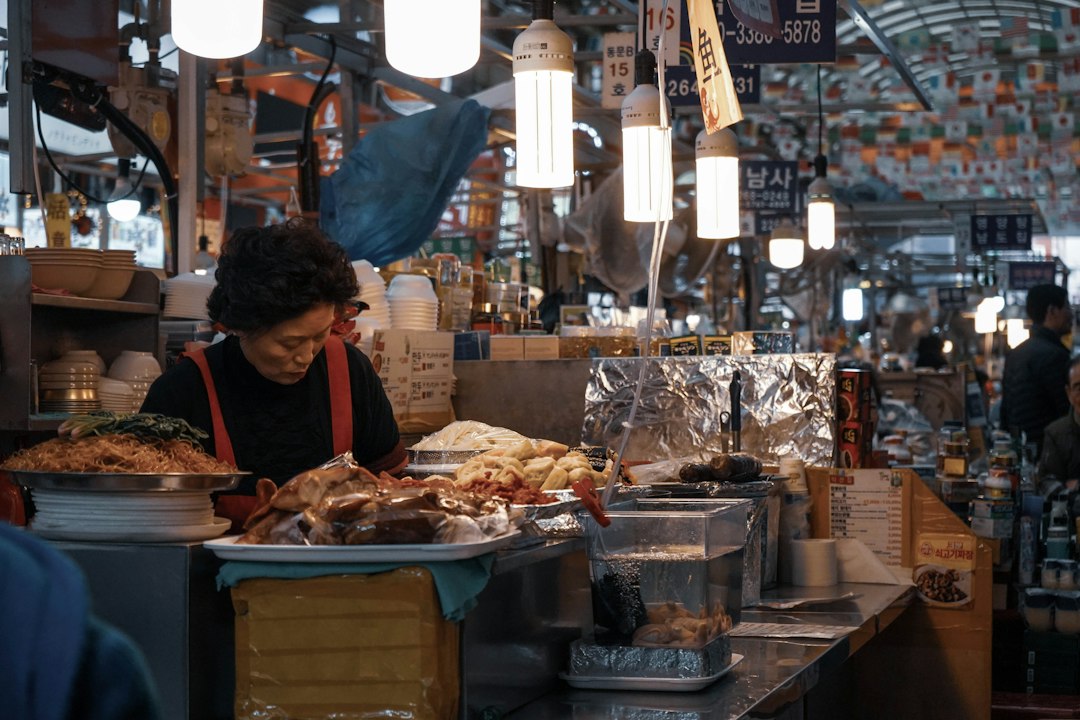
Among all the available dishes, the bindaetteok is the one that best represents the soul of Gwangjang. It is a savory pancake made with ground mung bean flour, mixed with soybean sprouts, kimchi, and sometimes minced pork. The batter is spooned onto an oiled griddle and flattened until it forms a crispy disc on the outside and soft on the inside. The sound of frying is constant, almost rhythmic, and the steam rising from the griddles contributes to the dense and enveloping atmosphere of the market.
The price of a portion generally hovers around 3,000-4,000 won — less than three euros — and is served on a paper plate with a light soy sauce. Each vendor has their own proportion of ingredients, their preferred degree of cooking, and it is not uncommon for regular customers to have their favorite spot among the dozens of stalls offering the same dish.
Mayak gimbap: small rolls with a addictive effect
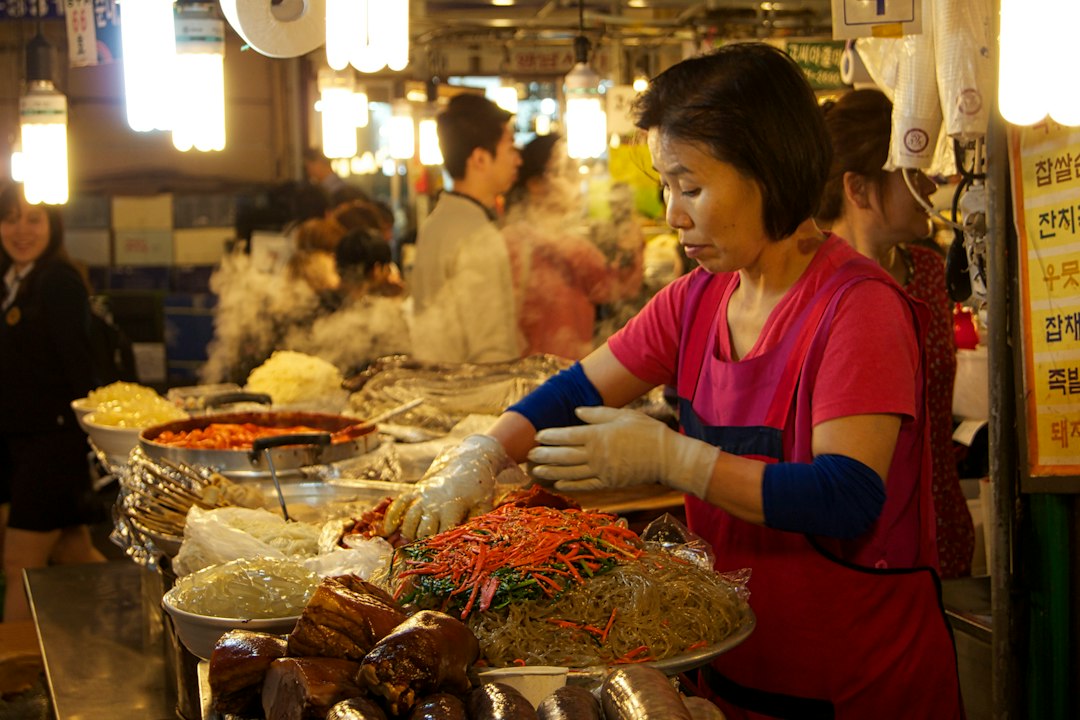
The name mayak gimbap literally means "drug gimbap," an ironic nickname that alludes to the difficulty of stopping eating them once you start. Compared to traditional gimbap, these rolls are much smaller — just over a bite each — and are prepared with rice seasoned with sesame, carrot, spinach, and pickled radish, wrapped in nori seaweed. The peculiarity lies in the accompanying sauce: a mixture of yellow mustard and soy sauce in which they are dipped before eating.
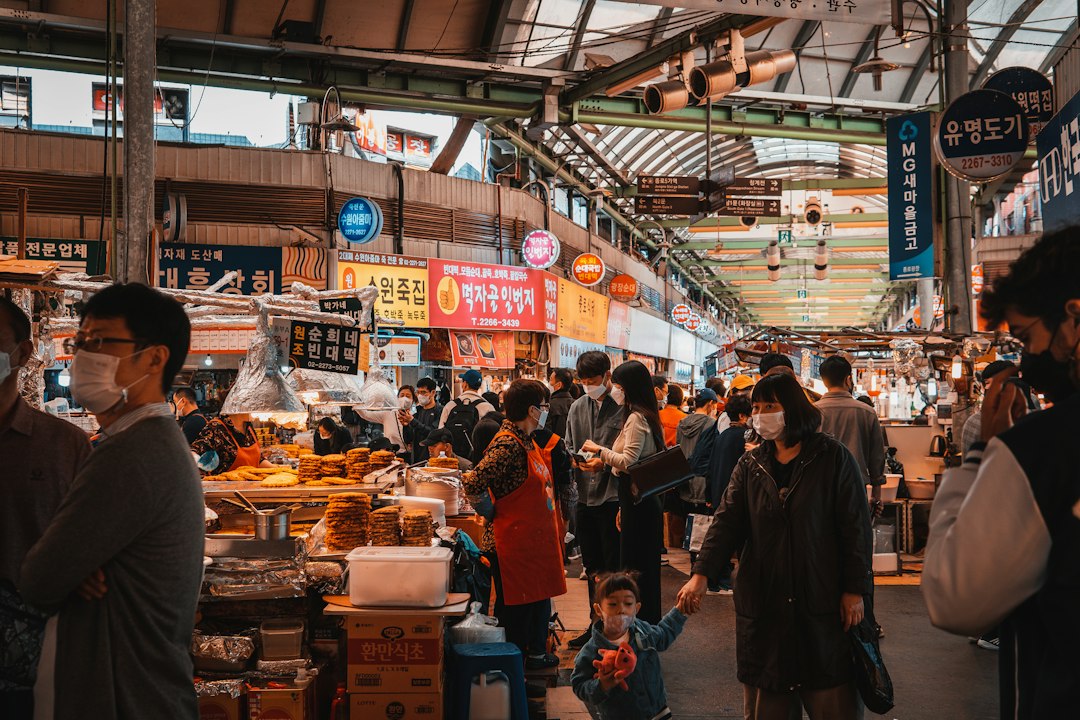
At Gwangjang, some stalls specializing in mayak gimbap have become famous even outside of Korea thanks to social media. The quantities produced are impressive: in some cases, the vendors prepare hundreds of rolls as early as the morning, placing them on trays that empty quickly. A portion of ten pieces usually costs between 3,000 and 5,000 won.
Raw fish and fermented dishes

The section dedicated to raw fish — yukhoe from the sea and hoe dishes, that is, sliced fish consumed fresh — occupies a significant part of the market and is especially frequented in the evening. Here you can find octopus, clams, oysters, and varieties of local fish served with spicy sauces based on gochujang or with rice vinegar. The visual experience is immediate: the seafood is displayed on ice in front of the stalls, and the vendors invite passersby with decisive gestures.
Next to the fish, the market also hosts a wide range of fermented foods: different types of kimchi, soybean paste, and pickled vegetables. These products are sold both for on-site consumption and packaged to take away, and they represent a direct window into Korean home cooking, which rarely appears in restaurants designed for foreign visitors.
How to visit Gwangjang Market
The market is open every day, generally from 8:00 AM to 11:00 PM, although some stalls close earlier. The best time to visit without encountering too much crowd is early in the morning or in the early afternoon on weekdays. On Saturdays and Sundays, the attendance increases significantly, especially in the food section. It is advisable to bring cash, as not all stalls accept credit cards.
A practical aspect to keep in mind: the aisles are narrow and during peak hours the movement is intense. It is wise to choose a seat, order calmly, and observe the work of the cooks — many of whom have been running the same stall for decades — before deciding what to taste. It is not necessary to speak Korean: the menu is often visible and gestures work very well. A budget of 15,000-20,000 won is sufficient for a complete meal with multiple tastings.