10 Best Things to Do in Tokyo, Japan — beyond the obvious
A long-term resident's guide to the city that keeps refusing to be understood
L
Una guida di
Lena Hofmann
Aggiornata il
22 ottobre 2026
Lettura
13 minuti
Comprende
10 luoghi · mappa interattiva
★ Guida d'Italia 2026
Pianifica con cura. Viaggia più a fondo.
1.3M+ luoghi curati nel mondo, mappe offline e itinerari intelligenti — tutto in un'app gratuita.
1.3M+ luoghiMappe offlineItinerari AIGratis
I have been coming to Tokyo, on and off, for the better part of fifteen years, and I still get lost in Shinjuku Station. Not metaphorically — literally lost, standing in a corridor that I am certain did not exist the last time I was here, holding a paper transfer map that was already obsolete when I printed it. This is, I have come to believe, the correct relationship to have with Tokyo. Confidence is the enemy. The city rewards the person who gives up trying to master it and simply starts paying attention.
Tokyo is one of those places that generates a kind of tourism amnesia. Visitors arrive, do Senso-ji, Shibuya Crossing, teamLab, a conveyor-belt sushi place, and leave with the feeling that they have seen it — when in fact they have seen the city's most carefully maintained public face, the version it has agreed to show strangers. There is nothing wrong with any of those things. Shibuya Crossing at night is genuinely worth the five minutes it takes to watch. But the city is so much stranger, quieter, more contradictory, and more specific than the Instagram grid suggests.
What follows is not a list of secrets. I am suspicious of that word in travel writing; it usually means 'things locals find slightly embarrassing to see in a guidebook.' These are, rather, things that have held my attention across multiple visits — a park at the wrong time of year, a curry that doesn't quite belong to any cuisine, a view that requires a detour nobody tells you to make. Some of them involve friction. Some of them will disappoint you, which is fine. Disappointment is data. It means you were actually paying attention to the city rather than to your own expectations of it.
The source material for this entry carries a title — Cosa vedere a Tokyo nel 2026: guida ai luoghi imperdibili — that nods toward the parks and gardens category, and it contains a line worth sitting with: Tokyo is one of the few cities in the world where you can walk from a seventeenth-century Buddhist temple to a Michelin-starred restaurant in ten minutes. That compression of time and register is nowhere more visible than in the city's green spaces. Shinjuku Gyoen, a former imperial garden opened to the public after the war, is the clearest example: French formal garden, English landscape garden, and Japanese traditional garden all occupying the same 58 hectares, with no apparent irony. The crowds during cherry blossom season are genuinely punishing — think queues out the gate by 9am — but in late November, when the maples are turning and the tourists have moved on, the place is close to empty and the light through the zelkova trees is something you will remember without having to photograph it.
Il consiglio del team
Alcohol is prohibited in Shinjuku Gyoen, which keeps the hanami crowds marginally more manageable than in Yoyogi Park. The south entrance near Shinjuku Station is always busier; enter from the Sendagaya gate instead.
There is a genre of travel content that pits digital tools against each other — Secret World vs Wanderlog: Il Miglior Trip Planner per Tokyo 2026 is a representative example — and while the debate is mostly a marketing exercise, the underlying question is real: Tokyo is genuinely difficult to plan. The city has 23 special wards, each with its own character, and the transit network is so dense that optimising a day's itinerary can save you two hours of backtracking. The practical answer is less about which app you use and more about accepting that Tokyo rewards neighbourhood-level immersion over point-to-point tourism. Spend a full day in Yanaka — the low-rise, temple-dense district in Taito Ward that survived both the 1923 earthquake and the Second World War bombing — and you will understand more about how Tokyo actually functions than you would from three days of landmark-hopping across the map.
Il consiglio del team
The Tokyo Metro 24/72-hour passes are genuine value if you are moving between wards. They do not cover JR lines, which matters when you need to reach Shimokitazawa or Koenji.
The Japanese-language source カレーライスをいつ食べるか:東京で一年中楽しむための完全ガイド — which translates roughly as 'When to Eat Curry Rice: A Complete Guide to Enjoying It Year-Round in Tokyo' — opens with a premise that sounds absurd until you think about it: does curry rice have a season? The author, who spent six years at a travel magazine before going freelance, argues it does, or at least half-does. Tokyo's curry scene is genuinely complex in a way that resists easy summary. There is Indian curry, soup curry (a Hokkaido import that has colonised entire blocks of Shimokitazawa), European-style curry descended from the Meiji-era navy recipe, and the newer spice-forward category that blurs all the above. The honest answer to when to eat it is: in autumn and winter, when the soup curry in particular makes structural sense against the cold, and when the smaller specialist shops are less crowded than in the tourist-heavy summer months.
Il consiglio del team
The area around Jinbocho — the used-bookshop district — has a concentration of old-school European-style curry houses that have been operating since the 1960s and 1970s. Lunch sets are the move; dinner menus are sometimes identical but cost more.
The source 東京の抹茶パウダー完全ガイド — a buyer's guide to matcha powder in Tokyo — makes a point that any honest visitor will recognise: every time you return to Tokyo, the matcha retail footprint has expanded. Department store basement floors, supermarket baking aisles, tourist souvenir shops. The range in price runs from a few hundred yen to well over ten thousand, and the quality difference is real but invisible to the untrained eye. The key distinction, which the source correctly flags, is between drinking-grade and culinary-grade matcha: the former is meant to be whisked with hot water and consumed as tea; the latter is cheaper and designed to be cooked into things. Buying culinary-grade matcha to drink is a common and dispiriting mistake. The better department stores — Isetan in Shinjuku, Mitsukoshi in Ginza — have staff who will actually explain the difference if you ask, which is worth the slight awkwardness of asking.
Il consiglio del team
Uji, in Kyoto Prefecture, produces what is generally considered the benchmark matcha. If a product in Tokyo doesn't specify origin, it probably isn't from Uji. That is not automatically disqualifying, but it is worth knowing.
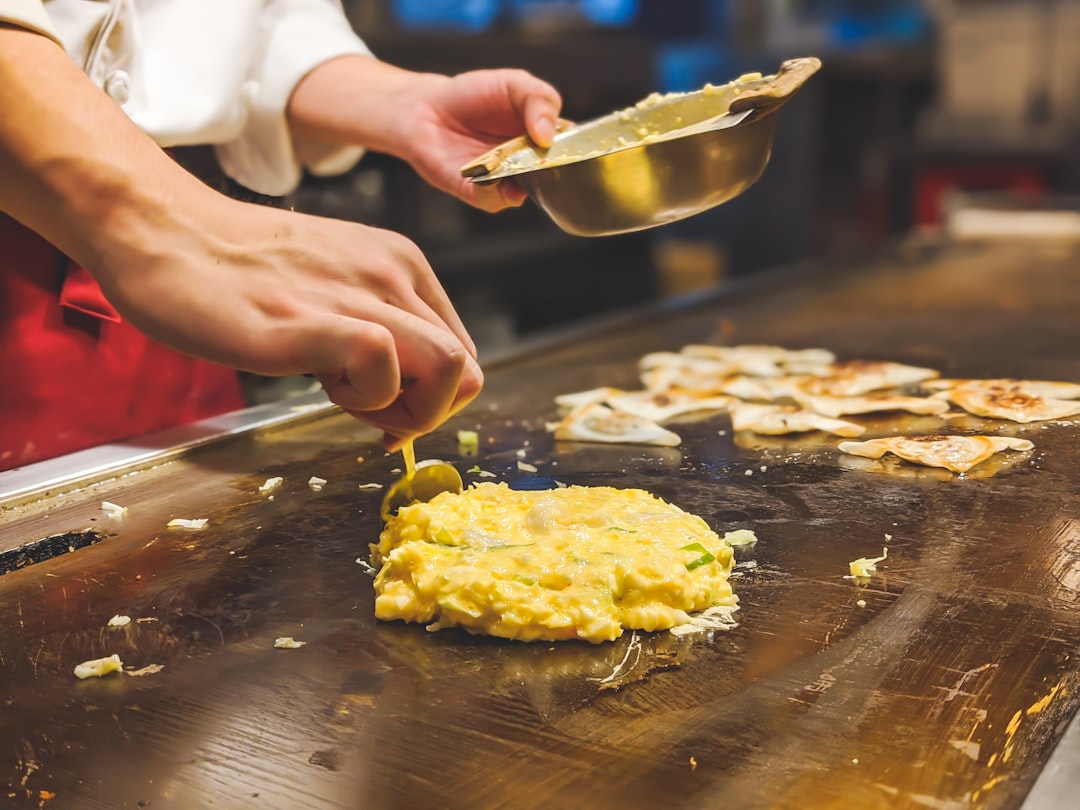
The source お好み焼きを食べるベストシーズンは?大阪で楽しむ季節ガイド is technically about Osaka, and okonomiyaki is, in the minds of most Japanese people, an Osaka dish. But Tokyo has its own version — monjayaki, the looser, wetter pancake that originated in the Tsukishima district on a reclaimed island in Tokyo Bay — and the comparison between the two is instructive about how the two cities think about themselves. The source's author describes waiting 45 minutes in August heat outside a famous Dotonbori restaurant, sweating through the queue and then sweating further from the iron griddle inside. Tokyo's monjayaki shops are rarely that crowded, which is either a mark against them or a mark in their favour depending on your tolerance for performance queuing. Tsukishima's main shopping street, Nishi-Jujo-dori, has a concentration of monjayaki restaurants that is slightly overwhelming, but the older, less decorated shops tend to be the ones worth sitting down in.
Il consiglio del team
Monjayaki is cooked at the table on a built-in iron griddle. The technique — scraping it into a ring, letting it set, eating directly from the griddle with a small metal spatula — takes about one attempt to learn and is part of the point.
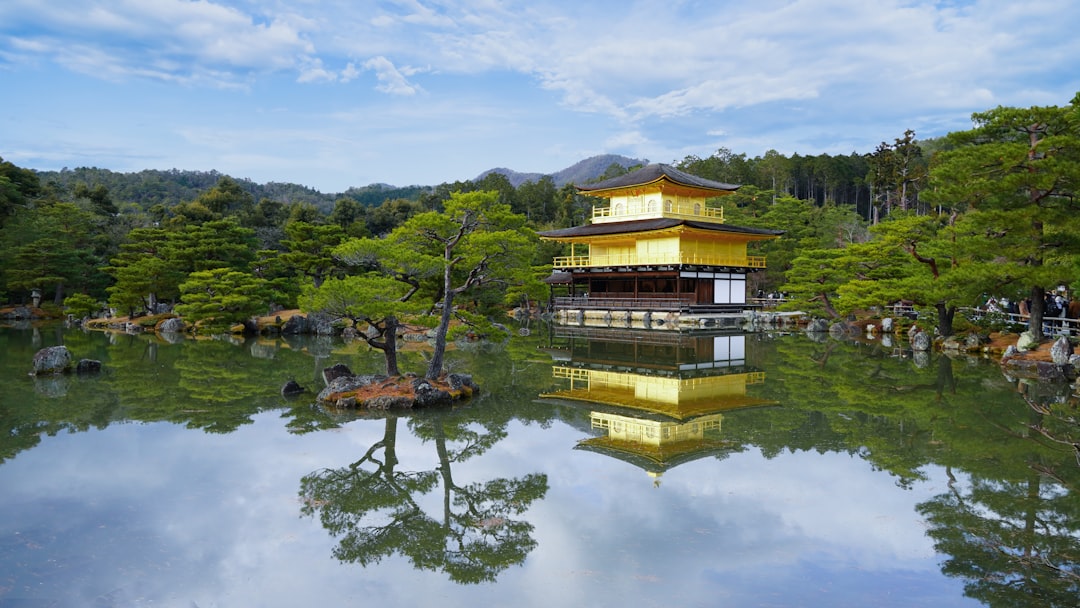
The source 金閣寺とは?よくある質問に全部答えます — a FAQ about Kyoto's Golden Pavilion — is technically about a building 500 kilometres from Tokyo, and yet it belongs in this list because the experience it describes is the experience most visitors have at Tokyo's major historic sites too. The author visited Kinkaku-ji as a university student during autumn foliage season and was too overwhelmed by crowds to look at it properly. The same thing happens at Senso-ji in Asakusa on any weekend between March and November. The lesson is not to avoid these places but to time them differently: Senso-ji at 6am, when the incense smoke from the large bronze cauldron in the outer courtyard is visible in the early light and the souvenir stalls are still shuttered, is a genuinely different experience from Senso-ji at 11am. The temple itself — rebuilt after wartime bombing, the current structure dating from 1958 — has a history that most visitors walk past without knowing.
Il consiglio del team
The Nakamise shopping street leading to Senso-ji is fine for a single pass but sells largely the same items as every other tourist corridor in Japan. The small streets to the east and west of it, in the older Asakusa backstreets, have craft shops and traditional food vendors that have been operating for decades.
The source 厳島神社の大鳥居:よくある疑問に全部答えます covers the famous floating torii gate of Itsukushima Shrine in Hiroshima Prefecture — again, not Tokyo — but the questions it raises are universal to Japanese historic sites: can you walk to it when the tide is out? (Yes.) Which ferry do you take? (There are two operators; either works.) What's the best time of day? (Early morning, always early morning.) Tokyo has its own version of this pilgrimage logic in the form of Meiji Jingu, the Shinto shrine in Harajuku dedicated to Emperor Meiji and Empress Shoken. The forested approach — a kilometre of gravel path through camphor and zelkova trees that were planted in the 1920s — is one of the more disorienting experiences available in central Tokyo: the city simply disappears. The shrine itself is large and somewhat austere, and it is correct that it is not as visually arresting as Itsukushima. But the forest is the point.
Il consiglio del team
The barrel-stacked sake display and the wine barrel display near the main path are gifts from French and Japanese producers respectively — a detail that captures something about Meiji-era modernisation that no interpretive panel quite manages.
The source 日本酒のすべてがわかるFAQ|大阪から学ぶ酒の世界 — a sake FAQ written from an Osaka perspective — opens with the author sitting at a bar counter, watching a row of one-sho bottles and talking to a proud proprietor, and then drinking too much and regretting it. This is a universal sake experience. Tokyo is not a sake-producing region — the breweries are in Niigata, Akita, Yamagata, Hyogo — but it is arguably the best place outside those prefectures to drink sake with intention, because the city's izakaya culture and its specialist sake bars draw from the entire national production. Shibuya's Nonbei Yokocho, a narrow alley of small bars that has somehow survived the surrounding redevelopment, has several shops that will pour you a flight of regional varieties and explain the difference between junmai, ginjo, and daiginjo without making you feel like a student. The difference matters: junmai tends toward umami and weight; ginjo is cleaner and more aromatic; daiginjo is the most delicate and the most expensive.
Il consiglio del team
Temperature matters more than most Western drinkers expect. Asking for a sake warm (atsukan) versus room temperature (jo-on) versus chilled (reishu) will produce what feels like a different drink from the same bottle.
The source 沖縄一人旅FAQ — a solo travel FAQ about Okinawa — notes with some self-awareness that the author's usual territory is quiet hot-spring towns and local train journeys, and that Okinawa is usually discussed in a resort context. But the observation that walking alone through the backstreets of Naha produces a specific kind of solitude — different from mainland Japan, more open, more Caribbean in temperature and pace — points toward something Tokyo actually contains in miniature. The Okinawan diaspora in Tokyo is substantial, and the Koenji and Shimokitazawa neighbourhoods in particular have Ryukyuan izakaya serving awamori (the Okinawan spirit distilled from long-grain rice and aged in clay pots), rafute (braised pork belly), and goya champuru (bitter melon stir-fry). These are not tourist restaurants. They are neighbourhood places that happen to serve food from 1,600 kilometres away, and eating in one of them is a reasonable introduction to a culture that the standard Tokyo itinerary never reaches.
Il consiglio del team
Awamori aged in clay pots (kame-jikomi) is the variety worth asking for specifically. It is rougher and more complex than the standard bottled versions and is rarely available outside specialist Okinawan restaurants.
The source 京都、いつ行く?月別に正直に書く旅の季節論 — a month-by-month honest assessment of when to visit Kyoto — opens with a declaration that there is no perfect timing for Kyoto, that chasing perfection tends to end in exhaustion in the middle of a crowd. The same is true of Tokyo, and the author's conclusion — that the question is really about what you are willing to prioritise — applies equally here. After a week in Tokyo, the city's density begins to produce a specific kind of fatigue that is not unpleasant but is cumulative. The corrective is not necessarily to leave for Kyoto (though the Shinkansen from Tokyo Station reaches Kyoto in about two hours and fifteen minutes). It can be as simple as taking the Chuo Line west to Takao, hiking the mountain that sits at the end of the line, and returning to the city in the evening with the particular clarity that comes from having been briefly outside it. Takao-san is well-known enough to be crowded on weekends; go on a Tuesday in October and it is a different proposition entirely.
Il consiglio del team
The Inariyama trail on Mount Takao — Trail 5, which follows the ridge — is longer and less trafficked than the main paved path and offers views toward Fuji on clear days in autumn and winter. It adds about forty minutes to the ascent.
There is a passage in the Kyoto seasonal guide — the source that argues there is no perfect timing for that city — that I keep returning to: the problem is not the destination, it is knowing what you are actually trying to prioritise. Tokyo makes this question unusually difficult to answer, because it offers so many simultaneous versions of itself that the act of choosing feels like a loss. You can spend a week here and never eat the same cuisine twice, never visit the same neighbourhood twice, never use the same train line twice. The city is large enough to absorb almost any itinerary without revealing its actual character.
What I have tried to do in this list is point toward the moments when Tokyo stops performing and starts simply existing — a park in November with no one in it, a curry house in a bookshop district that has not changed its menu in forty years, an Okinawan bar in Koenji where the awamori is served in a clay cup and the television in the corner is showing baseball. These are not secret places. They are just places that require you to have already decided what you are looking for, which is the only preparation that actually matters before arriving in a city this large.
Tokyo will not meet you halfway. This is not a flaw.
★ Guida tascabile
Porta questa guida con te.
Salvala offline, ottieni le indicazioni a piedi e scopri migliaia di luoghi come questi.
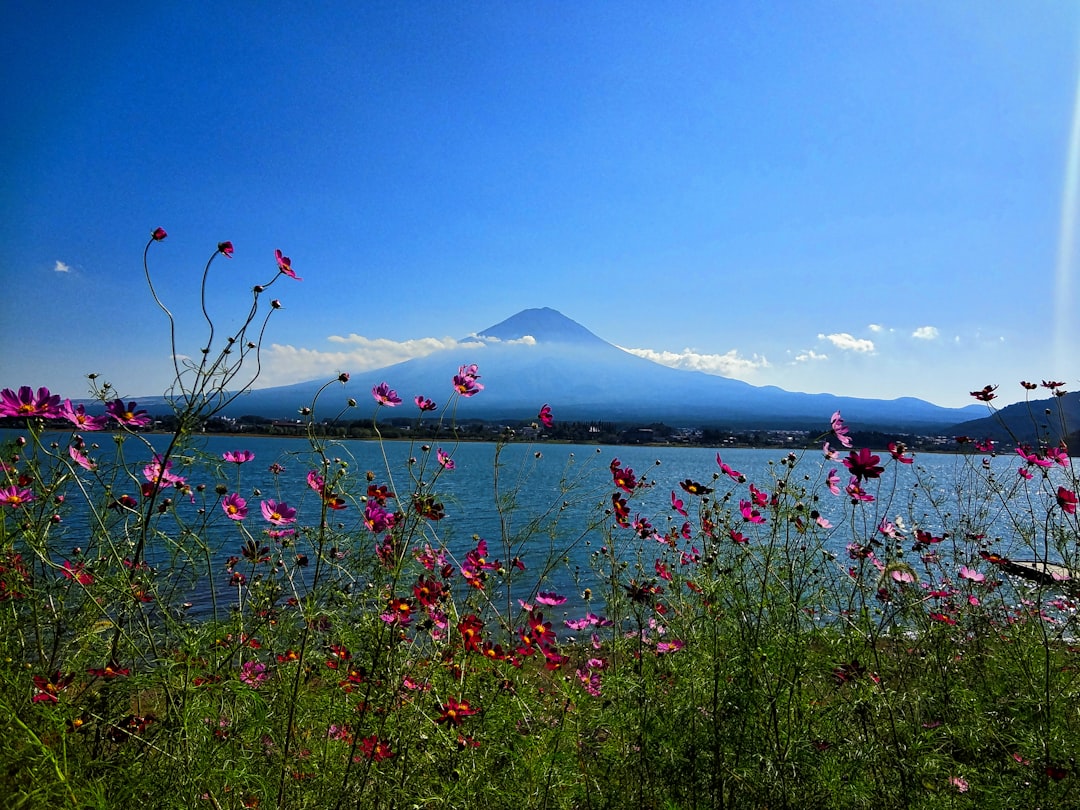
Late March to early April (cherry blossom) and mid-November (autumn foliage) are the most visited periods, and the crowds are proportional to that reputation. If you want mild weather without the peak-season pressure, early October and late May are both reliable. Summer — July and August — is hot and humid in a way that is genuinely punishing for extended walking, though the city's indoor culture (department stores, covered shopping arcades, air-conditioned everything) mitigates this somewhat. Winter is cold but dry, and the light in January and February is clear enough that distant views of Fuji from elevated points in the city become possible.
How many days do you actually need in Tokyo?
The honest answer is that a week is enough to form a real impression of two or three neighbourhoods, which is a more useful goal than trying to cover the city comprehensively. Four days is the minimum for anything beyond the major landmarks. The common mistake is building an itinerary that covers too much geographic ground — crossing from Asakusa to Shibuya to Harajuku in a single day is physically possible but produces a kind of blur. Better to pick a ward, walk it slowly, eat in it twice, and understand it as a place rather than a waypoint.
Is Tokyo expensive?
Less so than its reputation suggests, and significantly less expensive than London, Paris, or New York for day-to-day costs. A bowl of ramen at a counter restaurant runs between 800 and 1,200 yen. A subway journey within central Tokyo is rarely more than 300 yen. The costs escalate at the high end — a kaiseki dinner, a room in a well-located hotel — but the middle range of eating and moving around is genuinely reasonable. The main budget trap is department store basement food floors, which are designed to make spending feel like browsing.
Do I need to speak Japanese to navigate Tokyo?
For practical navigation — trains, convenience stores, chain restaurants — English signage and translation apps have made Japanese unnecessary in a way that was not true fifteen years ago. For the kinds of experiences described in this article — small neighbourhood restaurants, specialist sake bars, craft shops in Yanaka — some basic phrases and a willingness to point at menus and nod will get you further than you might expect. Japanese hospitality culture is oriented toward making transactions succeed; people will work hard to understand what you need. Learning to say 'kore wo kudasai' (I'll have this one) and 'oishii desu' (this is delicious) will be received warmly.
What is the one thing most visitors to Tokyo get wrong?
Treating it as a single city rather than a loose federation of distinct neighbourhoods that happen to share a transit network. Shibuya and Yanaka are both 'Tokyo' in the same way that the financial district and the outer boroughs are both 'New York' — technically true, experientially quite different. The visitors who leave Tokyo with the clearest sense of having been somewhere specific are usually the ones who spent three days in one neighbourhood rather than one afternoon in six. Pick an area that matches what you are actually interested in — old temples, live music, contemporary art, serious food — and stay close to it long enough to become a regular somewhere.
★ Leggila quando vuoi
Salvala sul tuo telefono.
Aggiungi questa guida ai preferiti, pianifica il viaggio offline, scopri luoghi come questi.