10 Best Things to Do in Stockholm, Sweden — beyond the obvious
A long-term resident's guide to the city that rewards patience, curiosity, and a willingness to take the wrong bus
L
Una guida di
Lena Hofmann
Aggiornata il
13 maggio 2026
Lettura
13 minuti
Comprende
8 luoghi · mappa interattiva
★ Guida d'Italia 2026
Pianifica con cura. Viaggia più a fondo.
1.3M+ luoghi curati nel mondo, mappe offline e itinerari intelligenti — tutto in un'app gratuita.
1.3M+ luoghiMappe offlineItinerari AIGratis
I arrived in Stockholm in October, which is, objectively, the wrong time to arrive anywhere in Scandinavia. The light was already retreating by three in the afternoon, the water between the islands had gone the colour of pewter, and the Swedes I encountered on the tunnelbana seemed to have collectively agreed to stare at their shoes. I had come expecting the postcard version — the ochre and mustard facades of Gamla Stan, the clean lines of the Vasa Museum, the open-faced sandwiches arranged with geometric precision. I found all of that, eventually. But the city I came to understand over subsequent visits — and, later, a year of living within cycling distance of Södermalm — was considerably more interesting and considerably less cooperative than the brochure suggested.
Stockholm is not a city that performs for you. It is built on fourteen islands stitched together by fifty-seven bridges, and that geography gives it a quality of perpetual incompleteness, as if it is always in the process of becoming something else. It is a city of water and stone and long silences, of Lutheran restraint that occasionally cracks open into something warmer. It is also, if you stay long enough, a city of extraordinary churches, overlooked palaces, and a relationship with its royal past that is neither sentimental nor entirely ironic.
What follows is not a list of the things you will find in every airport magazine. The Vasa Museum is extraordinary, yes, and Gamla Stan is genuinely beautiful even when it is full of people taking photographs of other people taking photographs. But this list is about the second layer — the things that take a little longer to find and repay the effort of finding them.
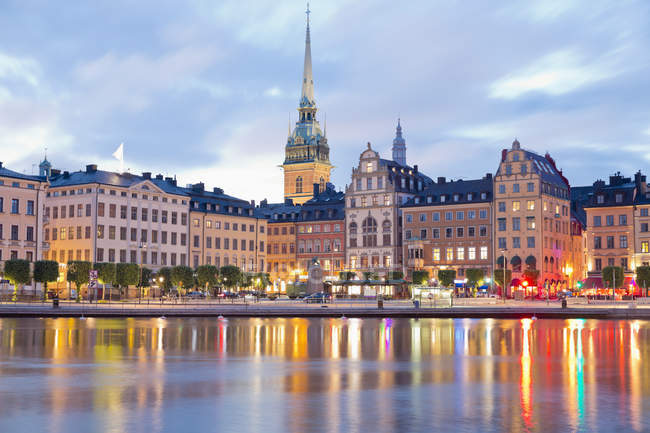
Most visitors to Gamla Stan follow the same route — the Royal Palace, the cathedral, the narrow lane that someone on Instagram has decided is photogenic. Very few look up at the spire that rises above all of it. The German Church, or Tyska Kyrkan, is the most tangible reminder that medieval Stockholm was, for long stretches of its history, effectively a German commercial colony. The Hanseatic merchants who dominated Baltic trade also dominated this city, and they built themselves a church that said so. The baroque interior, completed in the late seventeenth century, is ornate in a way that Swedish churches rarely permit themselves to be — gilded, layered, slightly overwhelming. The royal gallery, added for the Swedish-German royal connection, has a particular elaborateness that feels almost defiant in this otherwise restrained country.
The church is still an active congregation serving Stockholm's German-speaking community, which gives it a lived quality that many heritage sites lack. You may walk in during a rehearsal. The acoustics will remind you why they bothered.
Il consiglio del team
The church is often open on weekday mornings with no queue and no entrance fee. Go before eleven and you will likely have the interior almost to yourself.
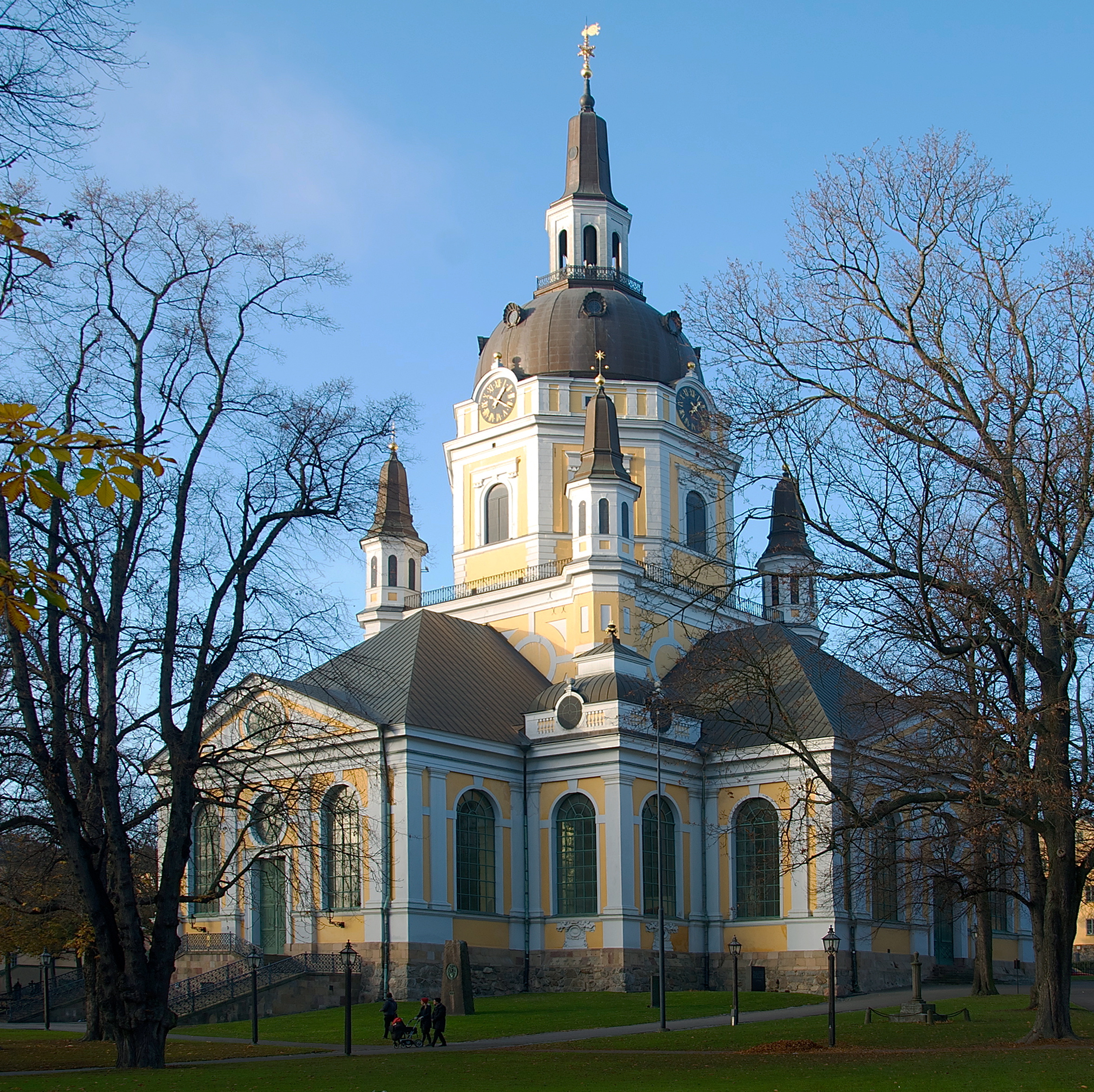
Katarina kyrka sits on the Södermalm ridge with the quiet authority of a building that has been rebuilt twice and is no longer surprised by anything. The original church was designed in the seventeenth century by the French architect Jean de la Vallée — a name that appears repeatedly in Stockholm's architectural history, like a recurring character in a novel you didn't expect to be so long. The church burned catastrophically in 1723, was rebuilt, and then burned again in 1990 in a fire that gutted the interior. What you see now is a restoration completed in 1995, which is either a triumph of craft or a philosophical problem, depending on your tolerance for these questions.
What is not in question is the view from the churchyard, which sweeps across the water to Gamla Stan and Djurgården in a way that requires no filter and generates no hashtag. The surrounding neighbourhood of Södermalm is worth at least an hour of wandering — independent bookshops, coffee roasters, the occasional vintage clothing shop that has not yet been discovered by the algorithm.
Il consiglio del team
The churchyard is a genuinely peaceful place to sit in summer. Locals use it as a lunch spot. Follow their lead.
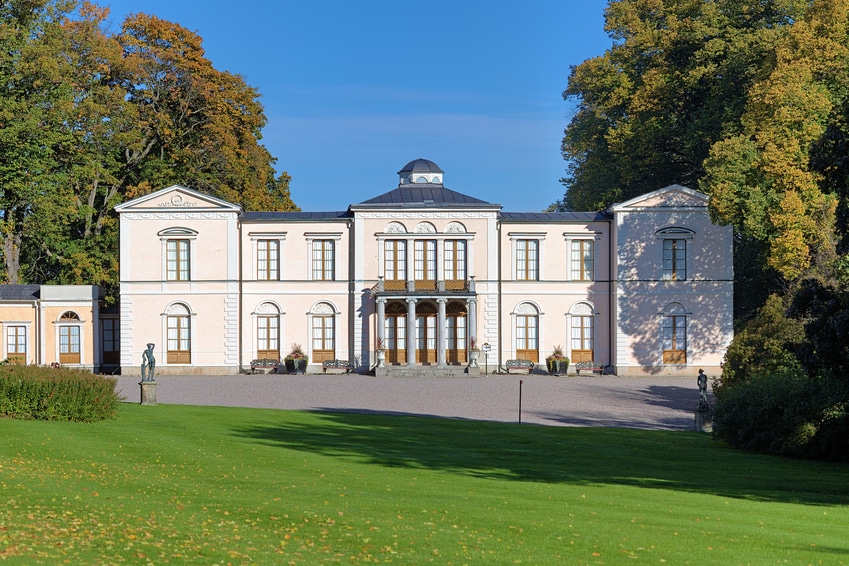
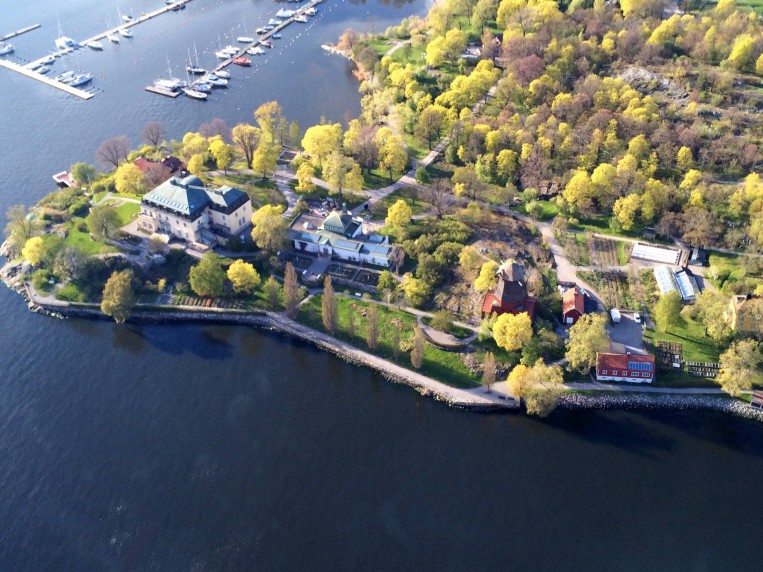
Rosendal Palace sits on Djurgården, the island that Stockholm has wisely kept as a park, and it is the kind of place that rewards visitors who have already spent a morning at the Vasa Museum and are now looking for something quieter. Built for King Karl XIV Johan — the French-born Napoleonic general who became Sweden's unlikely monarch in 1818 — the palace is a compact, almost domestic example of Swedish Empire style. Where the great European palaces of the period tend toward the grandiose, Rosendal feels like someone's idea of a retreat: the proportions are human, the rooms are furnished as they were during Karl Johan's lifetime, and the whole thing has a quality of preserved ordinariness that is more interesting than splendour.
The palace is open for guided tours in summer, and the surrounding gardens include a working biodynamic farm with a café that sells produce grown on site. This is not a detail I am including for atmosphere — the food is genuinely good and the terrace, in good weather, is one of the better places to eat on the island.
Il consiglio del team
The biodynamic garden café sells bread baked on the premises. Arrive before noon on weekends if you want any.
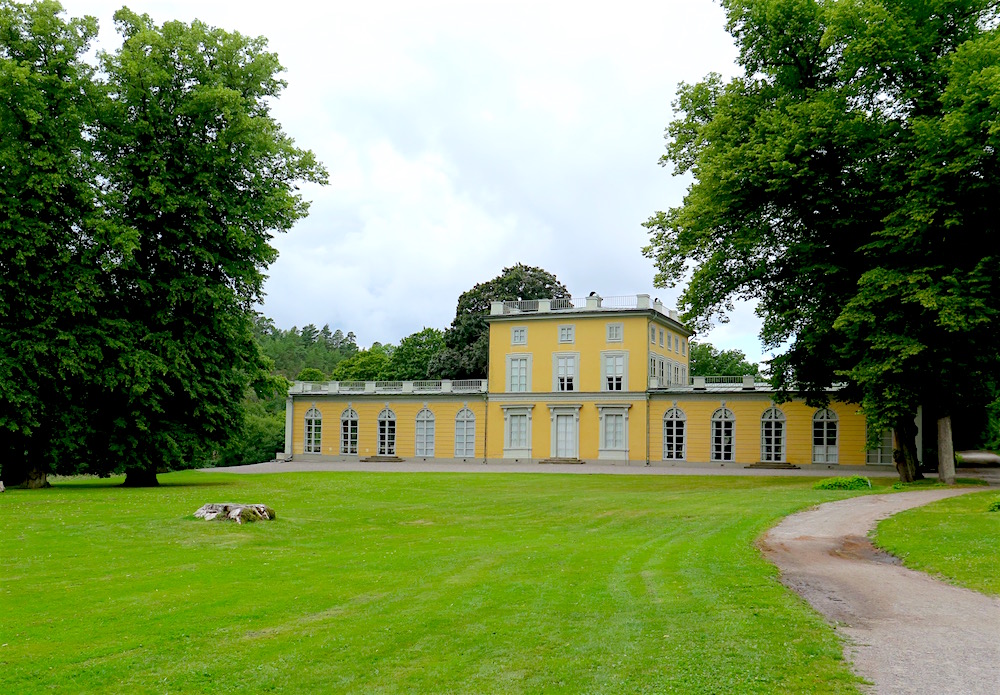
Haga Park, a few kilometres north of the city centre, is where Stockholm's urban fabric begins to loosen into something more genuinely rural. Within it, Gustav III's Pavilion stands as one of the more precise examples of late eighteenth-century European neoclassicism north of the Alps. Gustav III was a king with strong opinions about architecture, theatre, and his own image — he was assassinated at a masked ball in 1792, which tells you something about the risks of strong opinions in the Swedish eighteenth century — and the pavilion he built here reflects a mind that had spent serious time in France and Italy and intended to show it.
The interiors are painted with trompe l'oeil details that are technically impressive and slightly vertiginous. The park itself, designed in the English landscape tradition, is worth the journey independently — it is used by joggers, families, and the occasional person reading a novel on a bench who looks as if they have been there since the nineteenth century.
Il consiglio del team
Guided tours are the only way to see the interior, and they run on a limited schedule. Check the Royal Court website before making the trip.
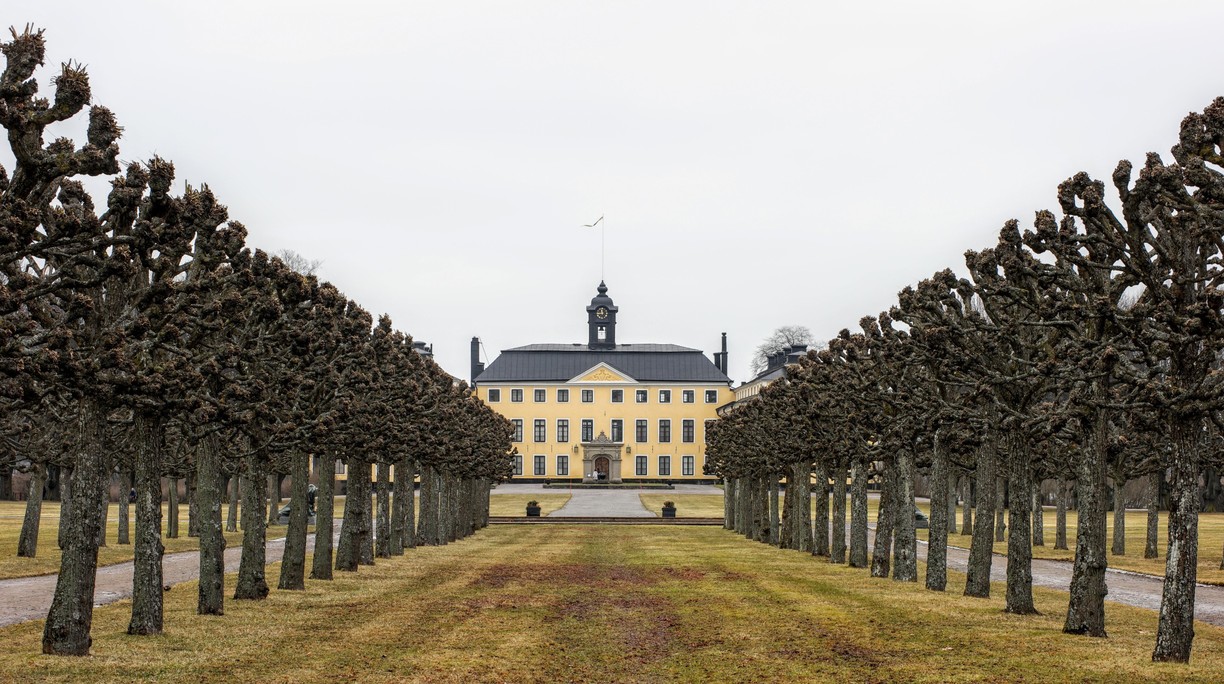
Ulriksdal Palace requires a degree of commitment that most visitors are not prepared to make, which is precisely why it is worth making. It sits on the banks of Edsviken Lake, within the boundaries of the National City Park — a protected green corridor that stretches from Djurgården northward — and getting there without a car involves a bus journey that will take you through suburbs Stockholm does not show in its promotional material. The palace itself was built in the seventeenth century and expanded and altered by successive monarchs across three hundred years, which means it carries the architectural evidence of multiple tastes, some of them in direct conflict with each other.
The orangery, which dates from the late nineteenth century, now operates as a restaurant. The grounds, particularly in autumn when the birch trees along the lake have turned, have a quality of composed melancholy that feels entirely appropriate to a Scandinavian palace that nobody is quite sure what to do with.
Il consiglio del team
The palace is within the National City Park boundary, which means you can combine a visit with a long walk through forest and lakeside paths. Wear shoes that can manage mud.
Prince Eugen was a son of King Oscar II who chose, with some stubbornness, to become a painter rather than a military officer, which in the 1880s required a certain amount of personal resolve. He was good enough that Swedish art history takes him seriously, and Prins Eugens Waldemarsudde — the estate he built at the southern tip of Djurgården — is the place where his work makes most sense. The house, the gallery he added to it, and the gardens that slope down to the water form a coherent argument for a particular way of seeing the Swedish landscape: the light over the inlet, the particular blue of a Baltic summer evening, the birches.
The collection includes not only Eugen's own work but pieces he acquired from his contemporaries — Zorn, Larsson, Liljefors — which makes the gallery a useful introduction to Swedish painting of the late nineteenth and early twentieth centuries. The view from the garden terrace across Djurgårdsbrunnsviken is the kind of thing that justifies the bus journey from the city centre.
Il consiglio del team
The museum café has a terrace that faces the water. It fills up quickly on summer weekends. Arrive at opening time or accept that you will be standing.
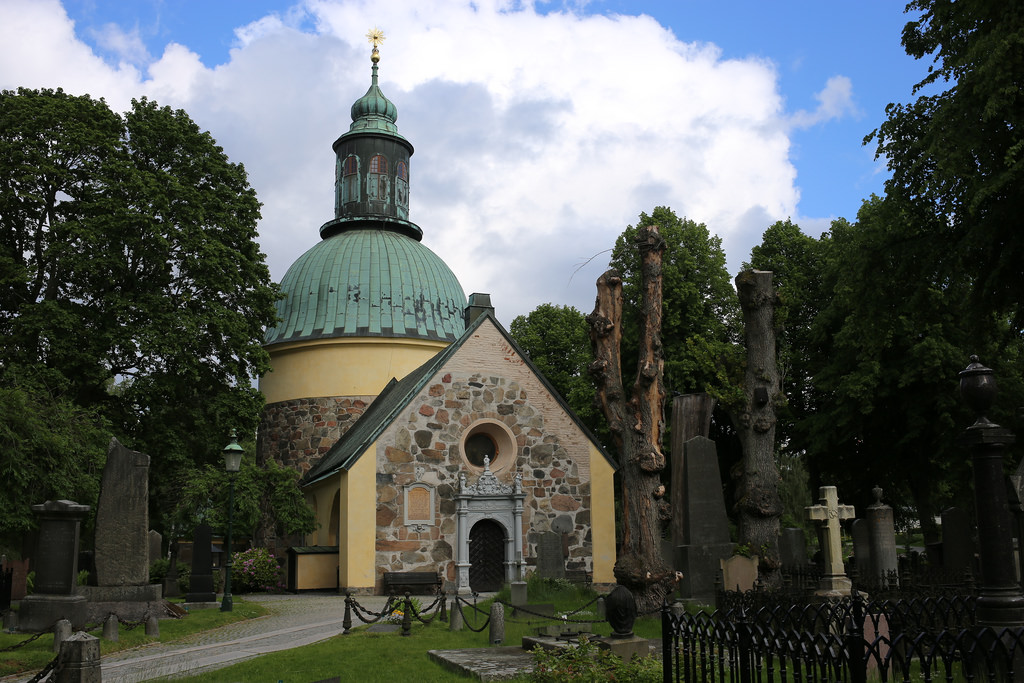
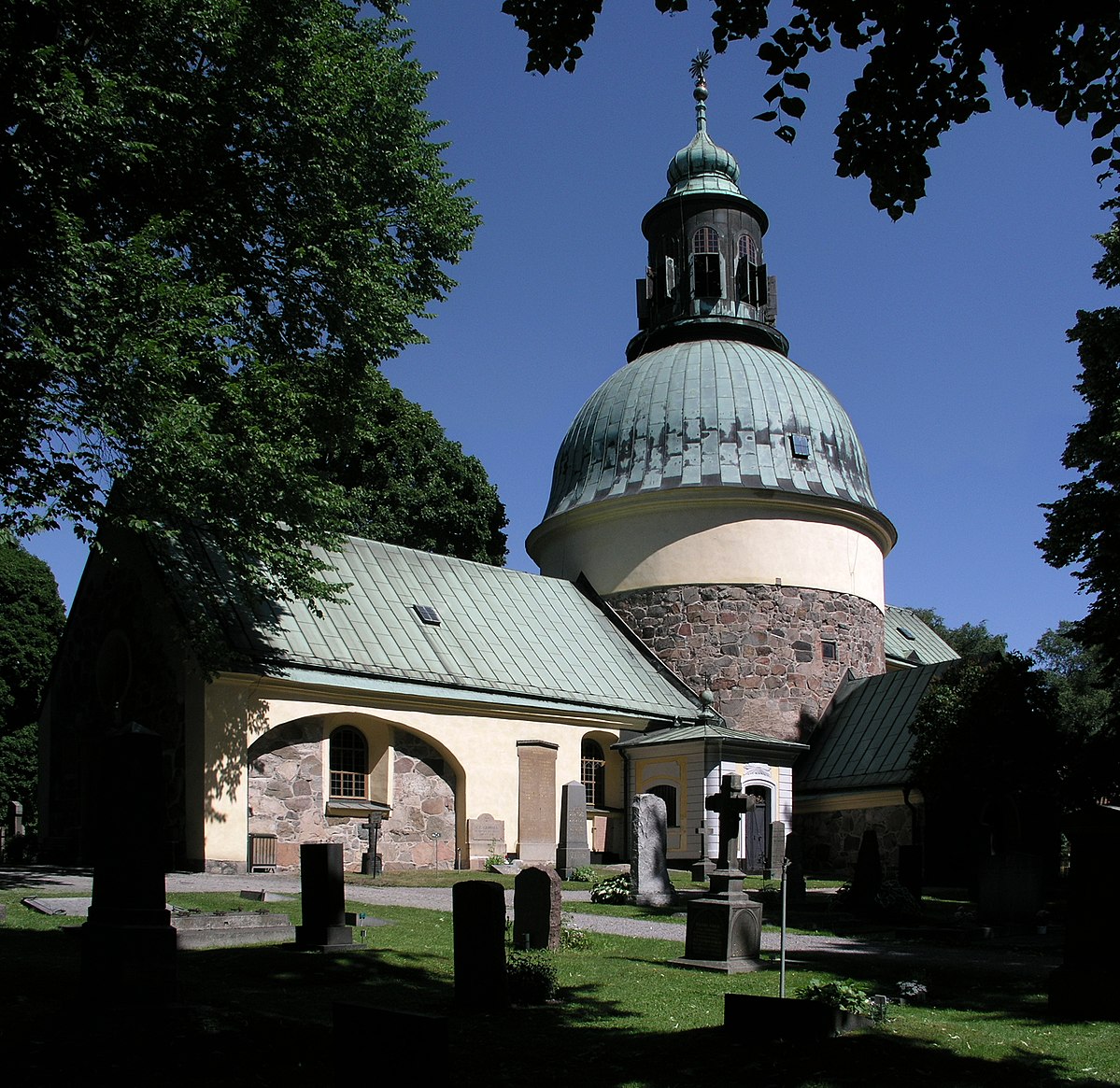
Solna Church is described in the sources as a 'round church,' which is accurate but undersells the strangeness of actually standing inside it. The building occupies a headland between two lakes — Brunnsviken and Ulvsundasjön — at the southern end of the old Solna cemetery, and it has the quality of a place that was important long before anyone thought to write down why. The medieval frescoes inside are the main reason to make the journey: they cover the vaulted ceiling in the dense, unsentimental visual language of the Middle Ages, where saints and sinners are depicted with equal conviction and the colour has survived several centuries of Swedish winters with more grace than you might expect.
Solna is now effectively a suburb absorbed into greater Stockholm, but the church and its cemetery retain a separateness from the surrounding urban texture. The walk from the nearest tunnelbana station takes you past a landscape that shifts, within a few hundred metres, from bus stops to something that feels genuinely old.
Il consiglio del team
The church is not always open without prior arrangement. Check opening hours carefully before travelling — a locked door here is a genuine disappointment.
To be precise about a point of potential confusion: Solna Church and the Medieval Church of Solna refer to the same building — a distinction worth noting because Stockholm's tourism infrastructure sometimes lists them separately, which has caused at least one afternoon of unnecessary map-reading on my part. What the 'medieval' designation emphasises is the interior programme of wall paintings, which represent one of the more complete surviving examples of medieval ecclesiastical decoration in the Stockholm region. The paintings are not decorative in the modern sense — they are instructional, theological, and occasionally threatening, in the way that medieval religious art understood its function.
Spending time with them requires patience and, ideally, some prior reading about the iconographic conventions of the period. If you arrive expecting the paintings to explain themselves, you will leave underwhelmed. If you arrive prepared, you will leave with the particular satisfaction of having understood something that was not designed to be immediately legible.
Il consiglio del team
A small printed guide to the frescoes is sometimes available inside the church. It is worth more than its modest cost.
There is a particular kind of disappointment that Stockholm can produce in visitors who arrive expecting the city to meet them halfway. It will not. The Swedes have a word — lagom — that is usually translated as 'just the right amount' and is sometimes used to explain a cultural tendency toward moderation, restraint, the avoidance of excess in any direction, including enthusiasm. Whether or not the word actually carries all that weight, the quality it describes is real and it shapes the city's relationship with tourism in ways that can feel, initially, like indifference.
What I have come to understand, over years of returning, is that this is not indifference but a different kind of invitation. Stockholm rewards the visitor who is willing to take the wrong bus, to sit in a churchyard for twenty minutes without any particular purpose, to walk the long way around an island in November with the wind coming off the water. The city is built on fourteen islands, and the spaces between them — the water, the light, the distances that require effort to cross — are as much a part of it as the buildings.
The places listed here are not secrets. They are simply things that take a little longer to find than the Vasa Museum. The finding is part of the point.
★ Guida tascabile
Porta questa guida con te.
Salvala offline, ottieni le indicazioni a piedi e scopri migliaia di luoghi come questi.
June and July offer the longest daylight hours and the most reliable weather, but the city is also at its most crowded. May and early September are a reasonable compromise — the light is still good, the queues are shorter, and the water is calm enough to take the archipelago ferries without discomfort. Winter visits are not for everyone, but the city at Christmas, with its markets and early darkness, has a quality that is entirely its own.
How do you get around between these destinations?
Stockholm's public transport system — the SL network of tunnelbana, buses, and trams — covers most of these destinations adequately, though Ulriksdal Palace requires a bus journey that takes roughly thirty minutes from the city centre. A 24-hour or 72-hour SL travel card is worth buying on arrival. Djurgården is best reached by tram from Norrmalmstorg or by ferry from Slussen in summer. Cycling is practical for the central islands but less so for the outer destinations.
Are these destinations suitable for children?
Djurgården as a whole — including Rosendal Palace and Prins Eugens Waldemarsudde — works well for families because the park setting gives children space to move. The medieval churches, particularly Solna, are better suited to older children or adults with a specific interest in the period. Gustav III's Pavilion and Ulriksdal Palace are guided-tour experiences that require patience and a tolerance for standing in rooms while someone talks — variable propositions depending on the child.
Do I need to book tickets in advance for the palaces?
For Rosendal Palace and Gustav III's Pavilion, guided tours are the only way to see the interiors, and places are limited. Booking ahead through the Royal Court's website is strongly recommended, particularly in summer. Prins Eugens Waldemarsudde operates as a standard museum with timed entry available online — worth reserving on summer weekends. The churches listed here are generally free and require no booking, though opening hours vary and should be checked before travelling.
Is Stockholm an expensive city for visitors?
Yes, by most European standards. Restaurant meals, transport, and museum entry fees add up quickly. The churches listed here are largely free to enter, and the parks — Djurgården, Haga Park — cost nothing. The biodynamic café at Rosendal is moderately priced by Stockholm standards. Budget travellers should note that the city's supermarkets are a practical option for lunch — the quality of Swedish bread, cheese, and cured fish from a good supermarket is not something to be embarrassed about.
★ Leggila quando vuoi
Salvala sul tuo telefono.
Aggiungi questa guida ai preferiti, pianifica il viaggio offline, scopri luoghi come questi.