Borghi&Tesori by Secret World — la più grande guida di viaggio al Mondo
En · Guida di viaggio
Guida di viaggio · Edizione 2026

10 Best Things to Do in San Francisco, USA — beyond the obvious.

A long-term resident's guide to the city that resists easy description — fog, hills, and all.

L
Una guida di
Lena Hofmann
Aggiornata il
27 maggio 2026
Lettura
13 minuti
Comprende
10 luoghi · mappa interattiva
10 Best Things to Do in San Francisco, USA — beyond the obvious.
★ Guida d'Italia 2026

Pianifica con cura. Viaggia più a fondo.

1.3M+ luoghi curati nel mondo, mappe offline e itinerari intelligenti — tutto in un'app gratuita.

1.3M+ luoghi Mappe offline Itinerari AI Gratis
I have a complicated relationship with San Francisco, which is probably the only honest way to have one. I first arrived on a grey Tuesday in October, convinced I'd misread the season — it was cold in a way that felt personal, the kind of cold that comes off the bay and finds the gap between your collar and your neck. A local told me, with the weary satisfaction of someone delivering a correction they've delivered many times, that Mark Twain probably never said that thing about the coldest winter being a summer in San Francisco. I appreciated the precision. The city rewards precision.

San Francisco is not large. You can walk its neighbourhoods in a way that would be absurd in Los Angeles or impossible in New York. What it lacks in scale it compensates for in vertical drama and cultural density — a Victorian house next to a Salesforce tower next to a taqueria that has been run by the same family since before most tech workers were born. The city has been remade so many times, by earthquake and fire and money and ideology, that its layers sit unusually close to the surface. Scratch almost anything and you find something older, stranger, more interesting.

The problem with writing about San Francisco is that the famous things are famous for real reasons — the cable cars do rattle magnificently up impossible gradients, the Golden Gate Bridge is genuinely affecting — and yet the famous things are also where the crowds are thickest, the prices highest, and the experience most mediated by the fact of everyone else having the same idea at the same time. What follows is an attempt to thread that needle: to take the well-known seriously without stopping there, and to find, in a city that has been written about extensively, a few angles that still feel like they belong to you.
1 Transit · 0.0 km

San Francisco Cable Cars

San Francisco Cable Cars
The San Francisco Cable Cars are among the few things in this city that have remained structurally unchanged since the 1870s, which is either comforting or slightly alarming depending on your relationship with Victorian engineering. Pulled by underground cables running at a fixed speed of nine and a half miles per hour, they have been climbing the city's steepest gradients since 1873, and the Powell-Hyde line in particular — which crests Nob Hill and drops toward Fisherman's Wharf — remains one of the more theatrical ways to move through any city on earth. The friction, the bell, the gripman's physical labour: none of it is performance. It is simply how the thing works.

The honest caveat is the queue. On a summer weekend, the wait at Powell and Market can stretch to an hour. The workaround is to board mid-route, or to take the California Street line, which is quieter and, some would argue, more beautiful — it runs through the financial district and up through Nob Hill without the tourist density of the Powell lines.
Il consiglio del team The California Street cable car line is operated separately from the Powell lines and rarely has a significant wait. Board near Drumm Street in the Financial District and ride it all the way up to Van Ness.
2 Planning & Navigation · 0.0 km

Migliori app viaggio San Francisco 2026: top 5 per un viaggio perfetto
Migliori app viaggio San Francisco 2026: top 5 per un viaggio perfetto
This is not, strictly speaking, a place — but it belongs near the top of any honest account of how to navigate San Francisco, because the city is genuinely confusing in ways that a map alone does not resolve. The Muni system, which combines buses, light rail, historic streetcars, and cable cars under one fare structure, requires a certain patience and a working knowledge of which app is actually tracking which vehicle in real time. The SFMTA's own app is functional but inelegant. Transitapp has a better interface. For parking — which is its own psychological ordeal — SFpark remains useful for locating garages.

The broader point is that San Francisco in 2026 is a city where the gap between the physical experience of arrival and the digital infrastructure required to navigate it has narrowed considerably, but not entirely. Cell coverage drops in the tunnels. Ride-share surge pricing near large events can be startling. Planning the digital layer of a trip here is worth half an hour before you land.
Il consiglio del team Download the Clipper card app before you arrive and load it with transit credit. It works across Muni, BART, and the ferry system, which means you can get from the airport to the Ferry Building without touching cash.
3 Architecture · 1.8 km

San Francisco: The Painted Victorian and Edwardian Houses

San Francisco: The Painted Victorian and Edwardian Houses
The term 'Painted Ladies' was coined specifically for San Francisco's Victorian and Edwardian houses, which is worth noting because similar houses exist in other American cities and do not generate the same response. What San Francisco has that others lack is the combination: the hills as backdrop, the density of surviving examples, and the particular palette of colours — ochres, sage greens, dusty roses — that the city's house painters have favoured since the 1960s restoration movement began reversing decades of grey and beige.

Alamo Square is the canonical viewpoint, and the row along Steiner Street facing the park is photographed so relentlessly that the lawn has developed a kind of resigned quality. But the more rewarding approach is to walk the streets of the Haight-Ashbury, the Western Addition, or Noe Valley without a specific destination, where the houses stand in their original context rather than as a backdrop for photographs. The details — the fish-scale shingles, the bay windows, the corbels — reward slowness.
Il consiglio del team The blocks of Liberty Street between Sanchez and Noe contain some of the finest Victorian houses in the city and see a fraction of the foot traffic of Alamo Square. Walk them on a weekday morning.
4 Public Art · 3.1 km

Vaillancourt Fountain in San Francisco
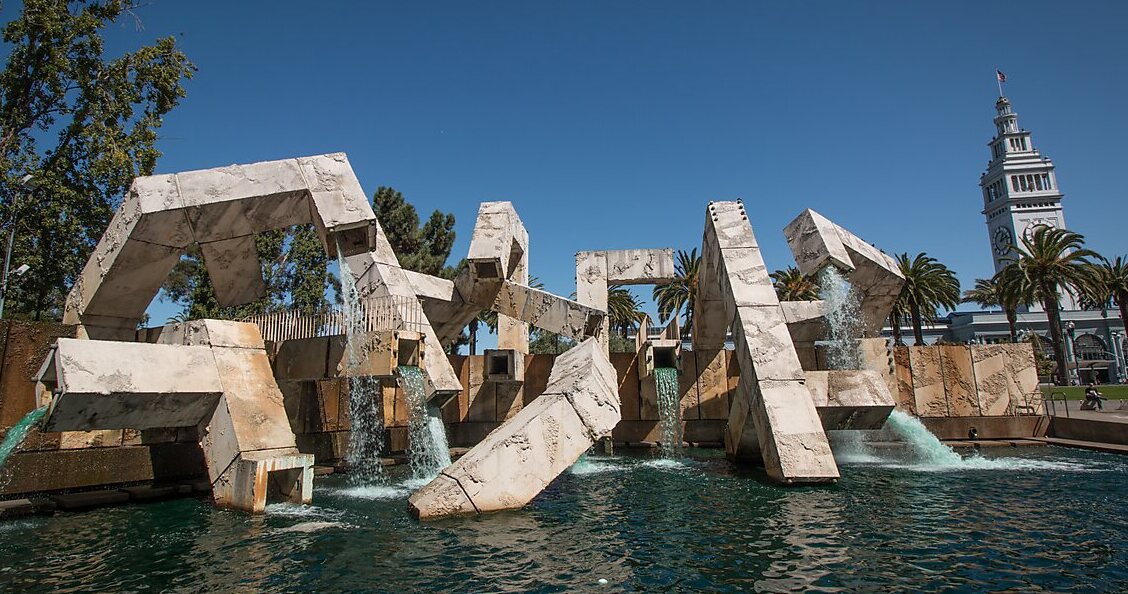
Vaillancourt Fountain in San Francisco
The Vaillancourt Fountain, which sits in Justin Herman Plaza at the foot of Market Street near the Embarcadero, is one of the most genuinely divisive works of public art in the United States. Designed by the Québécois sculptor Armand Vaillancourt and completed in 1971, it is a large, angular construction of precast concrete boxes — some hollow, some cantilevered, all slightly aggressive — through which water is pumped in ways that are either meditative or chaotic depending on the day and the flow rate. When it was unveiled, the San Francisco Chronicle's architecture critic called it an eyesore. It has been called worse since.

What makes it worth visiting is precisely this: it is a work that refuses to be liked easily, in a plaza that has been through several reinventions and still feels unresolved. Vaillancourt himself spray-painted 'Québec libre!' on it during a visit in 1990, which the city did not appreciate. The fountain was restored after the 1989 Loma Prieta earthquake damaged it. It endures, improbably.
Il consiglio del team The fountain is best approached from the Embarcadero side, where the structure reads more coherently against the bay. The plaza around it hosts a farmers' market on certain weekdays — worth timing your visit accordingly.
5 Religious Architecture · 2.9 km

California: The Vedanta Temple

California: The Vedanta Temple
One of the bay area's most unusual structures, the Vedanta Temple in the Western Addition neighbourhood sits on a residential block and announces itself with a roofline that makes no concessions to its surroundings: a rusty red onion-shaped dome of Moorish derivation, flanked by towers that suggest a North Indian temple, a medieval European turret, and a Bengali pavilion, all in the same building. Completed in 1906 — surviving the earthquake and fire of the same year, which is itself notable — it was designed for the Vedanta Society of San Francisco, one of the oldest Hindu organisations in the Western Hemisphere.

The interior, when open to visitors, is unexpectedly calm. The neighbourhood around it has changed considerably over the decades, but the temple maintains a quality of determined self-containment. It is the kind of building that makes you reconsider what the word 'eclectic' usually fails to convey.
Il consiglio del team The temple holds public worship services, and visitors are generally welcome to attend or to visit during open hours. Check the Vedanta Society's schedule before going — the building is not always accessible to walk-ins.
6 Museum · 2.0 km

(SFMOMA) The San Francisco Museum of Modern Art
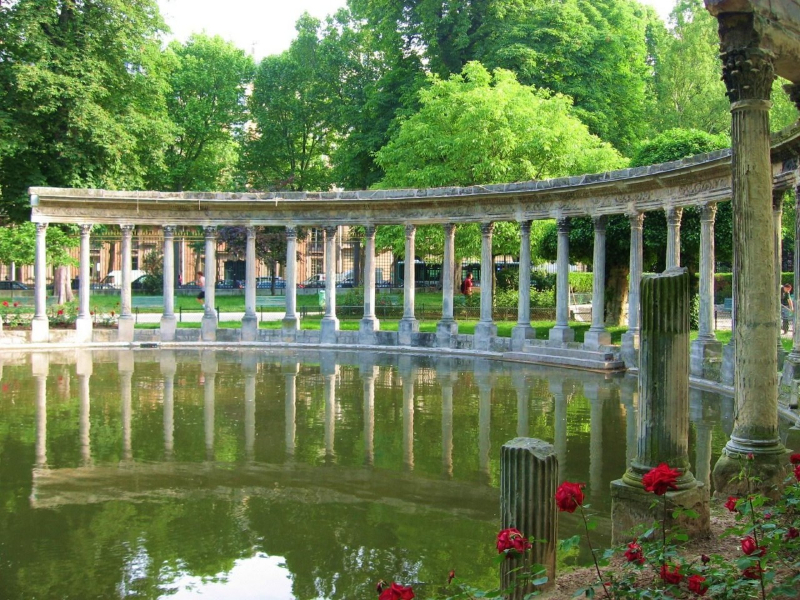
(SFMOMA) The San Francisco Museum of Modern Art
The San Francisco Museum of Modern Art, designed by Swiss architect Mario Botta and opened in 1995, was substantially expanded in 2016 by Snøhetta, and the expansion is where the more interesting architectural conversation now lives — a rippled white facade that faces Howard Street and mediates between the Botta building's striped brick severity and the surrounding SoMa streetscape. The permanent collection is particularly strong in American 20th-century painting and photography, and the photography holdings are among the most serious on the West Coast.

The honest note is that SFMOMA can feel uneven on a single visit — the building is large enough that curation decisions become very apparent, and some galleries feel more considered than others. The Calder sculpture court and the rooftop garden are reliable anchors. The admission price is not low, but free days exist for San Francisco residents, and the museum's third-floor café is a reasonable place to sit with coffee and consider what you've seen.
Il consiglio del team The museum offers free admission on the first Thursday evening of each month for visitors under 18, and deeply discounted tickets through the San Francisco Public Library's Museum Pass programme, which is often overlooked by visitors who aren't residents.
7 Museum & Architecture · 4.1 km

Renzo Piano: The California Academy Of Sciences Museum
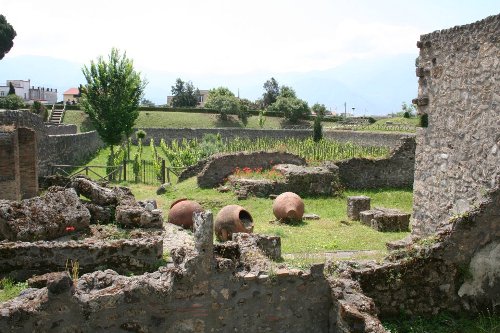
Renzo Piano: The California Academy Of Sciences Museum
Renzo Piano translated the 2.5-acre roof-space of the California Academy of Sciences Museum into an exhibition in itself — a living roof planted with native grasses and wildflowers whose undulating profile, from certain angles in Golden Gate Park, reads as a continuation of the San Francisco hills. Beneath it sits a natural history museum, a planetarium, a four-story rainforest dome, and an aquarium, all under one roof, which is either an admirably efficient use of space or a slightly overwhelming proposition, depending on your tolerance for crowds and children in equal measure.

The building, which opened in 2008, replaced an older structure damaged in the 1989 earthquake. Piano's design is formally elegant and environmentally considered — the roof collects rainwater, the photovoltaic panels generate a portion of the building's power. What it cannot entirely solve is the noise level inside on a weekend, which is considerable. A weekday morning visit, particularly in the aquarium levels, is a different experience.
Il consiglio del team Thursday evenings, the Academy opens to adults only with a cocktail programme and live music. The rainforest dome and the planetarium are both accessible, and the crowd is considerably thinner than on any weekend afternoon.
8 Landmark · 7.2 km

Il Fascino del Golden Gate Bridge: Un Ponte Iconico

Il Fascino del Golden Gate Bridge: Un Ponte Iconico
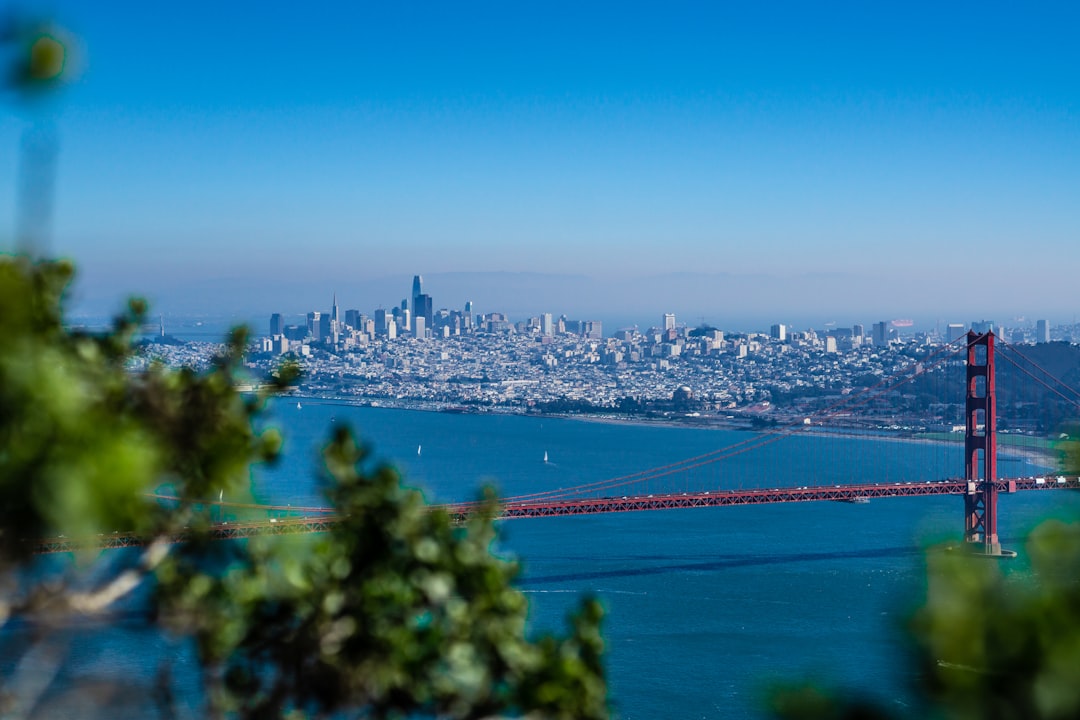
The Golden Gate Bridge connects San Francisco to Marin County across the strait that shares its name, and it is — there is no point in false modesty about this — genuinely affecting in a way that photographs do not prepare you for. The scale is the thing: the towers rise 227 metres above the water, and walking the pedestrian path across it, which takes roughly 40 minutes at a moderate pace, produces a specific kind of vertigo that is partly physical and partly conceptual. The bridge is also, depending on the fog, either invisible or theatrically revealed, which is a condition most landmarks cannot claim.

The crowds at the southern viewpoint near the toll plaza are dense and move in predictable patterns. The less-visited approach is from the Marin Headlands on the north side, where you can walk down to Fort Baker and look back at the bridge with the city behind it — a perspective that takes the bridge out of the postcard and puts it back into geography.
Il consiglio del team Cyclists can take the bridge year-round on the western sidewalk; pedestrians are generally restricted to the eastern side on weekdays. The Golden Gate Ferry from the Ferry Building to Sausalito passes directly beneath the bridge on its route — a useful combination of transit and viewpoint.
9 Beach & Landscape · 9.6 km

Black Sands Beach

Black Sands Beach
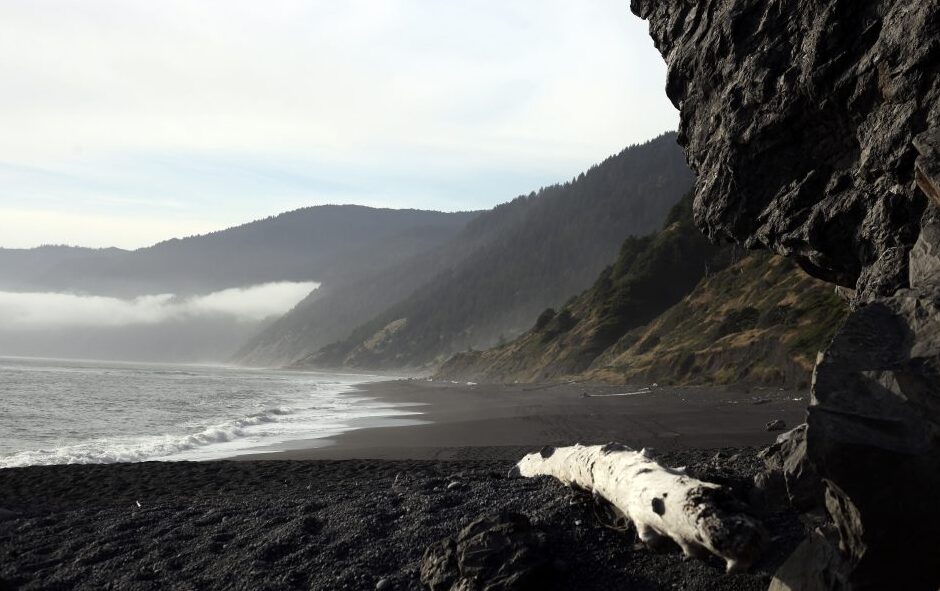
Black Sands Beach sits in the Marin Headlands, north of the Golden Gate, and the sand is indeed black — or more precisely, a dark grey-green composed of serpentinite and other coastal minerals that have eroded from the cliffs above. The beach is not easy to reach: the trail down from the Headlands road is steep and loose in places, and the beach itself is not swimmable — the currents here are cold and fast, and the surf is unpredictable. None of that is a deterrent. It is, rather, the point.

The beach has a quality of genuine remoteness that is unusual for a place less than ten miles from a major city. On a clear day you can see the bridge from the water's edge. On a foggy day — which is most days, in this part of the Headlands — you cannot see much beyond the surf, and the isolation is more complete. The cliffs above are the colour of oxidised copper.
Il consiglio del team There is no public transit to Black Sands Beach. The closest parking is along Conzelman Road in the Marin Headlands, from which the trail descends to the beach. Go early on weekends — the Headlands fill up faster than most visitors anticipate.
10 Day Trip · 11.0 km

Sausalito is a San Francisco Bay Area city
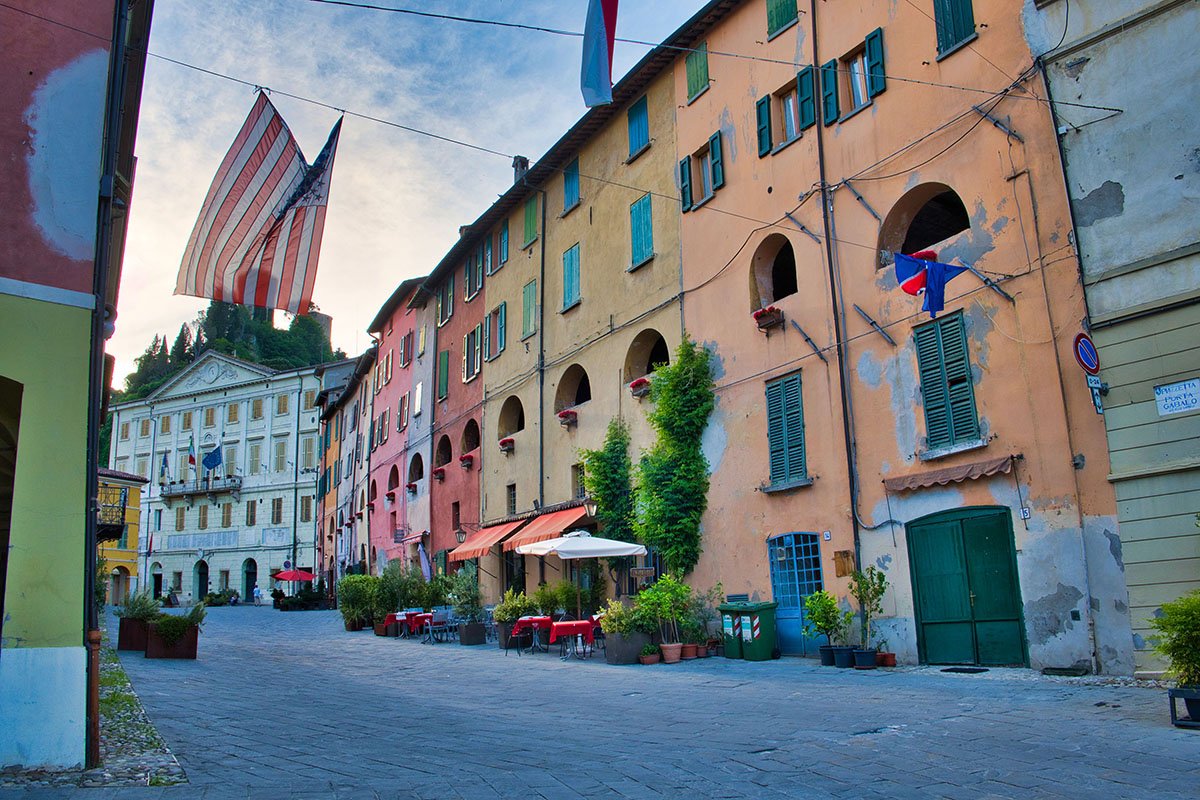
Sausalito is a San Francisco Bay Area city
Sausalito developed rapidly as a shipbuilding centre during World War II, and the industrial character of those years gave way in the postwar decades to something more complicated: a reputation as a wealthy and artistic enclave that is accurate in parts and reductive in others. The houseboats in the Richardson Bay marina are the most photographed element, and they range from architecturally serious structures to floating shacks held together by what appears to be optimism. The main street, Bridgeway, is tourist-facing in a way that can feel relentless — the galleries and the seafood restaurants are fine, but they are not why you come.

You come for the ferry. The Golden Gate Ferry from the Ferry Building takes approximately 30 minutes and arrives at a dock that puts you directly on the waterfront with the city visible across the bay. The return journey, in the late afternoon, with the light coming off the water at a low angle, is one of the more quietly pleasurable things you can do in the Bay Area.
Il consiglio del team Rent a bicycle in Sausalito and ride back to San Francisco via the bridge — a route of roughly ten miles that includes the bridge crossing and a descent through the Presidio. The ferry companies allow you to bring bikes aboard for an additional fee.
San Francisco is a city that has been leaving and arriving simultaneously for as long as anyone can remember. People come for the weather and are surprised by the cold. They come for the tech economy and find themselves in a city that predates Silicon Valley by more than a century and regards it with something between pride and exhaustion. They come for the counterculture and find condominiums. They come for the beauty — and the beauty is real, and it persists, and it is not reducible to any single bridge or hill or painted house.

What I have come to understand, after more visits than I can account for, is that San Francisco rewards a particular kind of attention: lateral, unhurried, willing to be wrong about what it expected to find. The city has been remade so many times that its relationship to its own history is unusually complicated — it mourns things that are gone and builds on top of them simultaneously. The fog that rolls in through the Gate most afternoons is not metaphorical, except when it is.

The ten things in this list are not the ten best things in any absolute sense. They are ten ways of paying attention to a city that has been paid a great deal of attention and still, somehow, contains corners that feel like they belong to you. That is rarer than it sounds.
★ Guida tascabile

Porta questa guida con te.

Salvala offline, ottieni le indicazioni a piedi e scopri migliaia di luoghi come questi.

Salva offline Percorsi smart Tesori nascosti
App Store Google Play AppGallery

Tutti i luoghi sulla mappa

Dati cartografici © OpenStreetMap contributors.

Domande dei lettori

Le domande più frequenti su questa guida.

What is the best time of year to visit San Francisco?

September and October are the warmest and clearest months in San Francisco — the summer fog that blankets much of June, July, and August has largely retreated by then, and temperatures can reach the mid-20s Celsius. Spring is mild but variable. If you are visiting primarily for outdoor activities in the Marin Headlands or along the coast, September is the most reliable choice. Avoid expecting warm beach weather at any time of year — the Pacific here is cold and the coastal winds are consistent.

How do I get around San Francisco without a car?

For most of the city's central neighbourhoods, a combination of Muni (the city's transit system, which includes buses, light rail, and the historic cable cars), BART (the regional rail system, which is particularly useful for the airport and East Bay destinations), and walking is sufficient. A Clipper card, loaded via app before arrival, covers all of these plus the ferry system. Ride-share is available but expensive during peak hours and events. A car is genuinely useful only for the Marin Headlands, Point Reyes, and other destinations north of the bridge.

Is San Francisco safe for tourists?

San Francisco has visible social problems — homelessness and drug use are concentrated in certain areas, particularly the Tenderloin and parts of SoMa — that can be jarring if you are not expecting them. These areas are not dangerous in the sense of presenting significant risk to tourists, but they are distressing, and it is worth knowing they exist rather than being surprised. Petty theft from cars is common citywide; leave nothing visible in a parked vehicle. The tourist-heavy areas around Fisherman's Wharf and Union Square have a persistent presence of street scammers; the usual attentiveness applies.

How many days do you need in San Francisco?

Three full days is enough to cover the city's central neighbourhoods at a reasonable pace — the Embarcadero, SoMa, the Mission, the Haight, and the Presidio — without feeling rushed. Five days allows for a day trip to Sausalito or the Marin Headlands, and another to Muir Woods or Point Reyes. A week gives you time to slow down and revisit places, which is when the city tends to reveal itself more honestly. One day is not enough, despite what some itinerary sites will tell you.

What should I know about eating in San Francisco?

San Francisco has a serious food culture that is not primarily organised around celebrity chefs or destination restaurants, though those exist. The Mission District's taquerias — particularly those on 24th Street — represent one of the city's genuine contributions to American food. The Ferry Building Marketplace on Saturday mornings hosts one of the better farmers' markets in the country, and the permanent vendors inside are worth visiting on any day. Reservations for mid-range and above restaurants should be made well in advance, particularly on weekends. The city's Chinatown, the oldest in North America, has restaurants that range from tourist-facing to genuinely excellent — the difference is usually apparent from the menu and the clientele.

★ Leggila quando vuoi

Salvala sul tuo telefono.

Aggiungi questa guida ai preferiti, pianifica il viaggio offline, scopri luoghi come questi.

Preferiti Offline 60+ lingue
App Store Google Play AppGallery