


New Orleans does not yield to short visits. It is a city that has been shaped by French and Spanish colonial rule, by the largest slave market in North America, by catastrophic flooding, by a music culture so deeply embedded in its geography that you can hear jazz bleeding through the walls of a pharmacy at two in the afternoon on a Tuesday. It is also a city that has learned, over roughly three hundred years, to perform itself for tourists — and to keep the more interesting version of itself slightly out of frame.
What follows is not a list of secrets. Most of these places appear on maps and in guidebooks. But there is a difference between knowing that something exists and understanding why it matters, and New Orleans is a city where that distinction is everything. I have tried, where possible, to write about what you will actually encounter — the smell of a room, the quality of light, the specific friction of a place that is genuinely old — rather than what the brochure promises. The brochure, in this city, is almost always beside the point.
Jackson Square and the Cabildo
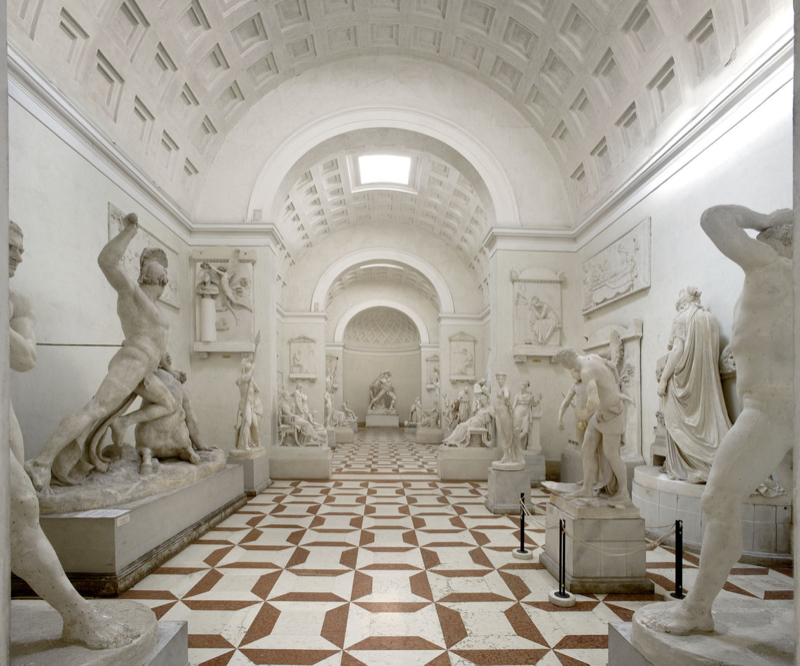
The Louisiana State Museum operates the Cabildo, and the collection inside is serious — masks, documents, portraits, objects from the antebellum period that are presented without sentimentality. It is one of the few places in the Quarter where the history is not being sold to you.
Il consiglio del team
Go on a weekday morning before ten. The square empties out and the light on the cathedral facade is cleaner. The fortune-tellers set up later.
St. Louis Cathedral
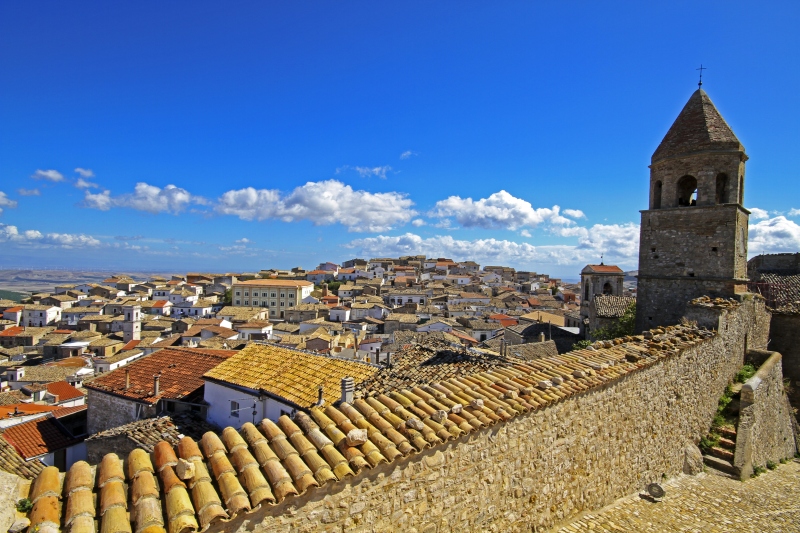
What surprises most visitors is how actively it functions as a working Catholic parish. Masses are held regularly, and if you walk in during one, the tourists and the congregation occupy the same pews in a way that is slightly uncomfortable for everyone and somehow entirely appropriate to New Orleans. The interior is painted in pale blues and golds, and the murals above the altar depict St. Louis announcing the Seventh Crusade — a scene that, in this particular city, carries its own complicated freight.
Il consiglio del team
The cathedral offers free guided tours on most weekdays. They are short and genuinely informative, and the docents tend to be locals who have opinions.
New Orleans Historic Voodoo Museum
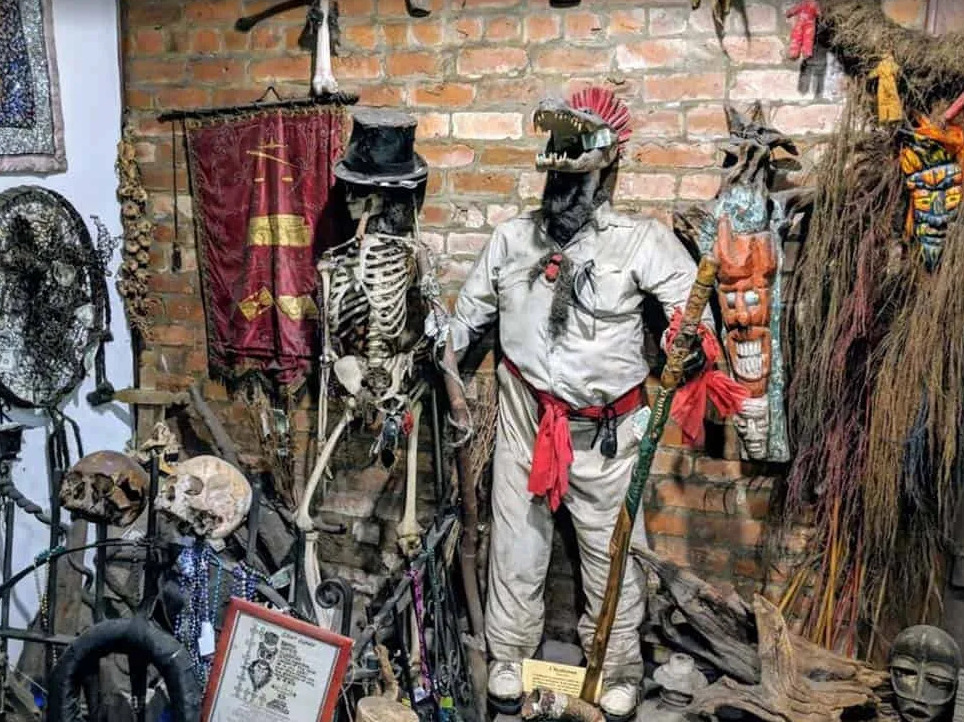
Voodoo — or Vodou, as practitioners more accurately name it — is a syncretic religion with roots in West African spiritual traditions, shaped in Louisiana by the particular violence of the slave trade and by Catholic overlay. The museum does not shy away from this history, and it does not reduce the tradition to gris-gris bags and tourist novelty. The collection includes altars, ritual objects, and materials related to Marie Laveau, the nineteenth-century Voodoo priestess whose influence on New Orleans culture remains genuinely difficult to overstate. The space is cramped and occasionally smells of incense that has been burning since before you arrived. This is not a flaw.
Il consiglio del team
There is a small gift shop, and some of the ritual objects for sale are the real thing — sourced from practitioners, not manufactured for export. Ask the staff before you buy anything you don't understand.
Hotel Monteleone's Carousel Bar
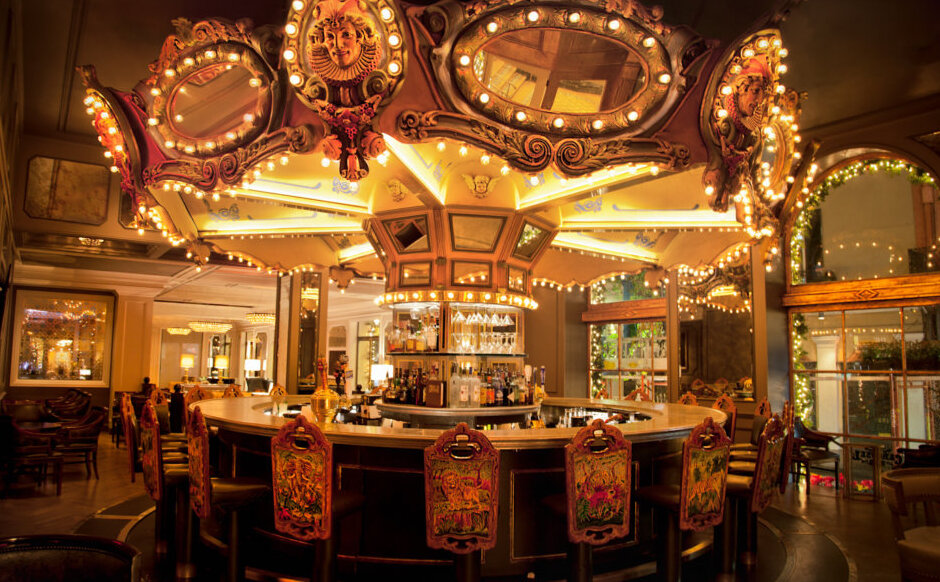
None of that diminishes the actual experience of sitting at the bar on a slow Tuesday, watching Royal Street scroll past the window as your seat imperceptibly turns. The Vieux Carré cocktail — rye, cognac, sweet vermouth, Bénédictine, bitters — was invented nearby, and the Carousel makes a competent version. Order it and resist the urge to take a photograph of it.
Il consiglio del team
The bar fills up by eight on weekends. Come at five-thirty for a pre-dinner drink and you will likely get a stool. The hotel lobby itself, all dark wood and brass, is worth a few minutes of your time.
Napoleon House in New Orleans
What makes Napoleon House worth your time is not the Napoleon connection but the building itself: high ceilings, crumbling plaster walls the colour of old paper, classical music playing at a volume that allows conversation, and a Pimm's Cup that has been served here long enough to constitute a local institution. The courtyard, open to the sky and hung with plants, is one of the better places in the Quarter to sit still for an hour. The food — muffulettas, soups — is honest and not overpriced, which is not something you can say about most of the Quarter.
Il consiglio del team
The Pimm's Cup here is the standard against which all other New Orleans Pimm's Cups are measured. Order one before you order anything else.
Bananas Foster
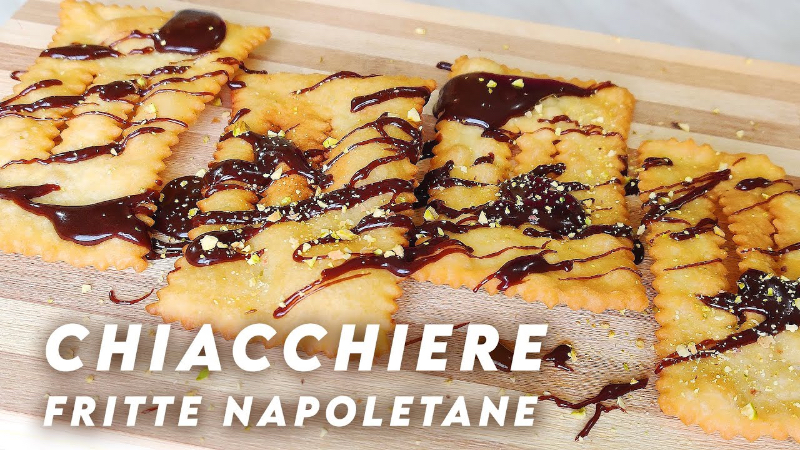
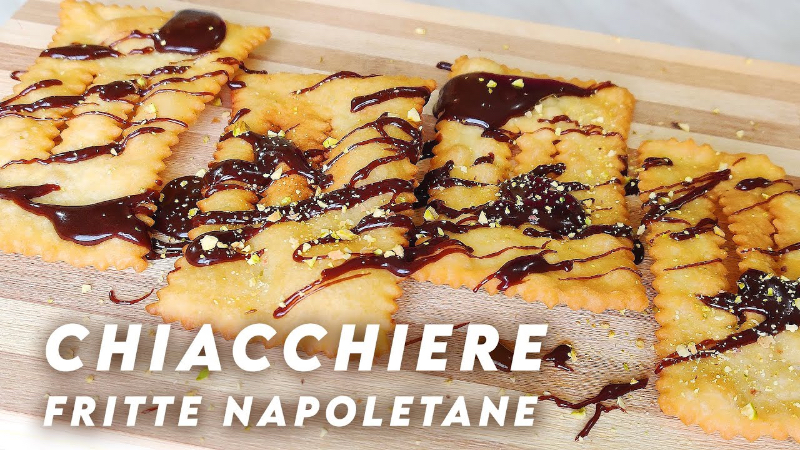
The dessert has since spread everywhere, but eating it in New Orleans, at a restaurant that still makes it properly, is one of those experiences where context does actual work. The flame, the warm sauce cutting through cold ice cream, the slight bitterness of the rum against the sugar — it is a simple thing, and it is better here than anywhere else, partly because the ingredients are right and partly because you are sitting in a city that invented it and has been refining it for seventy years.
Il consiglio del team
Brennan's is the origin point, but several smaller Creole restaurants in the Quarter and the Marigny make excellent versions without the reservation difficulty. Ask locally.
The Rosegate House
The Garden District itself was developed largely by American merchants who moved to New Orleans after the Louisiana Purchase and were not welcomed into the Creole social world of the French Quarter — a fact that shaped the neighbourhood's architecture, which is larger, more ostentatious, and more explicitly Anglo-American than anything across Canal Street. Walking these blocks with that social history in mind turns a pleasant neighbourhood stroll into something more layered. The Rosegate House is the best single argument for doing the walk.
Il consiglio del team
The St. Charles Avenue streetcar stops a few blocks away and is the correct way to arrive. The walk from the stop through the lower Garden District is itself the point.
The Rosegate House in New Orleans — a second look
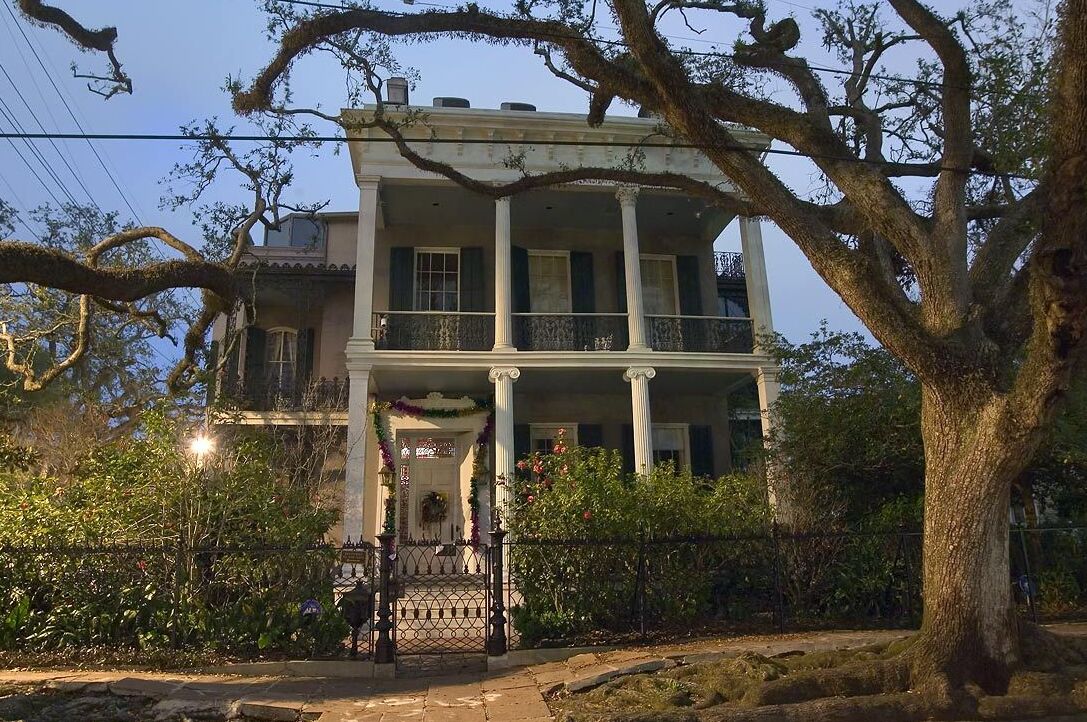
The house has been associated over the years with various owners whose stories track the economic and social history of New Orleans with unusual fidelity: the rise of American commercial money in the antebellum period, the disruptions of the Civil War and Reconstruction, the long slow decline and partial recovery of the District in the twentieth century. You cannot go inside, and the current residents have presumably had enough of people standing on their pavement taking photographs. Be brief, be quiet, and look at the fence. The rosette pattern is more intricate than it appears in photographs.
Il consiglio del team
Anne Rice lived in the Garden District for years and set several novels in this neighbourhood. Her descriptions of the architecture are, if you are interested, more useful than most guidebook prose.
St. Roch Chapel
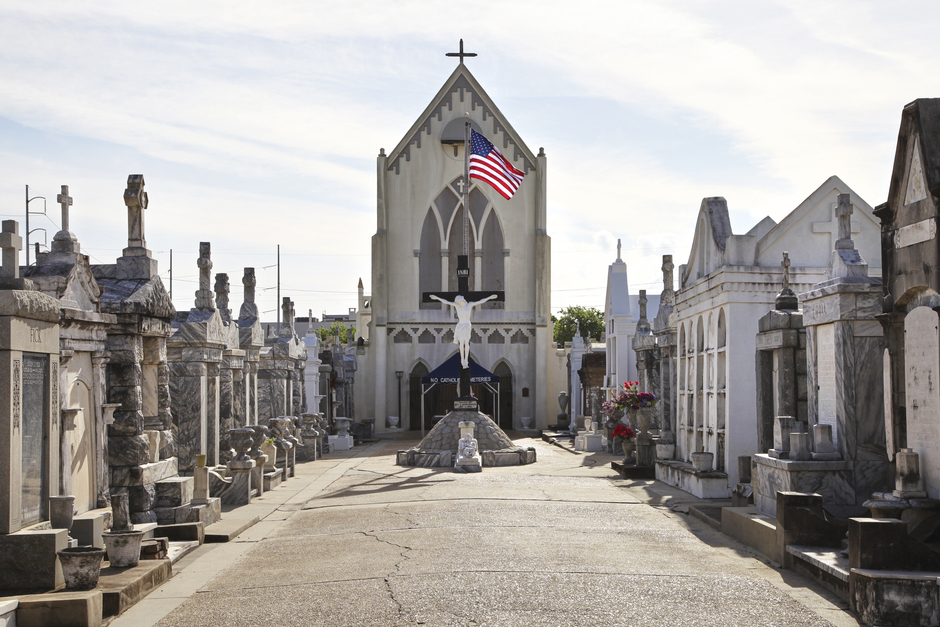
The collection accumulated primarily in the nineteenth and early twentieth centuries, and the objects — a plaster foot, a glass eye, a set of leg braces — are displayed on white shelves with a matter-of-factness that is more moving than any formal arrangement could be. This is a place where people brought their gratitude and left it in physical form. The neighbourhood around it is not a tourist neighbourhood, which is part of why it retains this quality.
Il consiglio del team
Take an Uber or rideshare rather than walking from the Quarter — the route passes through blocks that are not hostile but are not set up for pedestrian tourism. The cemetery itself is generally open during daylight hours.
Top 5 Travel Apps New Orleans 2026: Le Migliori Scelte

For practical navigation in 2026, the apps worth having are those that combine real-time transit information (the streetcar and bus network is more useful than most visitors realise), neighbourhood-level restaurant data that goes beyond the obvious, and offline maps for the areas where cell service is unreliable. The city's geography — the crescent shape of the river bend, the way addresses reset between neighbourhoods — is genuinely confusing until you have a spatial model of it, and a good mapping app accelerates that process considerably.
Il consiglio del team
The RTA's official app for streetcar and bus times is functional but slow. Supplement it with a general transit app that covers New Orleans specifically, and download offline maps before you arrive — hotel Wi-Fi in the Quarter is frequently inadequate.
There is a version of New Orleans that exists entirely for consumption — the Bourbon Street version, the Mardi Gras version, the city as a delivery mechanism for fried food and live music and the permission to behave badly in public. That version is real and has its own integrity, and I am not going to pretend I have never participated in it.
But the city that stays with you, the one that makes you want to come back and then makes you want to stay, is the one that reveals itself slowly and somewhat reluctantly. It is the city of the ex-voto room at St. Roch, where people left their healed bodies as evidence. It is the city of the Cabildo, where a continent changed hands in a single transaction. It is the city of a bar that has been waiting for Napoleon for two hundred years and has learned, in the meantime, to make a very good Pimm's Cup.
New Orleans is not a city that rewards the checklist approach. It rewards the willingness to sit still in one place long enough for the place to become specific. That is, admittedly, harder to do on a four-day trip than it sounds. But even four days, if you spend them with some deliberateness, will leave you with the feeling that you have been somewhere — not just passed through it.
But the city that stays with you, the one that makes you want to come back and then makes you want to stay, is the one that reveals itself slowly and somewhat reluctantly. It is the city of the ex-voto room at St. Roch, where people left their healed bodies as evidence. It is the city of the Cabildo, where a continent changed hands in a single transaction. It is the city of a bar that has been waiting for Napoleon for two hundred years and has learned, in the meantime, to make a very good Pimm's Cup.
New Orleans is not a city that rewards the checklist approach. It rewards the willingness to sit still in one place long enough for the place to become specific. That is, admittedly, harder to do on a four-day trip than it sounds. But even four days, if you spend them with some deliberateness, will leave you with the feeling that you have been somewhere — not just passed through it.