10 Best Things to Do in Naples, Italy — beyond the obvious
A city that resists being curated. Here is a partial attempt anyway.
L
Una guida di
Lena Hofmann
Aggiornata il
20 settembre 2026
Lettura
13 minuti
Comprende
10 luoghi · mappa interattiva
★ Guida d'Italia 2026
Pianifica con cura. Viaggia più a fondo.
1.3M+ luoghi curati nel mondo, mappe offline e itinerari intelligenti — tutto in un'app gratuita.
1.3M+ luoghiMappe offlineItinerari AIGratis
I arrived in Naples for the first time on a Tuesday in November, which is probably the right way to arrive anywhere you plan to take seriously. No festival, no summer light doing the city's work for it. Just the Circumvesuviana pulling in late, a taxi driver who quoted me three different prices in the space of thirty seconds, and the particular smell of the centro storico — espresso, diesel, something frying, and underneath it all, a faint mineral note that I later decided was just the tufa stone breathing. I have been back many times since. I have also, in the manner of people who return to a place repeatedly, made every mistake available to the repeat visitor: I have eaten at restaurants recommended by hotels, I have queued for a pizza I could have had around the corner with no queue, I have taken the wrong funicular and ended up somewhere entirely unplanned, which turned out to be the best afternoon of that particular trip. Naples is a city that punishes itinerary-worship and rewards a certain quality of attention. It is not, despite what both its defenders and detractors suggest, chaotic in any simple sense. It is layered — geologically, historically, socially — in ways that take time to read. The obvious things are obvious for reasons: the pizza is genuinely what people say it is, the archaeological museum is one of the great museums of Europe, Pompeii is worth the crowds. But a city this old and this dense has a great deal happening below the surface level of the guidebook. What follows is not a list of secrets — Naples has no secrets, only things that require a little patience to find.
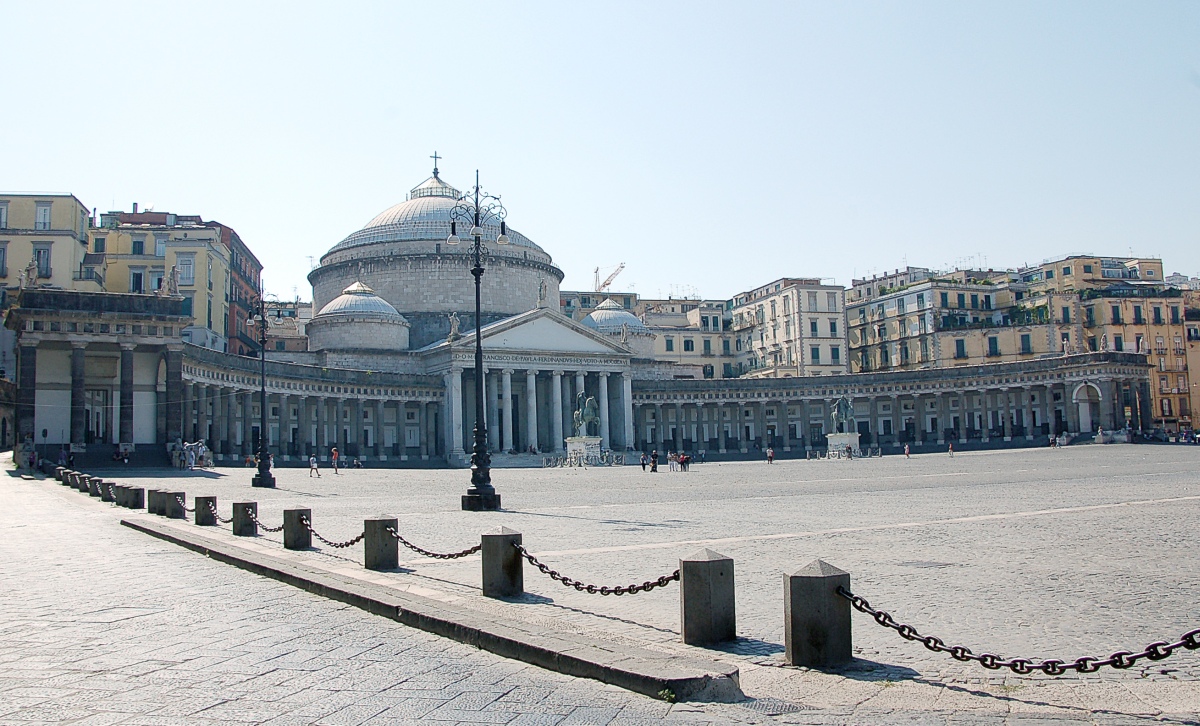
Every visitor ends up at Piazza del Plebiscito. The question is when. At noon in August it is a heat trap full of selfie sticks. At seven in the morning on a weekday in March, it is something else entirely — one of the largest public squares in Italy, the Basilica di San Francesco di Paola holding down one end with the calm authority of something that has been there since 1816, the Royal Palace anchoring the other, and almost nobody in between. The equestrian statues of Charles III and Ferdinand I stand in the middle of all that open travertine with the slightly absurd dignity of men who know they are being ignored. The square has been a parade ground, a car park, and a concert venue at various points in its modern life. The Neapolitans have a complicated relationship with its grandeur — it is simultaneously their civic living room and a space too large for ordinary life to fill comfortably.
Il consiglio del team
Come back at dusk on a Sunday when local families walk the perimeter and the light on the basilica's colonnade goes the colour of old paper. The piazza makes far more sense as a social space than as a monument.
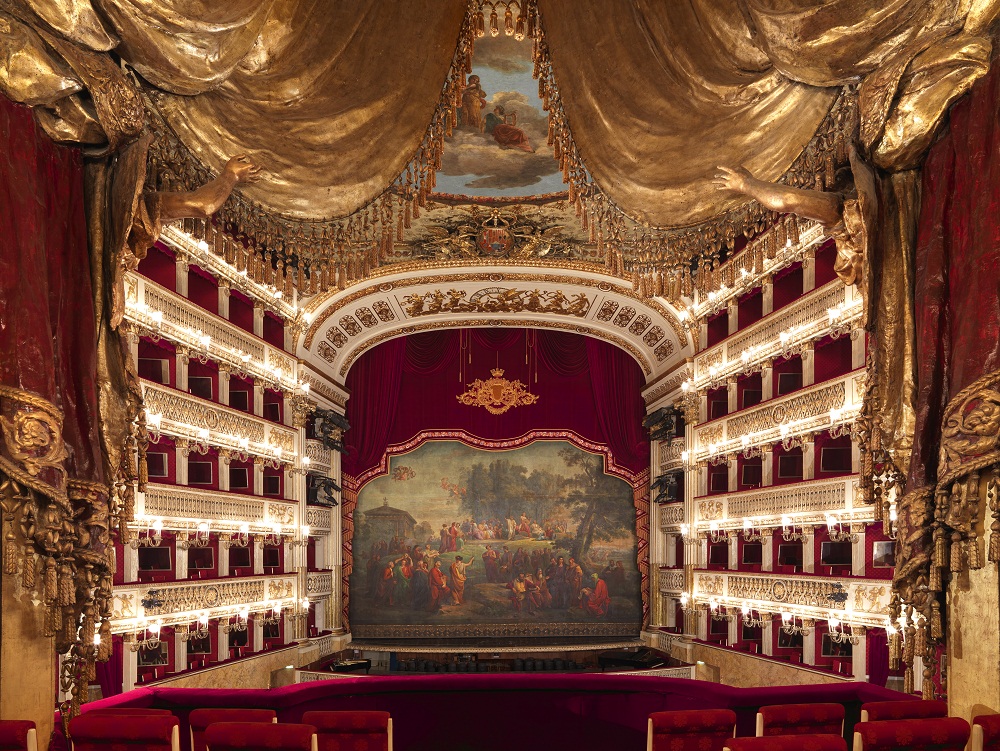
Teatro San Carlo opened in 1737, which makes it older than La Scala in Milan by forty-one years, a fact Neapolitans mention with a frequency that suggests the rivalry has not entirely cooled. The UNESCO designation is real, the gilt and red velvet interior is real, and the acoustics — which were apparently considered miraculous even before the building was rebuilt after a fire in 1816 — are real. But the San Carlo that most visitors see is the San Carlo of the guided tour, which is a perfectly adequate experience and tells you almost nothing about what the theatre actually does. The more interesting visit is a cheap seat at a mid-season opera or ballet, where you sit in the upper tiers among people who have been coming here for decades, who unwrap sandwiches during the interval with complete unselfconsciousness, and who will not hesitate to express displeasure if the tenor is having an off night.
Il consiglio del team
The San Carlo offers genuinely affordable tickets for many productions, particularly in the upper galleries. Book directly through the theatre's website. The building's exterior on Via San Carlo is worth examining slowly — the proportions are more interesting than the photographs suggest.
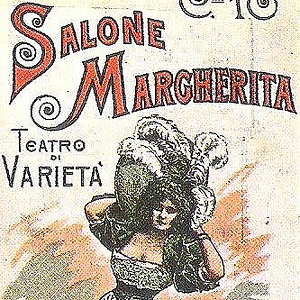
Il Salone Margherita, which claims the distinction of being the first café-chantant in Italy, sits below street level on Galleria Umberto I, which is itself a structure worth pausing inside — the iron-and-glass roof, the marble floors, the persistent sense that the nineteenth century is still trying to make a point about civic ambition. The Salone opened in 1890 and hosted the kind of entertainment that respectable people attended while pretending they might not: variety acts, music, spectacle. The quote that circulates about wealthy Italians preferring Naples to Paris for their amusements belongs to this period and this building. The venue has had various incarnations since its heyday, and checking its current programming before visiting is advisable — it operates as a performance space but its schedule can be erratic. The room itself, with its Belle Époque decoration, is the real argument for going.
Il consiglio del team
The Galleria Umberto I directly above is free to enter and chronically undervisited compared to its Milanese counterpart. The mosaics at the base of the dome are worth the neck strain.
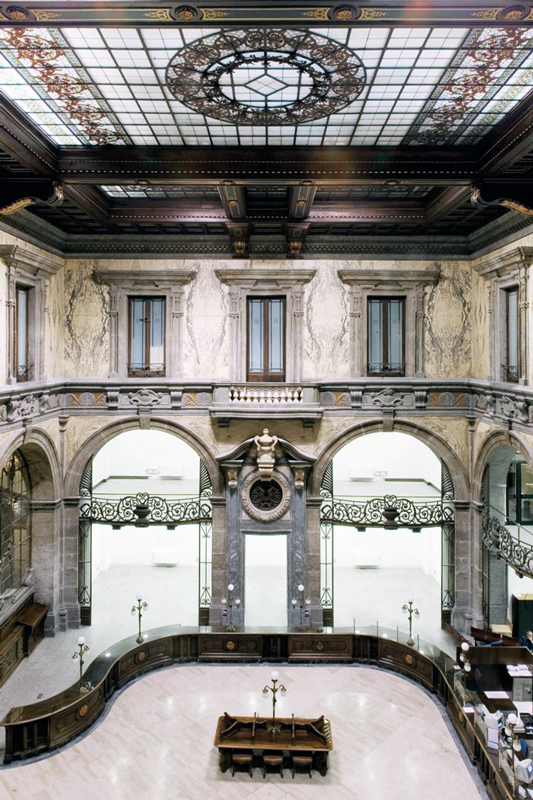
On Via Toledo, which is one of the great commercial streets of southern Europe and also one of the loudest, there is a palazzo that belongs to Banca Intesa Sanpaolo's Gallerie d'Italia project. The building is seventeenth-century Spanish Baroque, which in Naples means a certain heaviness of ornament that takes a moment to adjust to. Inside, among the collection of Neapolitan and Italian paintings spanning several centuries, is the work that justifies the detour: the Martyrdom of Saint Ursula, painted by Caravaggio in 1610, widely considered to be the last painting he completed before his death that same year. The painting is small, dark, and almost aggressively untheatrical for a martyrdom scene — Ursula receives the arrow with an expression closer to surprise than anguish, and Caravaggio himself appears in the background, watching, as he often did in his late work. It is a painting about dying made by a man who was about to.
Il consiglio del team
The palazzo's courtyard and staircase are worth examining independently of the collection. Entry fees are modest and the crowds are a fraction of what you would encounter at the National Archaeological Museum.
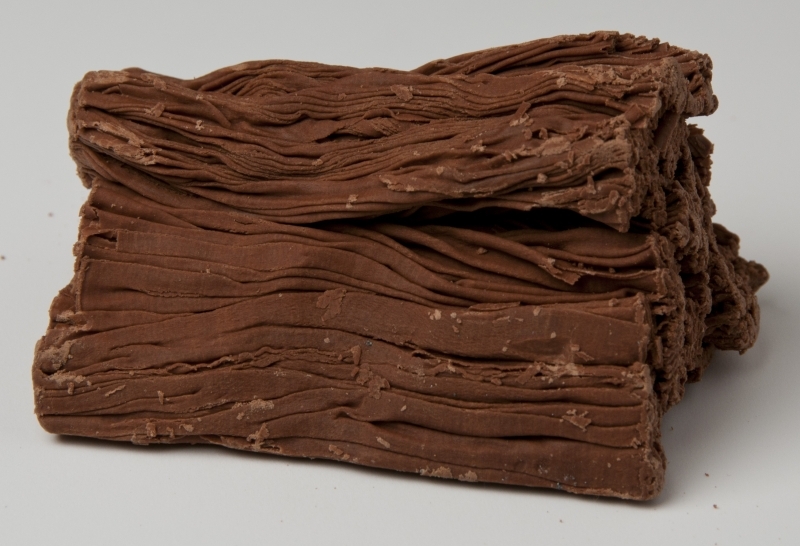
Gay Odin has been making chocolate in Naples since 1894, which in a city where most things claim an implausible antiquity is actually a verifiable and meaningful date. The flagship space on Via Vetriera — described by the company as a five-floor palazzo del cioccolato — is not a shop in the ordinary sense. It is a working atelier that happens to sell from its premises, and the range it produces is rooted in a specifically Neapolitan tradition of chocolate-making that was shaped by the city's long Spanish connections and its historical access to cacao through colonial trade networks. The Vesuvio, a chocolate shaped like the volcano and filled with a rum-spiked cream, is the obvious souvenir purchase. The less obvious move is to sit with one of their cioccolate calde in the colder months and pay attention to what they are doing with texture — it is thicker than the Viennese version, less sweet than the Belgian, and entirely its own argument.
Il consiglio del team
Gay Odin has several locations across the city. The Via Vetriera address in the Chiaia neighbourhood is the most atmospheric, but the smaller shops are equally reliable for purchasing. The foresta — a dark chocolate bark with nuts — travels well.
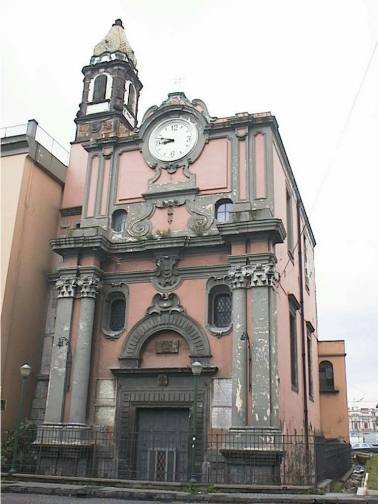
This is an entry that sits awkwardly in a food section, but bear with it. The Chiesa di Santa Maria di Portosalvo, on Via Marina near the port, is a church that has been serving the maritime community of Naples since the sixteenth century — it was built outside the city walls, hence its alternative name, fuori le mura, and its congregation was historically the fishermen, sailors, and dock workers who moved through the port district. The area around it today is industrial and unglamorous in the way that working ports tend to be. But the street food culture of the port zone — the frittura di pesce sold from small stalls, the taralli warm from the oven — is directly connected to this neighbourhood's working-class Catholic identity. The church itself is modest inside, which after the baroque excess of the centro storico reads almost as a relief.
Il consiglio del team
The port district around Via Marina is not a neighbourhood that caters to tourists, which is precisely why the food there tends to be priced for people who eat there every day. The frittura vendors near the waterfront are worth finding.
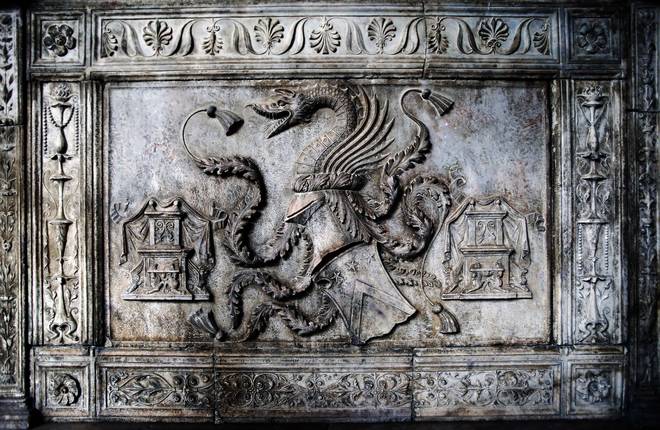
The chiostro of Santa Maria la Nova is a sixteenth-century cloister of genuine architectural quality — calm, proportioned, with the particular quality of silence that good cloisters manufacture. What makes it unusual is a tomb within its walls that has accumulated, over the decades, a reputation as the possible resting place of Vlad III of Wallachia — the historical figure whose reputation fed into Bram Stoker's fictional creation. The tomb bears a carved dragon and various symbols that researchers with varying degrees of academic rigour have interpreted as evidence for this claim. The historical record is genuinely ambiguous: Vlad III's fate after 1476 is not definitively established, and he did have connections to the Order of the Dragon. Whether you find the theory plausible or not, the cloister is worth visiting on its own merits, and the contrast between the serene Renaissance architecture and the gothic legend attached to one corner of it is pure Naples — the city has always been comfortable hosting contradictions.
Il consiglio del team
Santa Maria la Nova is not always straightforward to access — opening hours have historically been inconsistent. Arriving in the morning on a weekday gives you the best chance of finding the church and cloister open.
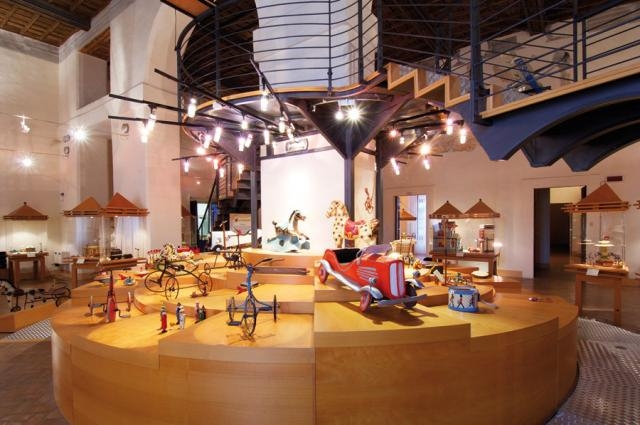
The Museo del Giocattolo holds one of the more carefully assembled collections of antique toys in Italy, which is a category of museum that sounds whimsical until you are actually standing in front of a nineteenth-century mechanical tin horse or a hand-painted wooden puppet from the Bourbon period and realise that you are looking at something that tells you more about the domestic life of a particular class in a particular era than most history books bother to. The collection spans several centuries and includes toys from across Europe as well as pieces specific to Neapolitan craft traditions. It is not a large museum and it does not need to be. The experience is quiet, slightly melancholy in the way that all preserved childhood objects tend to be, and entirely free of the crowds that make the larger Neapolitan institutions occasionally exhausting.
Il consiglio del team
The museum is particularly worth visiting with children who are old enough to understand that they are looking at objects that were once played with by other children — the conceptual weight of that lands differently at different ages.
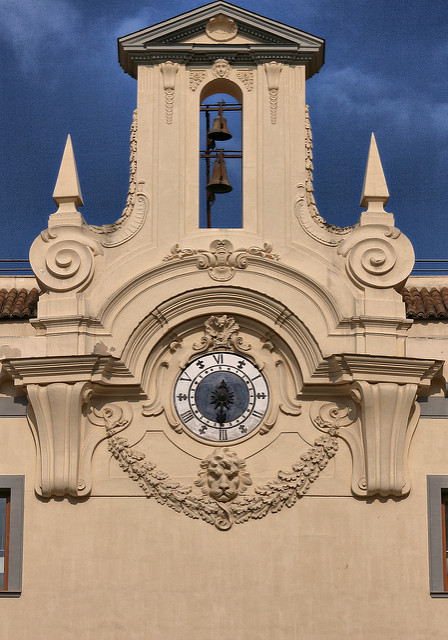
On the facade of the former Conservatorio dello Spirito Santo — now housing the architecture faculty of the Università Federico II — there is a clock that most people walk past without registering what is wrong with it. The Orologio alla Romana was built between 1563 and 1569 and it counts not to twelve but to six, in the Roman system of timekeeping that divided the day into periods rather than equal hours. The face is divided into six segments, each representing two of what we would now call hours. It is a working clock in the sense that it still has hands, though whether it is maintained to accuracy is another question. The broader point is that Naples is a city where you can turn a corner and find a sixteenth-century system of measuring time still mounted on a wall, still being largely ignored, and that this is not considered remarkable by anyone who passes it daily.
Il consiglio del team
The building is in the Montesanto area, which is itself worth a slow walk — the neighbourhood sits between the tourist circuits of the centro storico and the residential streets of the Quartieri Spagnoli and has a texture that neither zone quite replicates.
The same piazza appears twice in this list because it contains two different experiences, and the second one requires knowing where to look. Piazza Plebiscito sits at the foot of the hill of Pizzofalcone, which is one of the oldest inhabited points in the city — the original Greek settlement of Parthenope was established here before the city moved and expanded. The hill itself is a residential neighbourhood that most visitors do not climb, partly because it requires effort and partly because it is not signposted as a destination. But the streets above the piazza have a quality of quiet that is genuinely rare in central Naples, the views down toward the bay are earned rather than commodified, and the neighbourhood's long history — military, aristocratic, then working-class — is legible in its architecture in ways that the more visited parts of the city, polished by tourism, sometimes are not.
Il consiglio del team
The Rampe di Pizzofalcone, a series of stepped lanes connecting the hill to the piazza below, are the most atmospheric route up. They are steep and uneven underfoot. They are also almost always empty.
There is a version of Naples that exists primarily to be defended — against the people who say it is dangerous, against the people who say it is dirty, against the people who reduce it to pizza and Vesuvius and organised crime statistics. The defensiveness is understandable and also, after a while, exhausting. The city does not need defending. It needs, if anything, a certain quality of patience from the people who visit it. It is a city that was already old when most European capitals were villages, that has been ruled by Greeks, Romans, Normans, Germans, French, and Spanish in succession, and that has absorbed each of these influences without losing whatever it is that makes it irreducibly itself. That quality — the persistence of a local identity under successive layers of external imposition — is what you are actually looking at when you stand in front of the Caravaggio in the Palazzo Zevallos, or read the six-hour clock on the Spirito Santo building, or watch someone unwrap a sandwich in the upper tier of the San Carlo. The city is not performing for you. It is simply continuing. The best thing you can do, as a visitor, is try to keep up.
★ Guida tascabile
Porta questa guida con te.
Salvala offline, ottieni le indicazioni a piedi e scopri migliaia di luoghi come questi.
October through early December and March through May offer the most workable combination of weather and crowd levels. August is genuinely hot, and many local businesses close for portions of it — the city empties as Neapolitans leave for the coast, which creates its own eerie atmosphere but limits what is open. January and February are mild by northern European standards but can be rainy and grey; the city functions normally and the museums are quiet.
Is Naples safe for tourists?
Naples has a persistent reputation for petty crime — bag-snatching from scooters is a real phenomenon, particularly in the centro storico and around the train station. The precautions are the same as in any dense southern European city: keep bags on the side away from traffic, use inside pockets for phones and wallets, and be alert in crowded areas. The city is not dangerous in any meaningful sense beyond this. The areas around Spaccanapoli and Via Toledo are busy with tourists and locals at all hours and are perfectly navigable with ordinary awareness.
How do you get around Naples efficiently?
The centro storico is compact enough to walk, though the streets are narrow, uneven, and frequently obstructed by parked vehicles and delivery activity. The metro has two main lines and is useful for reaching the archaeological museum (Line 1, Museo stop) and the port. The funiculars connect the lower city to the Vomero hill. Taxis are metered but agree on the price before getting in, particularly from the airport. Avoid renting a car in the city itself — driving in central Naples is a specific skill that takes time to acquire.
Do I need to book attractions in advance?
The National Archaeological Museum and Pompeii are the two attractions where advance booking genuinely saves time, particularly in summer. The venues listed in this article — the Palazzo Zevallos, the Museo del Giocattolo, the Teatro San Carlo for performances — benefit from checking opening hours and, in the case of the San Carlo, booking tickets online in advance. Several smaller churches and historic buildings operate on reduced or irregular hours; arriving without checking is a reliable way to find a locked door.
What should I eat beyond pizza?
The pizza question answers itself in Naples. Beyond it: ragù napoletano, which is a slow-cooked meat sauce that bears almost no resemblance to its northern Italian or international interpretations; friarielli, the bitter local greens typically cooked with sausage; cuoppo, a paper cone of mixed fried food sold from street stalls; sfogliatella, the shell-shaped pastry that comes in two versions (riccia and frolla) and is best eaten immediately and warm. Coffee in Naples is served shorter and stronger than elsewhere in Italy and the bar culture around it — standing at the counter, paying before you drink — is worth observing as a social practice in its own right.
★ Leggila quando vuoi
Salvala sul tuo telefono.
Aggiungi questa guida ai preferiti, pianifica il viaggio offline, scopri luoghi come questi.