


Milan is not Rome. It does not perform its history for you. The Roman ruins are here, but they are wedged between a car park and a dry cleaner on a street you would never walk down unless you were lost. The medieval churches are here too, but they tend to be locked on Tuesday afternoons for reasons nobody can fully explain. The city's essential character is industrial in the old Lombard sense: purposeful, slightly closed, suspicious of people who seem to have too much time on their hands. It rewards the visitor who operates on its terms rather than demanding it perform.
What follows is not a list of the ten greatest things Milan has to offer in some absolute cosmic ranking. It is a list of ten things that, across multiple visits and extended residencies, have stayed with me — things I have recommended to friends who came to the city with good intentions and a willingness to walk. A few of them are well-known. Most are not. None of them will be the same twice.
Duomo di Milano: read the roofline, not the postcards
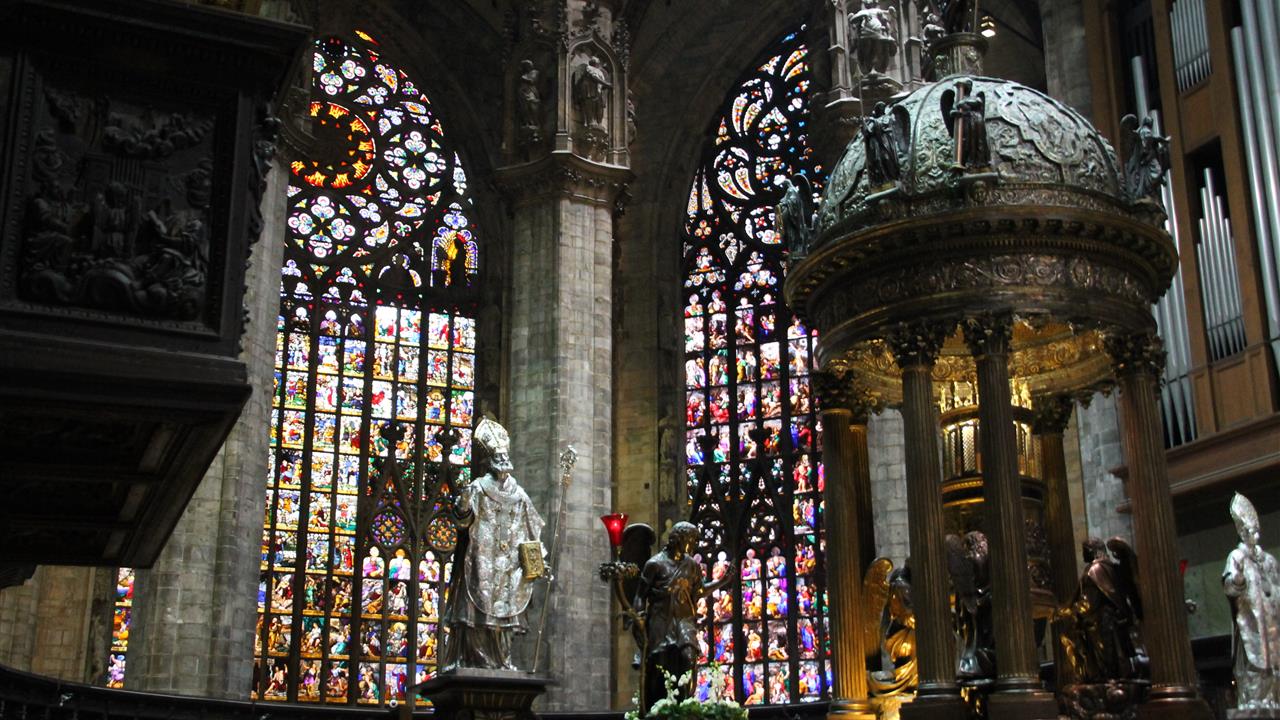
The roof terrace is the part most people underestimate. You can walk among the spires at close range, read the carved saints at eye level, and understand, physically, the scale of the project in a way no ground-level viewing permits. Book the ticket online; the queue for walk-ups is a serious commitment of time.
Il consiglio del team
The Museo del Duomo, just off the piazza, holds centuries of sculptural material removed from the cathedral during restorations. It is almost always quieter than the church itself and gives you the faces of those stone saints at arm's length.
San Bernardino alle Ossa: the bone church that nobody talks about at dinner
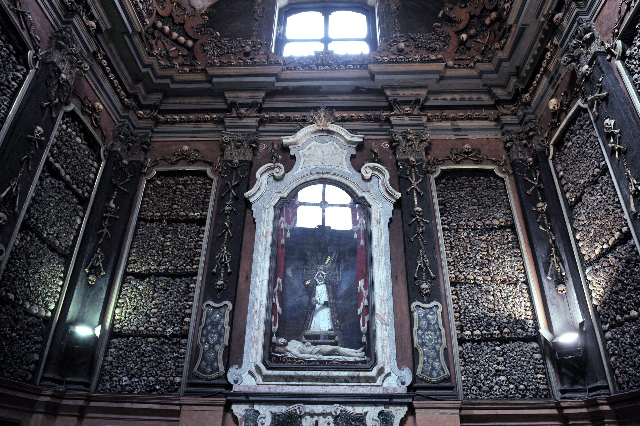
What makes it worth visiting beyond the obvious shock value is the fresco on the ceiling: souls ascending toward heaven while others are pulled downward, the bones below serving as a kind of visual footnote to the theological argument above. It is a complete piece of Counter-Reformation thinking, and it is free to enter, and it is almost always nearly empty.
Il consiglio del team
The chapel is only open during morning hours on weekdays and after Sunday mass. Check the posted schedule on the door rather than relying on any website, which will almost certainly be out of date.
Basilica di San Nazaro Maggiore: the first cross-plan church in the Western world

The building has been altered, damaged, rebuilt, and restored across seventeen centuries, and you can feel the layering if you spend time with it. The nave has a quietness that the more famous churches nearby tend to lack. It draws a local congregation rather than a tourist circuit, which means on a weekday afternoon you may have significant stretches of it to yourself.
Il consiglio del team
The Cappella Trivulzio at the entrance contains the tombs of the Trivulzio family, Milanese condottieri whose political history is worth knowing before you visit — it adds a layer of complexity to what might otherwise seem like mere funerary decoration.
La Pietà Rondanini di Michelangelo: an unfinished argument with death
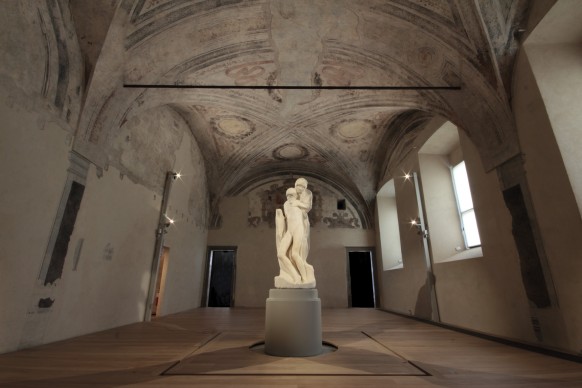
It is a genuinely difficult object to spend time with, not because it is unpleasant but because it refuses resolution. It does not look like a finished Michelangelo. It looks like an old man's private argument with mortality, made physical. The room is kept deliberately spare. The lighting is low. It deserves more than the five minutes most visitors give it.
Il consiglio del team
The Castello Sforzesco entry fee covers multiple museum collections within the complex. Arrive with enough time to also visit the Egyptian collection, which is substantial and almost comically under-visited given its quality.
Le due madri: Segantini's large, quiet painting at the Galleria d'Arte Moderna
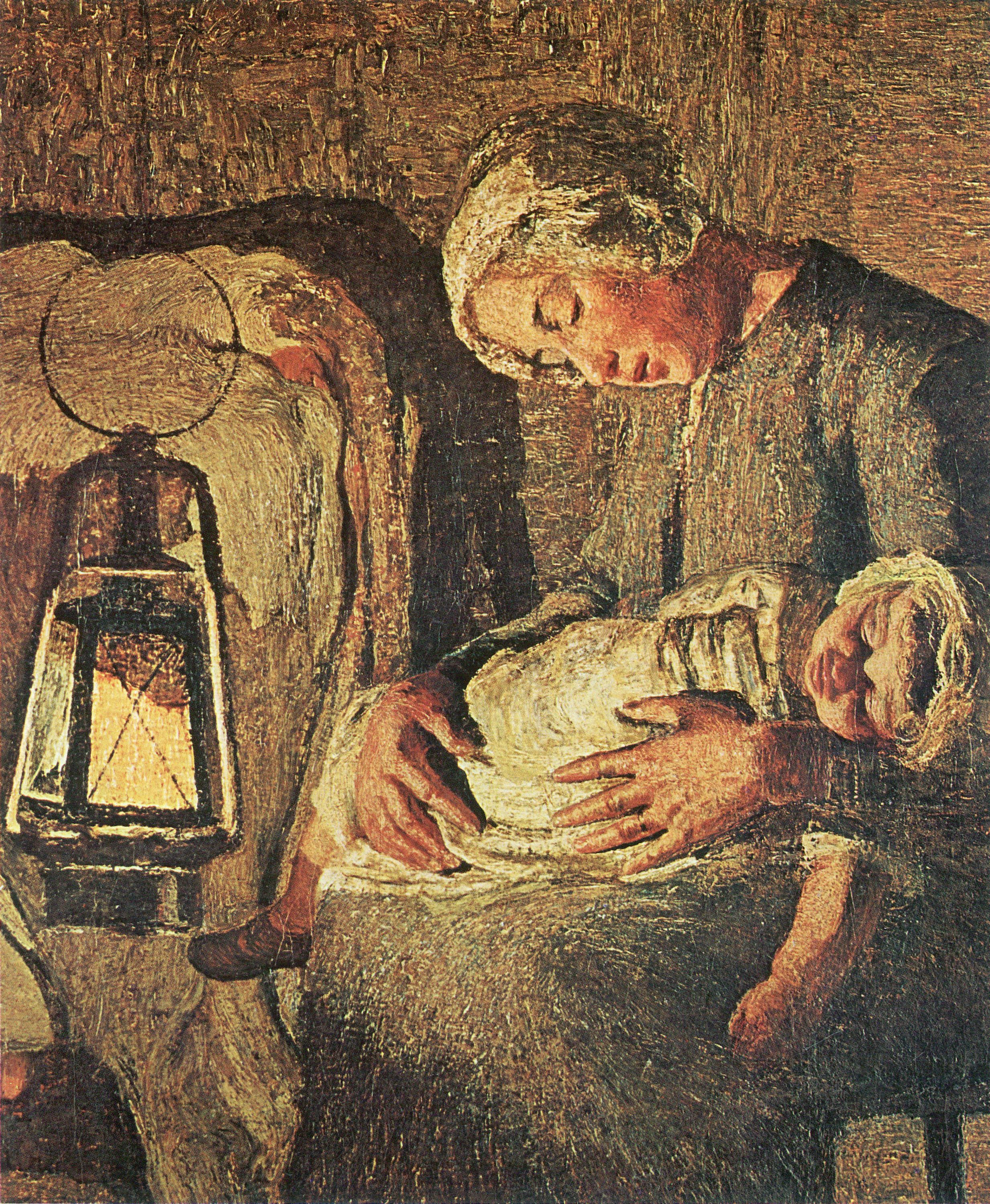
The Galleria d'Arte Moderna is housed in a neoclassical villa that Napoleon used as a royal residence. The permanent collection is strong in nineteenth-century Italian painting, a period that tends to get skipped in favour of the Renaissance. The museum is rarely crowded. The villa's garden is free to enter and worth walking through on the way out.
Il consiglio del team
The GAM is closed on Mondays, as are most of Milan's civic museums. Tuesday morning is typically the quietest window.
Risotto alla milanese: order it as a main, not a side
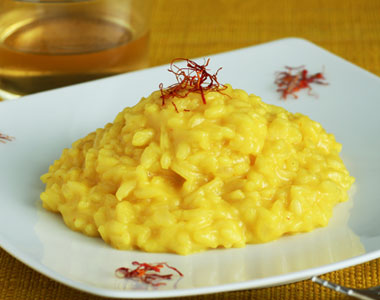
The problem is that most versions you will be served are mediocre: under-seasoned, the saffron a cosmetic gesture rather than a structural element. The real thing is deeply yellow, rich without being heavy, with a wave-like consistency the Milanese call all'onda. It is traditionally served as a primo piatto, not a side dish for ossobuco, though restaurants will often try to sell you the combination. Order it alone, from a place that makes it to order. The wait will be twenty minutes. That is the correct sign.
Il consiglio del team
Avoid any risotto alla milanese that arrives in under ten minutes. Risotto cannot be pre-made and reheated without losing its texture. A fast risotto is a risotto that was already sitting.
Fontana a Pinocchio: a small, strange object on Corso Indipendenza
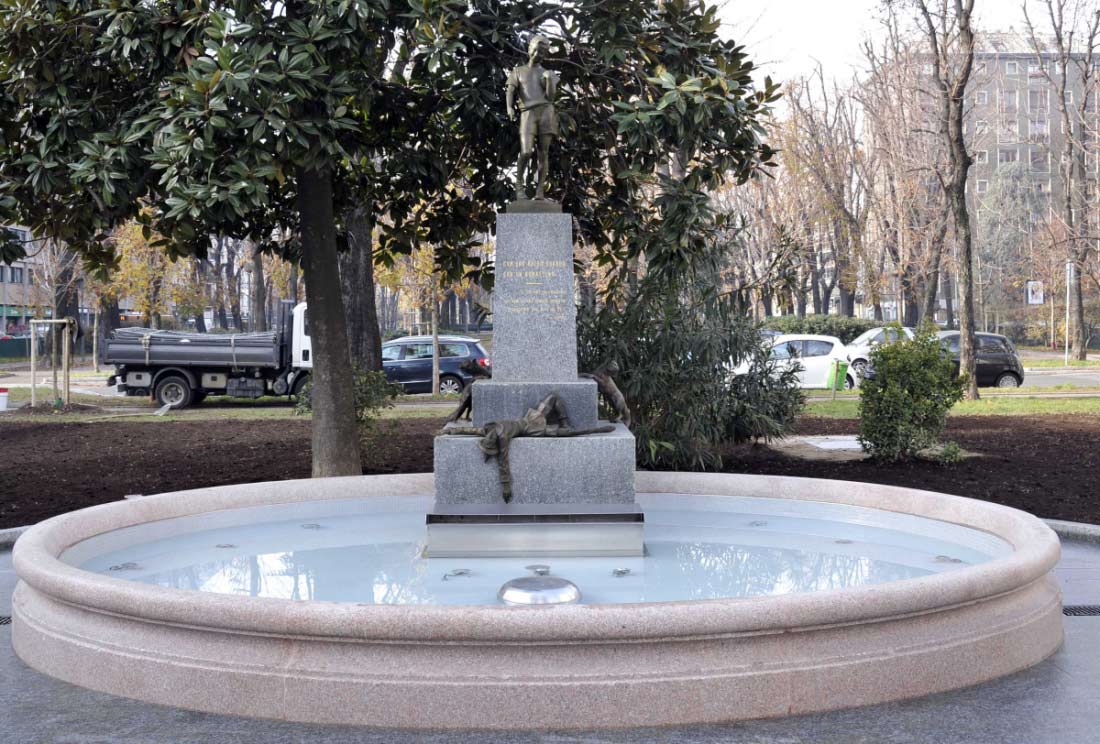
The reason to seek it out is not the fountain itself, exactly, but what it represents: the habit Milan has of placing art objects in unexpected locations and then largely ignoring them. The corso around it is a working neighbourhood street, not a tourist corridor. The fountain sits in the middle of pedestrian traffic and is routinely used as a landmark by locals giving directions.
Il consiglio del team
The area around Corso Indipendenza has a concentration of Liberty-style architecture — the Italian variant of Art Nouveau — that repays a slow walk. The buildings date mostly from the early 1900s and are best seen from across the street.
La strada degli gnomi: igloo houses and mushroom architecture in the northern suburbs
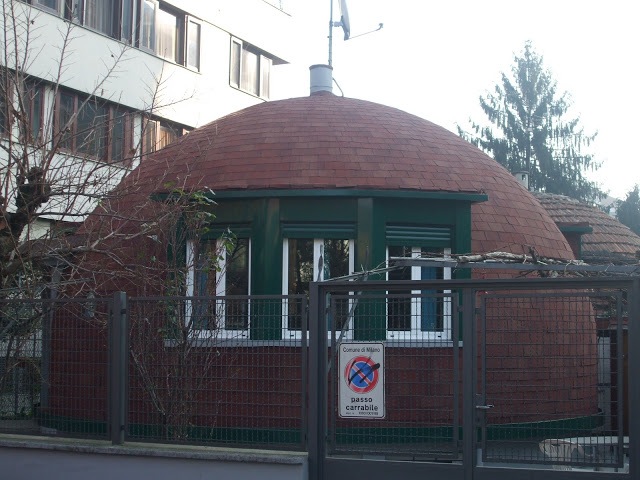
Getting there requires a metro ride and a walk, which is precisely why most visitors never make it. The neighbourhood around the street is unremarkable, which makes the houses more striking by contrast. You cannot go inside. You can walk the street, look at the facades, and try to understand what the original owners were thinking.
Il consiglio del team
Go on a weekday. On weekends, the street has begun to attract small crowds of people with cameras, which somewhat defeats the quality of accidental discovery that makes it worth visiting.
Scopri il Castello Sforzesco: the parts most visitors miss
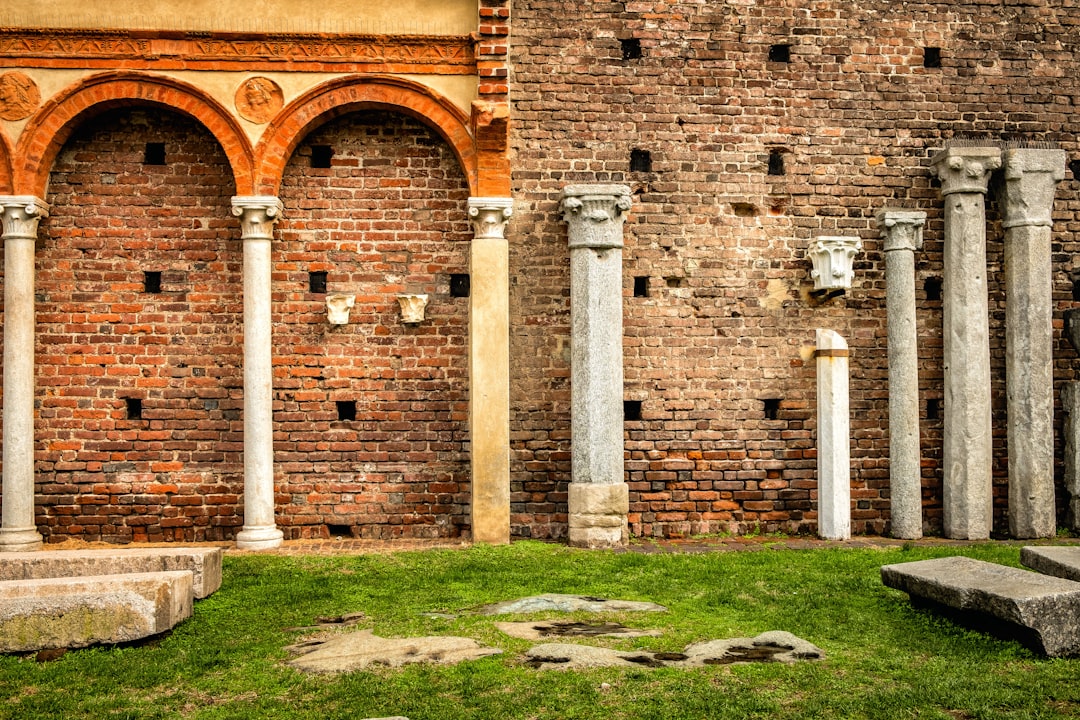
The castle also opens onto the Parco Sempione, Milan's largest park, through a gate at the rear. Most people enter from the Piazza Castello side and never find the park entrance. The park is where Milanese families spend Sunday afternoons, and it is a more honest version of the city than the tourist corridor.
Il consiglio del team
The castle's free entry days fill quickly. The individual museum collections within are inexpensive and can be visited on a combined ticket. Budget at least three hours if you intend to see more than one collection.
Top 5 travel apps Milano 2026: using Secret World to find what the guidebooks miss
The honest assessment of any travel app is that it is only as good as its editorial choices, and those choices reflect whoever built it. Secret World's strength is in its specificity: it tends toward the kind of destination that appears in this article rather than the kind that appears on billboards at Malpensa. Whether you use an app or a paper notebook or a set of recommendations from someone who has spent time in the city, the principle is the same: Milan rewards the visitor who has done some thinking in advance and is prepared to be wrong about half of it.
Il consiglio del team
Download maps offline before you travel. Milan's mobile data coverage is reliable in the centre but inconsistent in the outer neighbourhoods where some of the more interesting destinations sit.
Milan does not give itself up easily, and I mean that as a description rather than a complaint. The city's resistance to easy interpretation is, in the end, what makes it interesting. Rome tells you what it is. Florence tells you what it is. Milan keeps its own counsel, and the version of the city you leave with after a week is necessarily partial, provisional, and shaped as much by accident as by planning.
What I find, returning after periods away, is that the city has changed less than I expected and more than I noticed while I was living in it. The bone church is still there. The Segantini painting is still there, in its neoclassical villa, in its undervisited gallery. The Pinocchio fountain still stands on Corso Indipendenza while the city moves around it. The Pietà Rondanini is still unfinished, still refusing to become a monument, still looking like a private thing that has been left in a room for you to find.
That is, in the end, the best way to think about Milan: not as a collection of sights to be processed, but as a city that has been accumulating material for two thousand years and has not yet decided what to do with all of it. Your job, as a visitor, is to spend enough time there to find the parts that were left for you specifically.
What I find, returning after periods away, is that the city has changed less than I expected and more than I noticed while I was living in it. The bone church is still there. The Segantini painting is still there, in its neoclassical villa, in its undervisited gallery. The Pinocchio fountain still stands on Corso Indipendenza while the city moves around it. The Pietà Rondanini is still unfinished, still refusing to become a monument, still looking like a private thing that has been left in a room for you to find.
That is, in the end, the best way to think about Milan: not as a collection of sights to be processed, but as a city that has been accumulating material for two thousand years and has not yet decided what to do with all of it. Your job, as a visitor, is to spend enough time there to find the parts that were left for you specifically.