10 Best Things to Do in Los Angeles, USA — beyond the obvious
A long-term resident's guide to a city that rewards patience and punishes assumptions
L
Una guida di
Lena Hofmann
Aggiornata il
3 ottobre 2026
Lettura
13 minuti
Comprende
9 luoghi · mappa interattiva
★ Guida d'Italia 2026
Pianifica con cura. Viaggia più a fondo.
1.3M+ luoghi curati nel mondo, mappe offline e itinerari intelligenti — tutto in un'app gratuita.
1.3M+ luoghiMappe offlineItinerari AIGratis
The first time I drove into Los Angeles on the 10 freeway, coming in from the desert at dusk with the basin spread out below me in a grid of amber light, I thought I understood it. I had seen the movies. I had read Didion. I was wrong, of course, in the way that everyone is wrong about Los Angeles before they spend real time there — wrong about the scale, wrong about the pace, wrong about which parts of it are actually worth your attention. The city has a talent for making visitors feel like they've arrived somewhere familiar while simultaneously withholding everything that matters. You can spend a week here and leave having seen only the scaffolding: the Walk of Fame (grubby, smaller than expected), the Santa Monica Pier (fine, crowded, forgettable), the view from Mulholland Drive (genuine, but you'll share it with a tour bus). What Los Angeles actually offers — and it offers quite a lot — requires a different kind of attention. It requires you to accept that this is not a city organised around a centre, that its pleasures are lateral rather than vertical, distributed across forty-odd municipalities that blur into each other without ceremony. It requires, frankly, some surrender. I've lived here long enough to have stopped apologising for the traffic and started noticing the light, which is specific to this basin and this marine layer and nowhere else on earth. What follows is not a greatest-hits list. It is, I hope, something closer to a set of coordinates for people who are willing to do the work.
Los Angeles has more park acreage per capita than most American cities, and almost none of it gets the attention it deserves from visitors who spend their weekends gridlocked on Sunset Boulevard. A well-planned weekend itinerary — the kind that Secret World has built its reputation on — threads together Griffith Park's eastern trails, the lesser-visited sections of Elysian Park above Dodger Stadium, and the Japanese Garden in Van Nuys, which sits inside a water reclamation facility and is, for that reason alone, one of the stranger and more peaceful experiences the city offers. The trick with a Los Angeles weekend is sequencing: do the east side in the mornings before the heat builds, save the coast for late afternoon when the light comes in low and flat off the Pacific. Most people get this backwards and spend their best hours in traffic.
Il consiglio del team
The Japanese Garden in Van Nuys requires a reservation and is free — book at least a week ahead, because it fills up with people who know what they're doing.
Planning a trip to Los Angeles in any year requires confronting the city's fundamental paradox: it is simultaneously one of the most documented destinations on earth and one of the least honestly described. The practical itineraries that hold up are the ones built around neighbourhoods rather than landmarks — spending a morning in Frogtown along the Los Angeles River, where the concrete channel has been partially reclaimed by cyclists and herons; an afternoon in the Arroyo Seco corridor between Pasadena and Highland Park, where the old Craftsman bungalows sit behind bougainvillea and the Gold Line runs overhead. These are not glamorous itineraries. They don't photograph especially well for social media. But they give you the city's actual texture, which is quieter and stranger and more interesting than the version sold on postcards.
Il consiglio del team
The Metro Gold Line (now the A Line) between Union Station and Pasadena passes through some of the most visually interesting urban landscape in the city, and costs $1.75.
There is a growing cottage industry of AI-assisted travel planning tools, and Los Angeles — with its sprawl, its traffic variability, its neighbourhood-by-neighbourhood shifts in character — is actually one of the cities where such tools earn their keep. The question is what you ask them. An AI trip planner can tell you that the drive from Silver Lake to Venice takes twenty-two minutes at 10am and fifty-eight minutes at 5pm. It cannot tell you that the taco truck parked on the corner of Sunset and Fountain on Tuesday evenings is worth the detour, or that the back room of the Philosophical Research Society on Los Feliz Boulevard has a library that smells like 1934 and is open to the public. Technology is a reasonable starting point. It is a poor finishing one.
Il consiglio del team
Use real-time traffic tools obsessively, but cross-reference with local Reddit threads (r/LosAngeles is genuinely useful) for the kind of ground-level intelligence that no algorithm has indexed yet.
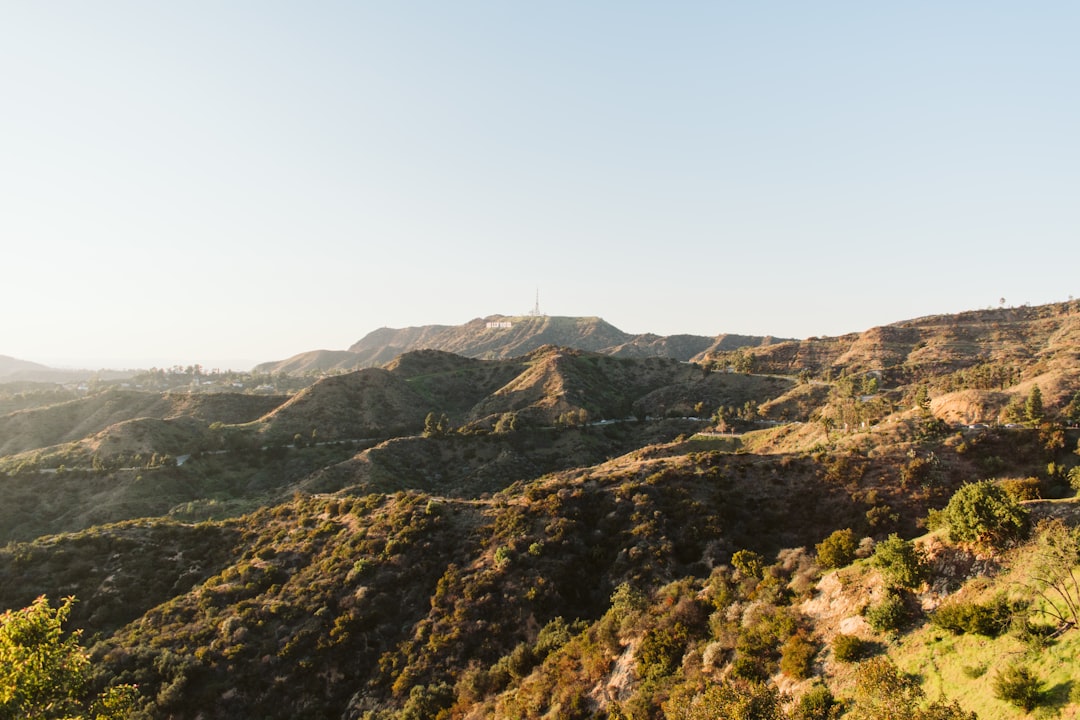
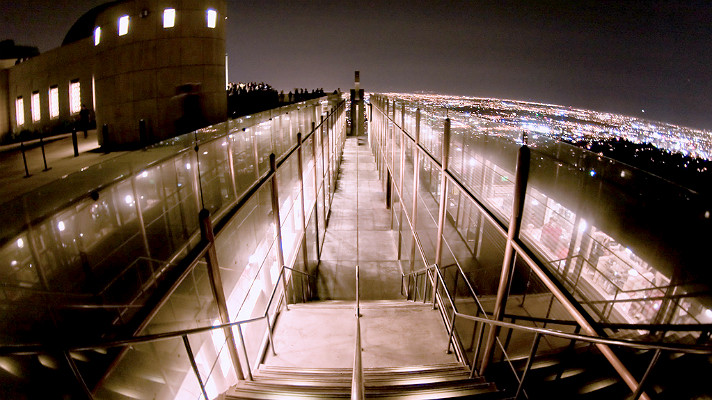
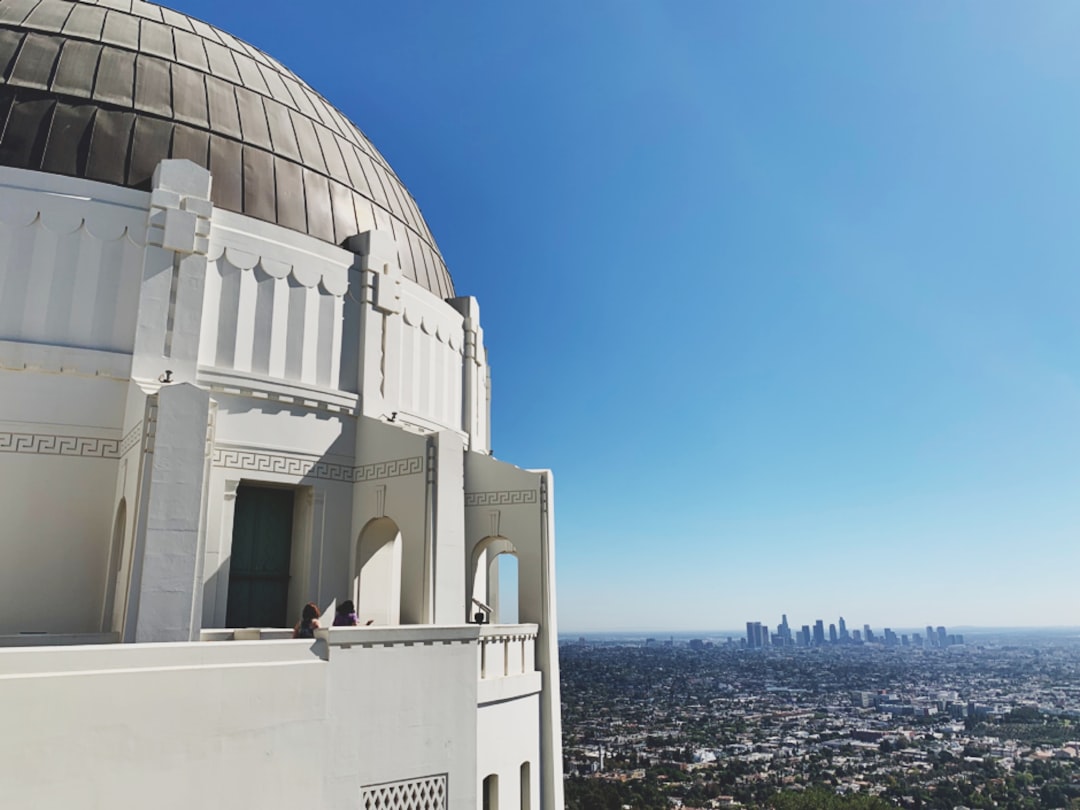
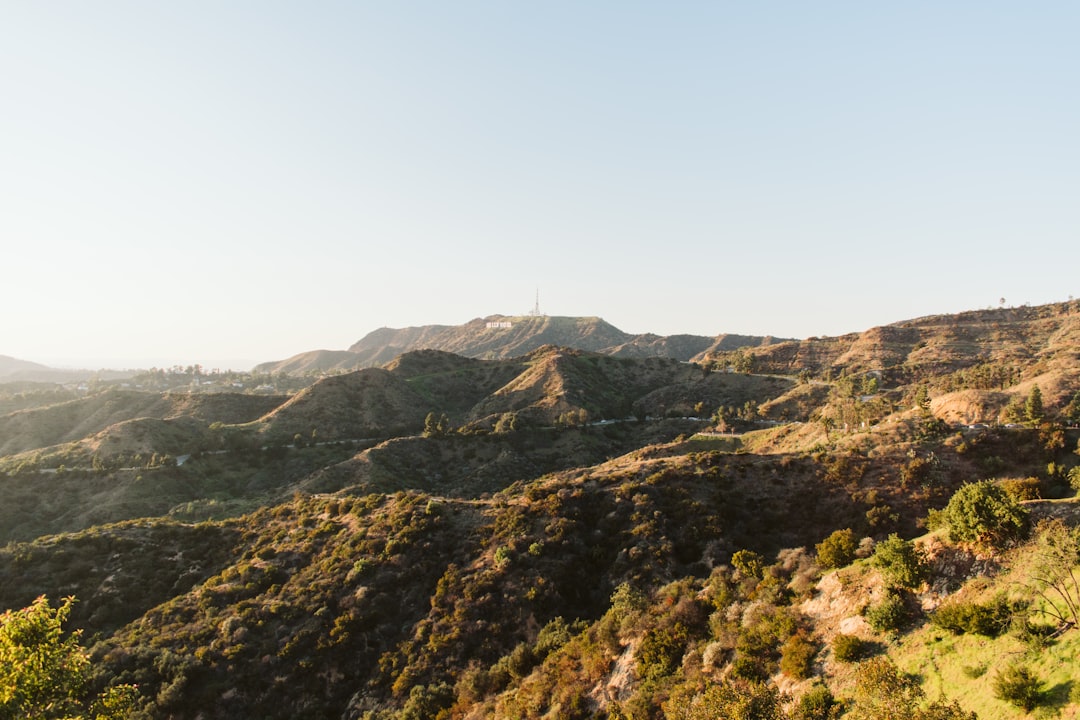
The Griffith Observatory sits on the south face of Mount Hollywood at roughly 1,134 feet, and the view it offers — from the Pacific Ocean on clear days to the downtown towers to the San Gabriel Mountains — is one of the genuinely earned pleasures of the city. I say earned because the parking situation is a small ordeal: the lots fill by 10am on weekends, the shuttle from the Greek Theatre is the sensible option, and the walk up from the Los Feliz neighbourhood takes about forty minutes and is steeper than it looks on the map. The building itself, opened in 1935 and restored in the mid-2000s, has the confident Art Deco authority of an institution that was built to last. The Zeiss telescope in the main dome is available for public viewing on clear nights, and the line moves faster than you'd expect. The planetarium shows are worth attending for the Foucault pendulum in the foyer alone, which swings with a patience that the city outside entirely lacks.
Il consiglio del team
Go on a weekday evening rather than a weekend afternoon — the crowd thins, the city lights come up below you, and the telescope operators tend to be more talkative when they're not managing a queue of two hundred people.
To visit the Griffith Observatory purely for the view is to use a concert hall as a coat-check room. The building's interior — its copper domes, its Samuel Oschin Planetarium, its exhibits on the electromagnetic spectrum and the mechanics of the solar system — rewards the visitor who slows down. The exhibit on the history of astronomical observation in California is particularly good, tracing the line from the early Lick Observatory to the Palomar telescope to the role that Los Angeles's own light pollution played in pushing serious astronomy eastward into the desert. There is something appropriately Angeleno about a city that generated enough artificial light to make it impossible to see the stars from within its own limits, and then built, on a hill above that same city, one of the most visited public observatories in the world.
Il consiglio del team
The Samuel Oschin Planetarium's laser show programs are popular with a certain crowd and less interesting than the standard astronomical presentations — check the schedule before you book.
Navigating Los Angeles's food landscape without some form of digital assistance is technically possible and practically foolish. The city's restaurant geography is non-intuitive: the best Korean barbecue is in Koreatown, the best Oaxacan food is in Pico-Union, the best Japanese breakfast is in Sawtelle Japantown, and none of these neighbourhoods are particularly close to each other or to wherever you're staying. Apps like Secret World have built curated layers on top of standard mapping tools, flagging the kind of places that don't have publicists — the Salvadoran pupusería on Vermont that's been there since the 1980s, the Persian bakery in Westwood that opens at 6am and sells out of its saffron rice cookies by 9. The technology is only as good as the editorial judgment behind it, which is why the human-curated platforms consistently outperform the algorithmically generated ones.
Il consiglio del team
Grand Central Market in downtown Los Angeles is genuinely good and not a tourist trap — arrive before noon on a weekday and you'll eat at the counter of China Café next to construction workers and city hall staffers.
The honest answer about travel apps in Los Angeles is that you will need more than one and they will occasionally contradict each other. Google Maps remains the most reliable for traffic and transit. Yelp is useful for filtering out the genuinely bad options but unreliable at the top end, where the best places are often under-reviewed because their regulars don't feel the need to announce themselves online. The apps that have earned sustained respect among long-term residents are the ones that curate rather than aggregate — that make editorial choices about what belongs in their database and what doesn't. For a city as large and as laterally complex as Los Angeles, the difference between an aggregator and an editor is the difference between a phone book and a recommendation from someone who actually lives here.
Il consiglio del team
The Eastside Food Bites blog, though not an app, maintains a list of family-run restaurants in Boyle Heights and East Los Angeles that no algorithm has fully mapped — worth bookmarking before you arrive.
The neighbourhood that most consistently surprises first-time visitors is not Silver Lake or Venice or Los Feliz, all of which have been written about to the point of self-parody, but Leimert Park, a historically Black neighbourhood in South Los Angeles that has been a centre of African American arts and culture since the 1940s. The Vision Theatre, the World Stage jazz venue, the murals along 43rd Place — these things exist at a remove from the tourist infrastructure that has colonised the more photogenic parts of the city, and they are better for it. A practical 2026 itinerary that doesn't include at least one afternoon in Leimert Park is an itinerary that has decided, consciously or not, to engage only with the Los Angeles that was built for outside consumption.
Il consiglio del team
The Leimert Park Village Farmers Market runs on Sundays and is small enough that you can actually talk to the vendors — a rarity in a city where farmers markets have become performance spaces for a certain kind of aspirational lifestyle.
By 2026, AI trip planners will be able to generate a perfectly competent Los Angeles itinerary in about four seconds. The itinerary will be logistically sound, geographically coherent, and almost entirely devoid of the accidental encounters that make travel worthwhile. What no planning tool — artificial or otherwise — can engineer is the experience of arriving in El Sereno on a Sunday morning when the swap meet is running along Eastern Avenue, or stumbling into the Velveteria (a museum dedicated entirely to velvet paintings, which is exactly what it sounds like) on a quiet afternoon in Portland, Oregon — though Los Angeles has its own equivalents of that particular brand of earnest eccentricity. The Museum of Jurassic Technology in Culver City is the canonical example: a place that defies categorisation and rewards visitors who arrive knowing almost nothing about it.
Il consiglio del team
The Museum of Jurassic Technology charges a modest admission and requests that visitors not explain it to people who haven't been — a policy that is, in its own way, the most Los Angeles thing about it.
Los Angeles will not meet you halfway. This is the thing that takes the longest to accept, and it is also, I think, the thing that makes it more interesting than cities that are easier to love. It is a place that has been mythologised so thoroughly and for so long that the mythology has become part of the landscape — you can't drive past the Hollywood sign without thinking about all the other people who have driven past the Hollywood sign thinking about all the other people who have driven past the Hollywood sign. The self-referential loop is exhausting until it isn't, until you find the gap between the image and the place, which is where Los Angeles actually lives. That gap is in the concrete river on a Tuesday morning, in the Armenian bakeries along Sunset in East Hollywood, in the way the marine layer burns off at eleven and the light goes flat and specific and unlike anywhere else. I have been writing about cities for a long time, and I have never found one that punishes impatience more consistently or rewards attention more generously. Come with a flexible itinerary and a reliable parking app. Leave the checklist at home. The city will show you something, eventually, but it will do so on its own schedule and not yours.
★ Guida tascabile
Porta questa guida con te.
Salvala offline, ottieni le indicazioni a piedi e scopri migliaia di luoghi come questi.
When is the best time of year to visit Los Angeles?
March through May and September through November offer the most reliable weather — warm without the heat inversions that trap smog in the basin during August, and without the Santa Ana winds that make October and November feel like the city is holding its breath before something goes wrong. June is locally known as 'June Gloom' for its persistent marine layer, which can keep the coast overcast until early afternoon. December and January are mild by most standards and significantly less crowded.
Do I actually need a car in Los Angeles?
For most visitors, yes — though the honest answer is more complicated. The Metro system has improved substantially and connects downtown to Hollywood, Koreatown, Culver City, and Santa Monica with reasonable frequency. If your itinerary is concentrated in those corridors, you can manage without a car. If you want to reach Leimert Park, the Huntington, the Arroyo Seco, or any of the San Fernando Valley's more interesting corners, you will need either a car or a very high tolerance for Uber surge pricing.
How much should I budget per day in Los Angeles?
A realistic daily budget for a mid-range independent traveller — not staying in a hostel, not eating at Nobu — runs between $150 and $250 per day, including accommodation, food, transport, and one or two paid attractions. Parking alone can add $20 to $40 per day if you're driving. The Griffith Observatory is free to enter; the planetarium shows cost around $10. The Huntington charges admission but offers free days for LA County residents.
Which neighbourhoods are best for a first-time visitor to stay in?
Silver Lake and Los Feliz offer walkability, good restaurants within a short radius, and reasonable proximity to Griffith Park without the premium pricing of West Hollywood. Mid-Wilshire puts you roughly equidistant from the east and west sides, which is useful if your itinerary spans the basin. Santa Monica is convenient for beach access but expensive and somewhat disconnected from the city's more interesting inland neighbourhoods. Avoid staying in Hollywood proper unless you have a specific reason — it is not representative of the city and is considerably less pleasant than its surrounding areas.
Is it safe to use public transport in Los Angeles?
The Metro system is generally safe during daylight hours and on busier lines. The situation on some downtown stations and on the Red Line late at night has been inconsistent in recent years, and travelling alone after midnight on the rail system requires the same awareness you'd apply in any large American city. The bus network is extensive and used primarily by working Angelenos rather than tourists, which is either a deterrent or a recommendation depending on your disposition. Rideshare apps remain the default for most visitors, and for journeys after 10pm they are the more predictable option.
★ Leggila quando vuoi
Salvala sul tuo telefono.
Aggiungi questa guida ai preferiti, pianifica il viaggio offline, scopri luoghi come questi.